UK Green party drops longstanding opposition to nuclear power
Posted by mpweiher 1 day ago
Comments
Comment by silver92bullet 1 day ago
Comment by fn-mote 1 day ago
I was curious and did the reading. The technology still doesn't exist as far as I can tell. Even according to the Commonwealth Fusion Systems who says they will build in Virginia.
The International Atomic Energy Association says:
> there are still some technological issues to address before a commercial power plant can operate. A prototype of a fusion reactor (DEMO) is expected to be built by 2040. [1]
Comment by leonidasrup 1 day ago
But fusion power plants needs to breed and separare tritium, prevent excessive tritium losses in the first wall. The plasma-facing materials in tokamak are subject to very harsh conditions, mutch harder conditions then reactor walls in a fission power plant.
Comment by hunterpayne 13 hours ago
Comment by leonidasrup 1 hour ago
This part is quite well known and follows the design of classic thermal power plants.
Radiation heat from the fusion heats-up the inner wall of the vacuum vessel. This heats up working fluid flowing behind the inner wall (in case of CFS then plain is to use a molten salt: FLiBe). Also there a second, more important effect: deuterium-tritium fueled tokamaks release 80% of produced energy in the form of high energy neutrons. Large part of energy of neutrons has to be captured by the working fluid for the power plant to be economically viable.
Heat from the working fluid is transferred using a heat-exchanger to heat water and produced steam, which drives a steam turbine and an electric generator.
https://en.wikipedia.org/wiki/FLiBe
FLiBe as a working fluid is not a new concept and has been already demonstrated in molten salt fission reactors.
Comment by Gud 1 day ago
Please note the date. This is the reactor being built. CFS has come a long way since inception. DEMO is a joke. https://www.youtube.com/watch?v=KkpqA8yG9T4
Comment by hunterpayne 13 hours ago
Comment by javcasas 1 day ago
Nuclear power plants will be run by private companies that will weasel out on maintenance to save a penny. Yes, they will weasel out, this time will not be different to other industries.
Nuclear power plant cost overruns by more than 3x.
Nuclear energy being already more expensive than solar.
No private insurer wants to insure a nuclear power plant because the potential payout is gargantuan. So it is the country the one that has to insure it.
Nuclear waste maybe will get reprocessed one of these decades if we really get very lucky, but it is expensive and gets in the way of the profits. So we create a shell company to deal with it, and if it happens something, we bankrupt the shell company and the country has to pay it, again. We get to keep the profits, of course.
What if an accident happens? Well, the country is insuring it, so they have to pay for it. We don't have to be that careful anymore, we don't have to pay for it!
But there are 32 layers of protection, nothing bad will ever happen! We are going to a world with more active wars. Your 32 layers of protection will be blown apart by a well placed hypersonic missile. I hope this never ever happens, but my gut feeling tells me otherwise.
Nuclear would be great if it, and the world, would be run by responsible adults, not by profit-maximizing locusts and warmongering oligarchs.
Comment by belorn 1 day ago
The biggest reason the world is seeing more active was is that we are dependent on a few unstable countries for our energy needs. Solar and wind power can produce very cheap energy when the weather is optimal, but suboptimal weather can equally produce extremely expensive prices to the point where social and economical stability start to break down. We are giving money to warmongering oligarchs because of the fear of what happens if prices goes up to high, which would not happen if energy and heating infrastructure was secure and geopolitical independent.
Comment by defrost 1 day ago
Unless you accidentally left out "fossil", as in "burning fossil fuel", then we at least are unlikely to agree.
I certainly intend to continue to gather tree waste and burn it - and I cannot see a problem if forest weight is maintained through replenishment and replacement.
Comment by belorn 23 hours ago
Burning wood has at best similar environmental impact as beef. In theory it can be produced using just "waste", but we have to extend the word "waste" beyond recognition when production is scaled up and the profit-maximizing locusts become part of the picture. The world is suffering from deforestation.
We are not talking about using garden waste to burn a log in a open fire place, but rather grid sized power plants and central heating plants. I should however mention that there are air quality reports that points to issues with individual homes burning wood inside cities. Open air fireplaces do not scale well with dense population areas.
Comment by defrost 23 hours ago
Err, lets perhaps stick with
* Cutting down massive amount of old growth forest is harmful to the environment ( whether it's for burning or bauxite )
and
* Cutting down forest faster than regrowth rate is harmful to the environment (as that's net loss wrt surface sequestration)
and perhaps examine "harmful to bio diversity" (is it? checker-boarded plantation forest has about the same biodiversity as it ever has - it's not old-growth but it's not devoid of life or diversity), "dangerous to humans" (really? with modern logging machines on plantation forest? - the deaths in logging largely come from non plantation clearing on steep slopes and happen to humans aware of the risks)
> True tree waste is very minimal today
Is it? Many people hereabout heat their homes from limb lopping, dead fall, and tree deaths.
> not enough to power a nation for any duration
I don't recall suggesting powering a nation - just pointing out that there's an acceptable attrition rate for forests.
Comment by belorn 14 hours ago
Modern plantation forest involve draining of water, and that causes green house gases to be released. After logging, the area also release more green house gases during the first 20 years then they pick up. Logging also changes the level of ground water, and how much of the ground water get filtered, which in turn reduces quality of the water downstream. Logging also increase erosion, which has it own set of risk to humans.
> I don't recall suggesting powering a nation - just pointing out that there's an acceptable attrition rate for forests.
The article is about nuclear power plants, in the context of the UK green party. In order for wood to be an alternative it would need to be able to provide energy in a green, sustainable, and national independent way. Power plants that burn wood pellets do exist, but how green and how sustainable they are is debatable. It also questionable if they will just use wood, or if they mix it in with other even less green and less sustainable fuels, but sells the energy as green energy produced on waste products.
Comment by kergonath 16 hours ago
It does not scale. That’s how they are cutting down ancient pristine forest in Central Europe. It’s useful as a supplement to use wood waste; it cannot be a major source of energy.
Comment by defrost 8 hours ago
My point is that AGW is sensitive to the source of burnt fuel and not to the act of burning fuel alone (although it is a balancing act between carbon released and carbon captured - thrown out of balance during the anthropocene by the act of dragging up "old" carbon from the depths).
Comment by leonidasrup 1 day ago
For example Denmark is importing lot of wood from Baltics, UK lot of wood from Canada.
https://www.eubioenergy.com/2025/03/13/no-smoke-without-fire...
Comment by defrost 23 hours ago
I certainly didn't claim that there was, but thank you for rebutting a point not made.
Comment by silver92bullet 1 day ago
Comment by leonidasrup 1 day ago
Under the current aircraft protection rules, the containment building has to survive impact of a fully loaded large civilian airplane moving at speed of sound.
For example testing of samples of containment building was done using acceleration of F-4 Phantom mounted on rocket sledge towards the wall. The wall survived the impact without problems.
Comment by javcasas 16 hours ago
Which already exists. For example, India (so that you cannot say "this is something only available to USA) has the Agni-V (https://en.wikipedia.org/wiki/Agni-V) that supports a 7.5 ton bunker buster with Mach 24 terminal velocity. It costs $5 million each (like a battle tank).
Your squishy 747 moving at Mach 1 is nothing in comparison.
What other countries do already have something similar, or will have something similar, let's say, in the next 5 years?
Comment by leonidasrup 1 hour ago
https://en.wikipedia.org/wiki/Dnieper_Hydroelectric_Station#...
Comment by Mawr 1 day ago
Just like commercial aviation companies then, right?
> Nuclear power plant cost overruns by more than 3x.
On average or what?
> Nuclear energy being already more expensive than solar.
What's "solar"? A solar panel? Sure. Solar+8h worth of batteries? Maybe. Solar+enough batteries to guarantee a stable grid? Hmm. Solar+batteries+the externalities of burning fossil fuels to compensate?
> Nuclear waste ...
Let me stop you right there. Head on over to https://app.electricitymaps.com/map/fifteen_minutes and look at how much coal&gas waste (no, not just CO2) we are dumping into the atmosphere at this very moment.
Now go ahead and tell me again that we need to badly find a solution to the huge problem of inert, solid, compact nuclear waste that's just sitting there.
> What if an accident happens?
Idk, what if an accident happens with anything else that's already 99.999% safe, like aviation? Odd question to ask about the objectively safest power source we have.
> Your 32 layers of protection will be blown apart by a well placed hypersonic missile. I hope this never ever happens, but my gut feeling tells me otherwise.
Right. You're getting attacked by hypersonic missiles and your priority is your nuclear power plant safety.
Empirically, somehow Ukraine is not a nuclear wasteland despite their nuclear power plants being very much under threat of attack by not so sane people.
Comment by javcasas 17 hours ago
Do you think the concrete to build an NPP doesn't require a crazy amount of fossil fuel? Do you think the storage will continue to be as expensive? Do you think the storage will continue to be as expensive by the time the NPP is actually completed?
I can have solar now, with batteries next year, and great batteries in 3 years. Or badass nuclear in 7 to 10 years with an average cost overrun of 102% (https://www.bu.edu/igs/2025/05/19/investment-risk-for-energy...), just in time for solar and batteries to be so good that nuclear will be irrelevant.
BTW, Ukraine is not a nuclear wasteland because Putin doesn't think it is worth making it a wasteland, because Russia actually attacked the Chernobyl sarcophagus (https://en.wikipedia.org/wiki/Chernobyl_Nuclear_Power_Plant_...), thus showing everyone that Putin is not scared by the nuclear fallout taboo. That genie is out of the bottle now, the madmen have shown that they are not mad enough right now.
Comment by hunterpayne 12 hours ago
Comment by javcasas 10 hours ago
My sources say: nuclear power 20-33 months, coal power 33 months, peat power 26-27 months, gas power 21-27 months, wind power 7 months and photovoltaic power 60-95 months.
https://inis.iaea.org/records/kgzhn-ark54
Which means, among other things, that solar is already net negative before nuclear is built and starts to produce.
And also, solar panels are rated to 25 years 80%, which means they retain 80% of initial production after 25 years, not "explode after 20 years and you have to replace them".
But even better: let's go wind and beat nuclear and solar by a crazy margin.
Comment by leonidasrup 49 minutes ago
During the last decade Europe went for wind and solar, but wind is quite expensive to build. Solar was expensive but is now a lot cheaper, mostly because it's mass produced in China using cheap, still quite coal heavy, electricity.
Still solar and wind are weather dependent and need to by supplemented by fossil electricity production in Europe in the winter months, which is why we see these days market electricity prices around 300 Euro/MWh in Europe. (The plan, decade ago, was to use cheap Russian gas to supplemented solar and wind. Things didn't go according to the plan).
Comment by nomel 1 day ago
Comment by javcasas 1 day ago
Your sensor reporting system will be forced to report whatever is needed - regardless of the reality of the situation - as soon as the right manager demands more uptime to an engineer, or otherwise they get fired because leadership demands more profit.
Comment by leonidasrup 1 day ago
If you want to try live without technology, try living in Somalia for few months. Average Somalian would change for you at any moment.
Comment by javcasas 17 hours ago
The Middle ages had effectively more technology than the Romans (all the stuff that was invented til the Romans, plus the stuff that was invented later), yet they fared worse, mostly because of religion and feudal lords sabotaging what the Romans managed to achieve.
Comment by leonidasrup 1 hour ago
" There is little record of other sanitation systems (apart from sanitation in ancient Rome) in most of Europe until the High Middle Ages. Unsanitary conditions and overcrowding were widespread throughout Europe and Asia during the Middle Ages. This resulted in pandemics such as the Plague of Justinian (541–542) and the Black Death (1347–1351), which killed tens of millions of people. Very high infant and child mortality prevailed in Europe throughout medieval times, due partly to deficiencies in sanitation. "
https://en.wikipedia.org/wiki/History_of_water_supply_and_sa...
Even today countries without technology for clean and safe drinking water and sanitation have big problems.
" Without better infrastructure and management, millions of people will continue to die each year from preventable, water-related diseases like malaria and diarrhea. "
https://www.un.org/sustainabledevelopment/water-and-sanitati...
Comment by surgical_fire 1 day ago
I am as pro nuclear (actually pro anything not fossil fuel), but this was actually the best counter argument I came across:
Comment by cogman10 1 day ago
And what's nuts is they can walk away with those profits, buy another nuclear company, and repeat the same process until the same inevitable outcome happens.
We need reform. At a minimum we need make it impossible to have things like LLCs in charge of companies where failure result in huge negative externalities. The owners need to be at risk at going bankrupt. Without that risk, they'll just keep destroying everything so long as it makes an extra buck.
Comment by belorn 1 day ago
If a mining company extract lead and silver from the ground, we kind of know that they won't be around to safeguard waste for all eternity, nor will they be able to restore the environment when the company eventually goes bankrupt. If society want to allow such commercial operations then it need to also strike a balance so that society don't have to bear too much of the negative externalities.
In Sweden, the goverment here owns the energy company that operate the nuclear power plants and the mining company.
Comment by ViewTrick1002 1 day ago
That is not correct. Vattenfall has nothing to do with Oskarshamn, and had nothing to do with Barsebäck.
Forsmark
- Vattenfall: 66.0 %
- Mellansvensk Kraftgrupp (essentially Fortum): 25.5 %
- Sydkraft Nuclear Power (Uniper): 8.5 %
Ringhals
- Vattenfall: 70.44 %
- Sydkraft Nuclear Power (Uniper): 29.56 %
Oskarshamn
- Uniper (through Sydkraft): 54.5 %
- Fortum: 45.5 %
Barsebäck
- Sydkraft Nuclear Power (Uniper): 100 %
Comment by surgical_fire 21 hours ago
I am in the same boat. Companies will optimize for profit and rent-seeking, all else be damned. A nuclear meltdown would be a negative externality, if line goes up it would have been worth.
> We need reform
Any reform needs to account for corporations being machines optimized to generate profit. Regulations should ensure "negative externality" is not really externalized.
Corporations only understand profits, and investors should be understood as entities willing to leech from society. The only way to heandle corporations is by having failures threatening the money that investors can leech through this pipeline.
Comment by gustavus 1 day ago
Of course like in the well known capitalist regime of the USSR that precipitated the big nuclear problem. If only we had the government instead of the evil capitalists to run things then we could be safe from those profit maximizing parasites.
Comment by Timon3 20 hours ago
Comment by hunterpayne 13 hours ago
Chernobyl happened because the son of a central committee member needed data from a dangerous experiment that was conducted at the powerplant. They literally disabled safety systems with wrenches. Both the design itself would have never allowed in the west nor would the experiment that caused the accident. Also, the HBO movie was very inaccurate so please don't bring up something you saw there, many of the things in the movie aren't even scientifically possible.
Comment by apexalpha 1 day ago
Comment by gedy 1 day ago
Comment by JuniperMesos 1 day ago
Comment by penguin_booze 1 day ago
"Science progresses one funeral at a time".
Comment by apexalpha 1 day ago
It's hard to convince people to change a stance they made a part of their political and personal identity.
Comment by NamlchakKhandro 1 day ago
Comment by droppedasbaby 1 day ago
Comment by leonidasrup 1 day ago
For example Greenpeace had it roots in the oposition to nuclear weapon testing at the end of 1960s.
Comment by scoofy 1 day ago
The large portion of the environmentalist left are degrowthers who literally want people to just live with less, which means "less energy" is actually good. It will never be a politically viable position, but again, we're talking about a party that until recently has never come close to wielding power.
Comment by ZeroGravitas 1 day ago
If you accept both of these then like Vaclav Smil, you'll conclude that you need to use less fossil fuels and nothing else will replace them. And if you care about fairness globally then 1st world nations need to really use less.
It all makes perfect sense if you believe all the lies told about renewables.
Most of the people mocking it helped spread those lies, which makes attacking the people who believe them a bit rude.
Comment by scoofy 1 day ago
Literally the leftist dense cities have been the ones pushing back hardest against high rises, sustainable transportation alternatives, and in large part, electrification through overly restrictive environmental laws designed in the 70s.
That’s over now. Climate change is here, and you still can’t convert a house to a duplex in LA without jumping through a thousand hoops.
Comment by hunterpayne 13 hours ago
Basically, converting from one form of energy to another usually can be done at 50%. The lone exception is voltage potential (electricity) where we can get 90% for motion but 10% for anything else. And when you use motion for transport you have all the problems of a heavy battery reducing efficiency. This is why we can make an EV but not an electric plane. Then there are the problems to do with storage (remember 2 conversions so 25% efficiency there unless you use a battery). Finally, remember that capitalism is really good at efficiency. When people started trying to find energy uses to cut, this was easy in less developed places but in the US it was nearly impossible. Every cut caused problems elsewhere (even for something as minor as an HVAC fan). Ironically we learned this during COVID when the older "inefficient" buildings were healthier than the newer ones because they moved less air.
Comment by ZeroGravitas 33 minutes ago
This is wrong for two reasons.
One: you can make heat with electricity from renewables sources, if that were necessary.
Two: you don't need heat because you can make ammonia with green hydrogen from electrolysis then follow the standard Haber-Bosch process. The normal fossil route does this too but gets the hydrogen by splitting fossil gas and vents the waste CO2.
Comment by defrost 26 minutes ago
* (2022) https://www.nature.com/articles/s41561-022-01043-9
* (2026) https://www.sciencedirect.com/science/article/pii/S036031992...
soon to be piloted .. with results expected to take a while.
Comment by scoofy 5 hours ago
I was talking more about general decarbonization.
Comment by hughw 1 day ago
Comment by JuniperMesos 1 day ago
Comment by wolvoleo 1 day ago
And most of these things have impact much bigger than just the climate. They pollute in a lot more ways than that. Resource extraction, manufacturing pollution, transport, waste disposal.
It's stuff like forcing repairability that allows us to do with much less impact on the environment.
Comment by hunterpayne 13 hours ago
It really does. You can live without clothes, that's less. You can live on 1500 kcals a day. You would be at the brink of starving all the time but you would be alive. I could lock you in a cage and just give you the bear minimum of bread and water. Just enough heat so you don't freeze and never let you out. That's certainly less. Just how much less do you want?
PS Young people almost always use more resources than the old. When my kid isn't here, our trash and recycling containers are pretty empty. When he is here, they overflow. And he is only a 50% increase in the house's population.
Comment by Marha01 21 hours ago
In a perfect world, perhaps. In the real world, it very often does.
Comment by hughw 1 day ago
Comment by scoofy 1 day ago
That I think it's an idiotic position is beside the point. Things and prosperity generally are not the problem, and can grow pretty much indefinitely for the foreseeable future if it's done in a reasonable and sustainable way.
Comment by MisterTea 1 day ago
There are a lot of things that would work fine if done in a reasonable and safe way but we have plenty of examples of people making unreasonable and unsafe decisions.
Comment by mancerayder 14 hours ago
Living without AC in a warm summer is one example. It feels like a first world inconvenience to the Green types, that we should all learn to accept. Good luck with democratically convincing everyone else - you'd need authoritarian for a true success in keeping everyone "living with less."
Comment by sampo 1 day ago
Part of it was a Soviet psyop to get Western citizens to oppose West's nuclear weapons. Encourage people to oppose nuclear in general, both nuclear power and nuclear weapons.
Comment by knodi123 1 day ago
Sure, you and I can talk about newer plant designs that fail safely, or about how coal plants emit more radiation by far. But if we had the ability to rapidly convince large swathes of the populace of provable scientific facts, then clean power is only one of the many many problems we would be able to solve.
Comment by fulafel 18 hours ago
Comment by tasuki 1 day ago
Comment by apexalpha 1 day ago
The leader of Germany that phased out nuclear and made Germany fully reliant on Russia then took a job... at Gazprom. The VP from the Greens responsible took a very high paying job lobbying for foreign Gas firms, too.
It has to be one of the most successful foreign influencing campaigns in history.
https://en.wikipedia.org/wiki/Gerhard_Schr%C3%B6der#Business... https://en.wikipedia.org/wiki/Joschka_Fischer#Business_activ...
Comment by RandomLensman 1 day ago
Comment by apexalpha 1 day ago
The chances of a Soviet leadership-induced meltdown like at a German nuclear reactor that is properly designed and maintained is laughable.
It is, however, extremely hard to film the slow killing of people by browncoal. It's easy to film a nuclear reactor incident.
Comment by RandomLensman 1 day ago
Comment by ZeroGravitas 1 day ago
A slightly racist belief in the Japanese as superior at following the rules meant a big shock when the Germans realised that even the Japanese could not be trusted with nuclear power.
Comment by hunterpayne 12 hours ago
Comment by ViewTrick1002 15 hours ago
Sellafield's current expected bill is £127B over the next 100 years. Hanford is looking at a cost between $364B and $589.4B.
The imagined economics sold to the public never delivered followed by accidents like Windscale, TMI and Chernobyl.
With climate change the nuclear industry saw the possibility of finally having actual product market fit. So another round of subsidies were created in the 2000s and 2010s. At the same time renewables were seen as the upstart, and storage barely crossed any minds.
The outcome being ruinously expensive plants as seen in Vogtle, Virgil C. Summer, Olkiluoto, Flamanville 3, Hinkley Point c and so on.
What we're seeing now is a token investment to subsidize the necessary industry for military research and reactors. But no one expects it to deliver electricity at a relevant price, or point in time, compared to renewables and storage.
But not anywhere near the nuclear frenzy seen online.
Comment by hunterpayne 12 hours ago
Also, Hanford has nothing to do with civilian NPPs and the processes used there would never be done as part of power generation.
Finally, the cost of NPPs is almost always about the lawsuits. Look at how much Korea and China payed for their NPPs. It was less than 20% of what we pay, they were online in less than 5 years and they are producing 2.8GW for each country for the last decade.
PS The UK has never deployed a standardized design for a NPP. All of their NPPs are different types of experimental designs. Just buy a AP1400 and be done with it for far cheaper.
Comment by ViewTrick1002 11 hours ago
They were deeply entwined, and still are. The AEC established in 1946 was responsible for both nuclear weaposn and peaceful nuclear technology.
There's been a bunch of civilian dual purpose reactors ran at hanford.
Yes. Much of the waste is from the weapons program. But saying that the site has nothing to do with civilian nuclear plants is just you making stuff up.
It is sad when the premier example touted is South Korea. The country where 68 people received prison sentences totaling 253 years and 9 months from the corruption scandal involving falsified safety certificates, fraudulent components and bribery.
China is also especially funny. Despite the nuke bros perfect environment of stable regulations, cheap workforce, state financing, authoritarian rule and so on nuclear remains insignificant. Sitting at 4% of the grid mix and shrinking. While renewables and storage are absolutely exploding in scale.
Comment by Arodex 1 day ago
Comment by UltraSane 1 day ago
Comment by cowlevel 1 day ago
Comment by UltraSane 1 day ago
Comment by cowlevel 1 day ago
Comment by UltraSane 1 day ago
Comment by cowlevel 1 day ago
Comment by UltraSane 1 day ago
Comment by Arodex 1 day ago
Thanks to the inherent safety of nuclear? Or that the wind was, by chance, blowing to the sea when the worst happened?
https://www.ianfairlie.org/wp-content/uploads/2013/03/fukush...

https://www.sciencemediacentre.co.nz/wp-content/upload/2011/...
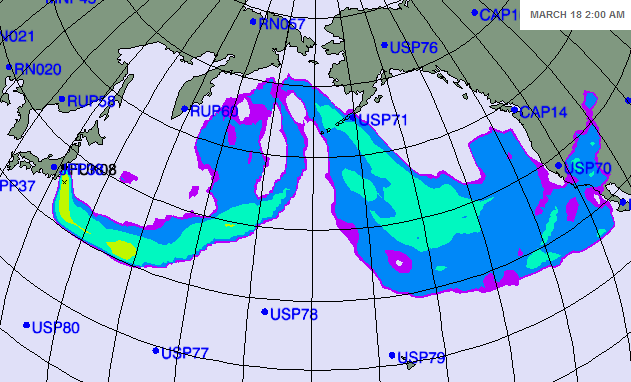
And who cares about the 150 000 displaced people and the still existing exclusion zone?
Oh, yeah, because the Fukushima nuclear accident is still ongoing. The plant is still too dangerous to access and dismantle. Cooling water is still pumped into the reactors to keep them from melting down. That water is still contaminated by a mixture of radioelements and being released to the ocean after partial treatment. And this will go on for several decades still.
Comment by Marha01 21 hours ago
Comment by Arodex 14 hours ago
Comment by hunterpayne 12 hours ago
Also, you can't spell.
Comment by UltraSane 1 day ago
Comment by worik 1 day ago
The waste will burden hundreds of generations for millenia and the reason? Our current consumption
Such greed and disregard for following generations
Climate change is a minor problem in comparison
Comment by devilsdata 1 day ago
That said solar panels and batteries are so bloody good now, why even bother building nuclear reactors in much of the world? And geothermal looks promising too, with the new fracking tech they're using. But who knows.
Comment by anakaine 1 day ago
Comment by devilsdata 1 day ago
https://www.legislation.qld.gov.au/view/whole/html/inforce/c...
And of course have a chat with the traditional custodians of the land, and see if they're keen.
Comment by defrost 1 day ago
Comment by AnnikaL 1 day ago
Comment by defrost 1 day ago
( eg: Noonkanbah - https://www.theguardian.com/australia-news/2018/sep/30/the-d... )
They do make agreements and keep them when they are part of the discussion from the outset and consulted for advice.
ie: find a place to make a hole that is both stable and not a significant site.
It doesn't help that more recent good faith agreements have been torpedoed by, say, Rio Tinto not keeping their word going forward.
( in recent follow up news from an epic Rio FUBAR - https://www.abc.net.au/news/2026-10-25/juukan-gorge-archaeol... )
Comment by nomel 1 day ago
Comment by AngryData 1 day ago
Comment by hunterpayne 12 hours ago
Comment by JuniperMesos 1 day ago
Comment by hunterpayne 12 hours ago
Comment by hermitcrab 1 day ago
Yes there is, bury it. Its what we do with lots of other waste. Of course, you have to be a bit more careful than you would be with a standard landfill. But the engineering is well understood. It is usually just the fact that nobody wants it buried near them that causes political issues.
>The waste will burden hundreds of generations for millenia
Pumping more carbon into the atmosphere is also a huge burden for future generations.
>Climate change is a minor problem in comparison
What do you base that on?
Comment by worik 1 day ago
We have no way to communicate the danger of the waste to people 55,000 years in the future
That greed, yours and mine, could create that dangerous pile of rubbish, that will be deadly to people who will never know of our existence
What astounding recklessness and hostility to the future
For current consumption
Unbelievable
Comment by hunterpayne 12 hours ago
B) We could reprocess the waste
C) There are reactors that produce 95% less waste, regulation prevents their testing and deployment
D) All the nuclear waste in the US (the country with by far the most NPPs) fits in 1 Olympic sized pool
Comment by kalessin 1 day ago
Nuclear waste is great for several reasons:
- the first one is quantity: very small in comparison with how much energy it produced (a nuclear reaction generates one million times more energy than a chemical reaction so less resource usage across the whole lifecycle);
- the second one is that most of it (over 90%) can be recycled and used with gen 4 reactors;
- the third one is that it stays local, i.e. unlike CO2 it doesn't go into the atmosphere (and then the ocean), and since CO2 is inert, from a human time scale how long CO2 can stay in the atmosphere is, I would argue, comparable to nuclear waste decay.
Comment by worik 1 day ago
You cannot predict t that any place on Earth will be stable, or stay local, over hundredsof millenia
Wishful thinking so you can make future generations pay for your consumption
Comment by kalessin 16 hours ago
You maybe mixing up danger and risk, those are two different concepts. Nuclear waste is dangerous, but it doesn’t have to be risky. Consider this: where do we have the most unknown (risk): long-term geological storage of nuclear waste, or the consequences of climate change and our ability to adapt?
I really wish I could share the educational resources that I have with you, unfortunately it’s all in French…
Comment by hunterpayne 12 hours ago
Comment by opo 1 day ago
>Climate change is a minor problem in comparison
No one knows what the best and worst case scenarios for deaths during to climate change as they effects might include AMOC shutdown, sea level rise, forced mass migrations of people, wars, shortages of food, etc. In all credible scenarios the deaths and suffering in even the best case scenarios will be much, much, higher than any deaths due to radiation exposure from nuclear waste.
Comment by hunterpayne 12 hours ago
Comment by apexalpha 1 day ago
Comment by worik 1 day ago
Nuclear: hundreds
Comment by hunterpayne 12 hours ago
Comment by knodi123 1 day ago
Don't let perfection be the enemy of improvement.
Comment by dumberquestions 1 day ago
Comment by UltraSane 1 day ago
Comment by adammarples 1 day ago
Comment by jayflux 1 day ago
https://storelectric.com/dunkelflaute-energy-storage/
https://assets.publishing.service.gov.uk/media/677bc80399c93...
Comment by Arodex 1 day ago
Comment by hunterpayne 12 hours ago
Comment by cedws 1 day ago
Nuclear is a great peacetime technology, Europe is no longer in peacetime.
Comment by Topfi 1 day ago
Besides maybe solar, there is always the potential for harm during war times. Heck, even with solar, cutting off electricity supply to a major urban area can tragically carry a death toll that goes beyond even the few severe power plant disasters we as a species have ever encountered.
Fission is not an outlier here and designing any power plant for resilience is a necessary step, whether in war or peacetimes, whether in a tectonically stable or seismically active area.
Comment by newsclues 1 day ago
Comment by direwolf20 1 day ago
Comment by hunterpayne 11 hours ago
Comment by RandomLensman 1 day ago
Comment by Topfi 1 day ago
The main difference in nuking a fission plant over any other area would be creating longer-term fallout.
If the attacker is at all rational, unlikely to be desired because it makes the area hard to inaccessible for troops on either side.
If the attacker is horrificaly irrational and just wants to cause pure, long term, irreparable harm, unfortunately salted nukes would be a feasible option, independent of having a fission plant anywhere near the drop zone...
Nuclear disarmament, international cooperation and reliable defence alliances can (hopefully) be used to protect against this, along with resilient fission designs within reason. Not having a fission plant by itself unfortunately and targically wouldn't prevent an utterly irrational attacker willing to cause as much long term damage as possible.
Very aware of that harsh fact, living in a country that has a section in our constitution making nuclear power illegal (yes, very stupid) and is not part of any defensive alliance (while expecting the countries around us to defend us anyways), if someone wanted to "salt the earth" around Salzburg, Vienna or Graz, they could do it, even if we have no plants.
Comment by RandomLensman 1 day ago
Comment by AngryData 1 day ago
Comment by declan_roberts 1 day ago
Regarding drones, most reactors are built relatively hardened. For example, they're protected against a 747 flying into it at full speed. So even a drone attack would take an advanced enemy, and they might as well drop a bomb on you.
Comment by cedws 1 day ago
Comment by jaseemabid 15 hours ago
If we come to that state of things, then almost anything we do isn't safe.
Comment by ilumanty 1 day ago
Comment by go13 1 day ago
Comment by FailMore 1 day ago
Comment by epistasis 1 day ago
Comment by ACCount39 1 day ago
The best time to build up nuclear power was 4 decades ago - when the supply of fossil fuel was obviously fraught, and things like solar and wind power were nonviable.
Whether it makes any sense to push for nuclear power now is unclear. Nuclear was quite expensive even back then - but decades of NIMBYism, "environmental" activism and overregulation have damaged the industrial capability and eroded supply chains to the point that getting a buildout going at scale, on a sane budget and a sensible timetable would be an uphill battle. At the same time, renewables aren't anywhere near as opposed, the economic outlook for solar, wind and grid storage is better than it ever was, and the situation is likely to improve even further.
Comment by epistasis 1 day ago
Look over at France, frequently touted as a "successful" buildout. But reactors got more expensive the more they built, not cheaper, and they never met their initial goals for number of builds.
And look at the one place with modern-day "successful" builds: China. They like to tout the reactors as great successes, and they are on time and on budget, or at least as on budget as we can tell in an economic system like that. But they missed their 2020 and 2025 five year plan goals for deployment, and will miss their 2030 goal too. Meanwhile, they deploy 20x-30x as much wind and solar each year, each tech. That's after adjusting for capacity factor! So the best nuclear builders in the world are only building enough of it to be low single digits of their energy mix.
Nuclear was always oversold as a technology, always underdelivered, and has not seen a positive learning curve that a normal technology would. It was doomed from the start, IMHO.
Comment by roryirvine 22 hours ago
And "quite expensive" vastly understates it - high temperature gas-cooled reactors are in theory more efficient in operation at the expense of increased construction cost. In reality, construction costs far, far outweigh the raw cost of fuel (reprocessing is a different matter!) so we landed ourselves with all the extra expense for very little benefit (probably actually a negative benefit since the much-vaunted ability to refuel whilst at full power turned out not to work in practice).
So they were late, hideously expensive, completely failed to be sold to other countries, and now have an availability factor no higher than that of offshore wind.
We knew that they would be unlikely to live up to their promise as early as 1964 and yet still went ahead despite several opportunities to change course. The nuclear industry never learns.
Comment by gopher_space 1 day ago
Comment by haunter 1 day ago
Are they really?
https://en.wikipedia.org/wiki/Opinion_polling_for_the_next_U...
Comment by hdgvhicv 1 day ago
Comment by hermitcrab 1 day ago
Comment by sgjohnson 1 day ago
Comment by robin_reala 1 day ago
Comment by gopher_space 1 day ago
Comment by GordonS 1 day ago
Comment by nephihaha 1 day ago
Comment by ndsipa_pomu 1 day ago
Possibly, but I vote for them and here in Bristol, they control the council and we have a Green Member of Parliament.
They've been around for decades, but they're grabbing more attention and headlines (especially the whole "Zionism is racism" declaration).
Comment by adammarples 1 day ago
Comment by mikeodds 1 day ago
Comment by croes 1 day ago
Comment by 964279964377 1 day ago
Comment by nephihaha 1 day ago
Both Scotland and Northern Ireland have their own Green Parties. There is no single UK Green Party.
Comment by InsideOutSanta 1 day ago
Comment by petcat 1 day ago
Comment by PorciiVorbesc 1 day ago
If only. There's people and parties (not in the UK) who would rather see the rest of the country suffer than admit they were wrong, so they feel compelled to die on that hill and take everyone with them, because defending their principle is more important.
Comment by notarobot123 1 day ago
Comment by prymitive 1 day ago
“People act reasonably when left no other choice”
It stuck with me.
Comment by ViewTrick1002 1 day ago
Meanwhile renewables and storage are reshaping our global energy system due to being the cheapest globally scalable energy source in human history.
We also need to keep in mind nuclear supply chains. After 21 sanction packages the EU still haven't sanctioned Russia's nuclear industry.
We're simply too deeply entangled across the entire supply chain: nuclear fuel, enrichment, reprocessing, technological partnerships, reactor maintenance, new construction and more.
Comment by croes 1 day ago
Comment by ACCount39 1 day ago
Unlike fossil fuel power plants, NPPs don't depend on a steady supply of a high volume of costly consumables just to keep running. Reactor fuel loads last months to years, naturally buffering any price shocks or supply chain issues. And you can maintain an "energy security" stockpile of nuclear fuel that would add you even more years of runaway.
To have your nuclear power disrupted, you have to face an adversary that's both capable and willing to hit targets on your soil, and on top of that, is willing to target NPP infrastructure specifically.
A random rogue state lobbing mid-range drones over a strait wouldn't cut it. Neither would a war halfway around the world.
Comment by croes 1 day ago
To attack you just need an inside man and an USB stick to fake an accident.
And with the AfD they get the information about critical infrastructure free of charge
Comment by petcat 1 day ago
Comment by adrianN 1 day ago
Comment by petcat 1 day ago
But Germany wanted the cheap gas, so they ignored the risks and Russia ultimately invaded Ukraine.
Comment by uecker 1 day ago
But regarding gas, one has to understand that a tiny fraction (15%) of gas is used for electricity and most for heating. So nuclear power is completely irrelevant here.
I also would like people realize that many nuclear plants in Europe and elsewhere still depend on fuel from Russia. So energy dependence is a bit more complex.
Comment by Marha01 21 hours ago
You know that homes can be heated with electricity from nuclear power? The reason why Germany uses gas for heating is because it was historically very cheap compared to electricity, because it came from Russia. Good, while the attached strings could be ignored..
Comment by uecker 21 hours ago
Comment by RandomLensman 1 day ago
Comment by RandomLensman 1 day ago
Comment by slopinthebag 1 day ago
Comment by RandomLensman 1 day ago
Comment by slopinthebag 1 day ago
we have the right to criticise countries too right?
Comment by RandomLensman 1 day ago
Comment by slopinthebag 1 day ago
Comment by RandomLensman 1 day ago
Comment by Marha01 21 hours ago
It is obviously a good thing if a democratic nation state is independent from a totalitarian dictatorship.
> Not like life expectancy in Germany is low, for example.
It's not about life expectancy. They now have to make a choice between supporting an aggressive totalitarian state vs. suffering damage to their economy due to higher energy prices. That is obviously a bad position to be in.
Comment by RandomLensman 18 hours ago
Comment by slopinthebag 1 day ago
Comment by RandomLensman 1 day ago
Edit: what is your point? Being able to criticize? Sure, but so what?
Comment by slopinthebag 1 day ago
Comment by uecker 1 day ago
Comment by papa0101 1 day ago
Comment by jdlshore 1 day ago
Comment by papa0101 1 day ago
Comment by direwolf20 1 day ago
Ukraine said that Russia invaded Ukraine. Russia said that Russia invaded Ukraine. And Russia has a long history of invading its neighbors - that's why it's already so big. We have no reason to doubt that Russia invaded Ukraine.
Comment by ezst 1 day ago
Comment by oliwarner 1 day ago
In the UK, Sellafield was a nightmare. Lots of less serious slip ups and malfunctions punctuated by a few critical incidents, between 1954 and 2003. You might understand why yesterday's Green Party might think it an issue worth pursuing.
Comment by fsckboy 1 day ago
Comment by JuniperMesos 1 day ago
Comment by declan_roberts 1 day ago
Comment by ransom1538 1 day ago
Comment by mitxela 1 day ago
Comment by doublepg23 1 day ago
Definitely risks in the supply chain there, but probably less than Russia?
Comment by croes 1 day ago
Or the panic when the next drones appear near a power plant
Comment by rrr_oh_man 1 day ago
What do you mean?
Comment by deltaknight 1 day ago
E.g the ex chancellor is now paid handsomely https://www.nytimes.com/2022/04/23/world/europe/schroder-ger...
I believe more recently there was an expose about some other politicians at that time having links to Russia, although don’t have them to hand right now.
Comment by coherentpony 1 day ago
Comment by hdgvhicv 1 day ago
How about some useful policies like removing planning constraints for grid expansion and solar farms and compulsory wind farms on golf courses owned by foreign billionaires
Comment by bluegatty 1 day ago
Comment by Zigurd 1 day ago
Even back then, those economic comparisons were idealized for nuclear. Build it run it count up to the dollars and there you go. Except you need to secure it, you need to handle waste, and roughly the same cost over runs are bedeviling decommissioning as they were construction.
On top of all that, why is nuclear still uninsurable in the private market?
Comment by bluegatty 1 day ago
The cost of Nuclear has raised in the same way every other civil industrial project has risen.
A pipeline in Canada was supposed to be $8B it cost $30, subways and tunnels go 3-5x over budget because the actors can extract that wealth.
Think of the builders like Nvidia - they are not incented to build something for 'cost plus' - they want to make sure they suck all of the surpluses out they can. Why build for $10B when you can build for $35B?
Contractors are incented to price all the way to the point where it's 'not viable'.
Thats why with oligarchic vendors, you will never, ever have cheap energy. Never. Because the supply chain will take all the surplus. That's why we have competition. Groceries are not like that.
Insurance - this is a debilitating issues stopping nuclear because there's no way to know what the outcome would be. We don't know how the courts would rule on damages if there was a problem.
This is something that has to be socialized, at least on some level.
Farmers and property owners have to 'live with' the fact there are 300f monstrous windmills obstructing their view for the public good. It's minor but very real. In a more extreme case, we have to contend with the fact there are certain cases in which people may have to 'vacate their properties' in some cases. How do we compensate? It's hard to say, but that has to be worked out and made clear otherwise nothing will get built.
Regulations around storage are another problem - governments have not pushed hard enough for material solutions, kicking the can down the road because just leaving the problem sit in pools beside reactors was 'good enough'. Were we to have invested this for decades we would be much further along.
US, Canada and France etc. have pretty good records, though the US situation is too 'open' it could be tightened, and there's no reason we couldn't have already 35%-50% base nuclear energy all over North America.
Ontario does is quite well.
This should have happened decades ago.
Comment by Zigurd 1 day ago
You think it's axiomatic that the insurability of nuclear power has to be socialized. Insurability is a strong and reliable financial signal. We're seeing this every day in the tech industry now with data center build out that needs credit default swaps. If you can't buy insurance at any price, it's probably not going to end well.
Comment by bluegatty 5 hours ago
Comment by Marha01 21 hours ago
Grid-scale solar plus batteries is cheaper? Citation needed.
Comment by defrost 21 hours ago
Energy costs, of course, vary by location - so that linked report is the Australian national science (both theory and very much applied) body determining that conditions in Australia are such that the economics of nuclear power here have costs greater than that of grid scale solar + batteries + other storage technologies on horizon and being firmed up.
Comment by hdgvhicv 1 day ago
Comment by DangitBobby 1 day ago
Comment by bluegatty 1 day ago
Renewables are a long way off from covering the base load.
They are only now crossing the threshold into 'key supply factors'.
Comment by moffkalast 1 day ago
Comment by bluegatty 1 day ago
There are literally 0 confirmed deaths to due exposure at Fukishima. Zero.
Literally installing solar panels is more dangerous. Most of the are will be recoverable in a few decades.
The wars in Russia, Iran and frankly the entire Iraqi conflicts, and Yemen as well - are all 'Oil Wars'. Without high Oil prices and global dependency - none of that would exist.
If we had followed through with buidling out nuclear from the 1980s - and did it safely, we might have 1 more Fukishima, and also learned from it (there are htings about Fukishima that should have never happened) - and most of the West would have 50-65% base load from Nuclear.
We may very well have had all electric cars 20 years sooner and Oil would be used for jet fuel and a few other things. Maybe not even that, as we can synthesize fuel with electricity already.
Comment by ViewTrick1002 1 day ago
Renewables have been displacing traditional baseload generation for years. What grids actually need is reliable dispatchable capacity, peaking power and firming.
People keep bringing up winter cold spells and claiming we need "baseload" to handle them, apparently without realizing that nuclear never solved those demand peaks either.
Historically that's been the job of dispatchable generation.
Baseload is the minimum level of demand.
Comment by acidburnNSA 1 day ago
Comment by ZeroGravitas 1 day ago
For existing nuclear, stealing it from the other grid users is cheaper than building clean power today.
Comment by acidburnNSA 1 day ago
Or.... the full-system economics of renewables may not actually be as good as advocates claim.
Comment by jdlshore 1 day ago
Comment by Zigurd 1 day ago
Comment by iknowstuff 1 day ago
Comment by andyjohnson0 1 day ago
Brit here: we need renewables and storage and nuclear.
> compulsory wind farms on golf courses owned by foreign billionaires
We need this x100.
Comment by mpweiher 1 day ago
It's not.
Comment by iknowstuff 1 day ago
Comment by mpweiher 1 day ago
And do you actually believe they are comparable?
German nuclear plants were producing for less than 2 cents/ kWh. Firm, day + night, summer + winter, profitable.
Intermittent renewables cost multiples of that and require massive subsidies on top and are allowed to place the burden of their intermittency on the firm producers on top of that.
Comment by iknowstuff 1 day ago
Batteries: https://www.tesla.com/megapack/design Solar: just google 1gw solar cost
Comment by mpweiher 1 day ago
So you claim as representative, not the average and not the median of nuclear power plants.
But the most expensive nuclear power plants ever produced.
Even without knowing any details about those plants, that's either statistical illiteracy or malpractice. Take your pick.
And it doesn't get better when you know the details:
- The ones you picked were all First of a Kind build (FOAK). So prototypes. It is well-documented that FOAK builds typically are 50% more expensive and longer to build than serialized builds (Nth of a Kind, NOAK). These were more around 100% longer than NOAK, for a bunch of reasons.
- A number of these were the EPR. The EPR has since been discontinued, because the manufacturer found it too hard to build. It has been replaced by the highly simplified EPR2. How is a discontinued reactor type representative of future builds?
- All of these builds were in countries that had a long hiatus in nuclear construction, so had to build up experience in the workforce, supply chain and regulators, so FOAK on steroids. Even the most experienced, France, had a gap of 18 years between the start of the previous build and the start of FV3.
- All of these builds had regulatory changes during the construction process. Sometimes massive changes, for example over 4000 changes for HPC in the UK. And not trivial things: the concrete of the outer protective shell had to be increased by 40% or something. Which has knock-on effects, because now things inside don't quite fit any longer. etc.
- New construction techniques such as modularization, factory production etc. all decrease the cost of serialized builds, but vastly increase the risk during First of a Kind builds.
And of course you are comparing installed capacity, which is an almost completely irrelevant metric. In the UK, capacity factors for solar are between 9-12%. So you have to multiply your solar numbers by 10 just to get equivalent output on average. Except average is not good enough. There is winter, there is night, there are clouds. 4h of battery are not going to get you through winter.
And you "forgot" that nuclear power plants last much, much longer than solar installations, at least twice as long, more likely 3 times and possibly 4 times. All of the plants in the US that have applied have been approved for 80 years of operations, they are now looking at 100 years and see no significant problems.
So without even taking into account new developments, you have to divide the nuclear numbers you gave by 2 and multiply the numbers for PV you gave by at least 20-80 (and that's not covering winter yet).
So $8B/GW vs. $20-80B/GW without any firming.
And which is why the price for installed capacity is not the right metric at all.
The cost of a kWh delivered reliably 24/7 is the right metric. And there nuclear shines.
And intermittents are simply not up to the job. Which is why pretty much the entire world is giving up on the fantasy of supplying an advanced industrial society using only intermittent renewables. And even the most hard-core anti-nuclear greens are coming around, as TFA reports.
As I wrote: Germany's nuclear power plants delivered reliable electricity at below 2 cents per kWh.
Comment by hdgvhicv 21 hours ago
If nuclear is cost effective it makes sense to build it for all capacity - in the U.K. that’s about 50GW.
Comment by mpweiher 15 hours ago
Otherwise, you are just making the circular argument that because we haven't built we shouldn't build. That makes no sense.
And yes, nuclear for all capacity makes a lot more sense than intermittent renewables for all capacity. But a more balanced mix tends to work out better.
Comment by ViewTrick1002 14 hours ago
The real question is cumulative emissions. Cheap and fast, even if imperfect in the shorter timeframe wins the day.
The question to answer is: Poland. €100 billion. 2026. What cuts the most cumulative CO2, fastest?
Comment by mpweiher 13 hours ago
None. Nuclear is cheap and quick and investments in nuclear not wasted.
We have wasted decades going down the wrong path. As an example, Germany has spent almost 25 years on the failed "Energiewende" and we haven't even completed the easy half. Nuclear did not require subsidies. Intermitten renewables anywhere from €30-50 billion just in subsidies. Per year.
France converted its electricity grid to nuclear in 15 years. For a total of €228 billion in 2011 money. Not "per year", not "subsidies". But total investment.
Comment by ViewTrick1002 11 hours ago
The existing French nuclear fleet was built with enormous state support. Germany pays €18B in EEG support. And that is decreasing as old extremely expensive renewables are leaving the problem.
What you are doing is crying about late 2000s and early 2010s renewables being expensive. Let me ask you, what relevance does that have in 2026? We don't pay those prices today.
The reality in 2026 is the outcome of Flamanville 3, Vogtle, Hinkley point C. Then we have modern projects, and proposed subsidies like:
- Darlington SMR: Close to Vogtle - Polish AP1000: Vogtle like - Czech APR1000: A step below Vogtle. - French EPR2 fleet: Absolutely insane at €100 per MWh and interest free loans alreay assuming large learning effects.
And that is before the usual timeline and budget overruns for new nuclear has happened.
Given this reply it seems like you are straying farther reality since the prospect of new nuclear is crumbling. You're not even presenting a logically sound argument. Its just victim complex and dreaming about times past.
The question to answer still remains: Poland. €100 billion. 2026. What cuts the most cumulative CO2, fastest?
Comment by mpweiher 10 hours ago
The nuclear renaissance is in full swing.
FACT SHEET: The Golden Era of American Nuclear Energy Has Arrived
https://www.energy.gov/articles/fact-sheet-golden-era-americ...
2026/09/25 | The Nuclear Renaissance: Financing the Global Expansion
https://fiasi.org/events/event/2026-09-25-the-nuclear-renais...
The nuclear power renaissance in the 21st century: Analyzing past trends, present status, and future outlook
https://ui.adsabs.harvard.edu/abs/2026NucAn...500231A/abstra...
Clear-Eyed about Nuclear Renaissance
https://events.weforum.org/en/events/world-economic-forum-an...
Comment by iknowstuff 16 hours ago
I’d bet you the cost will be $140B when it’s all said and done, but this website won’t be around in 2044 (assuming no delays, good luck with that). You can bet regulations won’t stop changing over the span of decades either.
I’d rather have 70GW of solar and batteries deployed in a few years, and replace them with even cheaper ones in a number of decades.
Comment by mpweiher 15 hours ago
For 6 EPR. Each EPR has 1.67 GWe. So 10.02 GW for €72.8 billion or €7.2 billion per GWe. Less than what I wrote. Versus €20-80 billion/GW for solar without firming.
Comment by ViewTrick1002 13 hours ago
We also have, wind, firming and you know. Relying on fossil fuels for the once a decade emergency.
There's no point having the grid be an ideological purity test when we still have agriculture, aviation, shipping, construction, chemicals, heavy industry and so on to decarbonize.
System studies from Australia to Denmark are converging on finding that new nuclear makes the system vastly more expensive. Even when assuming your "NOAK" costs. Because no one would be stupid enough to build new nuclear at Vogtle or Flamanville prices.
Because the problem for nuclear is that it never solved dispatchability. It always relied on fossil fuels to solve the hard times.
You raise the floor, but that's quite meaningless when the hard times are far far above the yearly baseload requirement. Even when factoring in scheduling maintenance around it. And theen adding that your nuclear fleet may be like the Swedish or French one and have half the capacity offline when it is needed.
Comment by mpweiher 13 hours ago
I didn't. The post I was responding to compared solar + batteries to nuclear.
Completely incorrectly, it turns out.
Realistic studies show that grids including nuclear are a LOT cheaper.
> There's no point having the grid be an ideological purity test
The only ones who are doing this are the anti-nuclear ideologues.
> Because the problem for nuclear is that it never solved dispatchability.
That is just comically wrong. Intermittent renewables are not dispatchable. Nuclear is.
Comment by ViewTrick1002 11 hours ago
System costs have been the central argument against renewables ever since they became competitive on LCOE. Which is why energy-system researchers have spent years developing, validating, and publishing models that account for hourly balancing, storage, transmission, flexibility, and sector coupling.
From Denmark to Australia system cost studies find renewable energy systems vastly cheaper than if involving new nuclear. Even when sensitivity testing very low nuclear costs.
The problem with nuclear is that it still needs the same firming to match an actual grid load. It still needs storage and gas turbines.
A smaller quantity than for renewable grids sure. But given how expensive new nuclear is it doesn't matter in the end.
Here's the Danish study:
https://www.sciencedirect.com/science/article/pii/S036054422...
And Australian:
https://www.csiro.au/en/research/technology-space/energy/Ele...
Please tell me how they aren't "realistic".
Your final comment conflates dispatchability with operational flexibility.
Nuclear output is controllable, and French reactors load follow. Although using a fleet controlling which reactor takes which day, and managing their fueling cycle so they can do it.
Conventional nuclear plants are economically optimized for high utilization, cannot start from shutdown on short notice, and don't eliminate the need for capacity that can respond to sudden shortages, demand peaks, and unexpected outages.
There is a significant difference between supplying dependable energy throughout the year and economically covering the relatively few hours when residual demand becomes exceptionally high.
Comment by mpweiher 10 hours ago
As an example, the Australian CSIRO "study" you cite is deeply flawed.
1. Incorrect lifetime assumptions
It assumes nuclear power plants only last 30-35 years. In reality they last 80-100 years. So they are actually 3x cheaper than reported. Same trick as used in the infamous Fraunhofer ISE "study"
2. Incorrect assumptions about sunk costs
The report incorrectly treats already spent capital costs (on renewable infrastructure) as "free".
3. Underestimation of system costs
The report incorrectly averages metrics over longer time periods and thus vastly underestimates the costs of intermittency.
4. Incorrect capacity factors for nuclear.
Capacity factors between 50-80% are assumed. In reality even the world-wide average is over 80% and well-run fleets like in the US are over 90%. Again, same shady trick used in the infamous Fraunhofer ISE "study"
So same-old same-old. And as I said before: not going to debunk every single instance of always-the-same disinformation.
Denmark is now looking at nuclear, because the renewables-only strategy has failed.
Comment by OKRainbowKid 1 day ago
Comment by jdlshore 1 day ago
Comment by hdgvhicv 1 day ago
The problems in the U.K. specifically are more about grid capacity (both long distance and local substation level) and nonsense regulations (why can’t I have pluggable battery to go with my pluggable solar) than in generation.
Comment by tim1994 1 day ago
Comment by mpweiher 1 day ago
Comment by eesmith 1 day ago
> Last year, Adrian Ramsay, then a Green co-leader, criticised government support for Sizewell C. “The money being spent on this nuclear gamble would be far better spent on insulating and retrofitting millions of homes, bringing down energy bills and keeping people warmer and more comfortable,” he said.
Classic negawatt approach, to use Amory Lovins' term.
Seems, though, like most people would rather build impressive infrastructure than improve what's already there. Grid expansion and new energy production development have far more cachet than paying a bunch of people with white vans to go around fixing up houses.
Comment by notarobot123 1 day ago
That said, it seems neither pragmatism nor ideological coherence is really necessary to hold power these days.
Comment by lincon127 1 day ago
You got one guy on here claiming a fusion reactor will be built in Virginia (lol). Yet another claiming that the reason that everyone hates nuclear power is because of the byproduct of nuclear waste and that it's worse than climate change (rofl). Like what kind of drugs are you people on?
Comment by whoanoway 1 day ago
Comment by papa0101 1 day ago
Comment by UltraSane 1 day ago
Comment by ViewTrick1002 14 hours ago
Comment by Gibbon1 1 day ago
Nuclear loses on pure accounting and time to build.
Comment by 93po 1 day ago
Comment by Gibbon1 1 day ago
So for the same rate of investment you can decarbonize 2-3 times faster. And that doesn't figure the long lead times for nuclear vs solar, wind and batteries.
Comment by Marha01 1 day ago
Comment by mpweiher 1 day ago
Comment by iknowstuff 1 day ago
Figure out how much solar overcapacity and batteries you can get, within a year or two, for the price of a nuclear reactor deployable 10-20 years from now.
Comment by mpweiher 1 day ago
Comment by uecker 1 day ago
Comment by Marha01 22 hours ago
Comment by uecker 21 hours ago
As Joe Kaeser (Chairman, Siemens Energy) observed "There isn't a single nuclear power plant in this world that makes economic sense.“
Or as Steven P. Nesbit (former Chair of the ANS) said <<The “Nuclear Renaissance” foundered when advanced light water reactors turned out to be much more expensive than their marketing claimed, while alternatives—primarily natural gas—plummeted in price. We tend to point to impediments to nuclear technology, such as overly restrictive licensing requirements and adverse public opinion, but these matter only to the extent of their impact on the bottom line. Again, it comes down to the money.>>
Comment by jmclnx 1 day ago
There are aspects of many political parties I agree with, but to me, being against Nuclear Power is the largest short sighted items this and a couple of other parties are/were against.
If many countries took the same road as France, the world would be in a much better place. Imagine the energy advances that could have happened if nuclear was supported for the past 50 years.
Comment by mitxela 1 day ago
Comment by tadfisher 1 day ago
Comment by jdlshore 1 day ago
We’re already in a situation where we have more power than we need during certain hours of the day in some states/countries, and that’s not even counting the massive, accelerating buildout that will happen between now and the years before new nuclear is built… even it was started today.
Comment by someonebaggy 1 day ago
Comment by adrianN 1 day ago
Comment by chrismustcode 1 day ago
Also France is around 7c (euro) per kwh from nuclear generation. If the whole west was all in on nuclear for last 50 years it would have resulted in lower per kwh costs.
Comment by OJFord 1 day ago
Comment by rjsw 1 day ago
Comment by eldaisfish 1 day ago
Nuclear doesn't need to be the only source of electricity generation. In fact, it can be the base on top of which a serious country expands electricity generation with renewable energy.
I will also remind you that there is not a single industrialised economy anywhere on earth that has successfully supplied new electricity growth with only renewable energy. Not one.
Comment by hdgvhicv 1 day ago
And that you can’t scale nuclear to provide all the power as the peaks are only needed rarely.
Which means that when other sources are cheaper (renewables), those must be banned to ensure nuclear gets paid more?
Comment by ZeroGravitas 1 day ago
Nuclear fans across the internet seems to have adopted this talking point recently and none of them have noticed it doesn't make any sense.
What are you even claiming here?
Comment by someonebaggy 1 day ago
Comment by ChocolateGod 1 day ago
Comment by Marha01 1 day ago
Comment by adrian_b 1 day ago
For now this is only a desire, not a fact.
The neutron radiation around a fusion reactor is far more intense than in any fission reactor, because in fusion reactors most of the produced energy is carried by neutrons.
Any material exposed to neutron radiation will become radioactive. Of course the designers of fusion reactors will attempt to choose only materials that are converted into radioactive isotopes with a short halflife, but until someone demonstrates a working fusion reactor we will not know whether this is possible or the production of some amount of long-life radioactive waste must be accepted.
In my opinion, during the next few decades there are far less chances for fusion reactors to be used as a significant energy source on Earth than for some improved kinds of fission reactors.
In any case neither fission reactors nor fusion reactors are strictly necessary on Earth, but nuclear reactors are the only way to achieve interplanetary travel through the Solar System in decent times, so I believe that the future of nuclear reactors is for spaceships, not for terrestrial use.
Comment by bruce511 1 day ago
Assuming all the physics are completely solved tomorrow;
Private capital can easily get better returns, not to mention sooner returns, doing pretty much anything else.
Public capital requires a very long-term govt spend spanning multiple governments. China could do it, but hard to see a western govt doing it. Plus it would add a decade to the schedule and costs would spiral upwards.
All of which is a huge bet against improvements in grid-level storage.
Comment by bluegatty 1 day ago
Comment by OKRainbowKid 1 day ago
Comment by uecker 1 day ago
Comment by RandomLensman 1 day ago
Comment by atum47 1 day ago
Comment by excannuk 1 day ago
Comment by varispeed 1 day ago
Comment by tlonny 1 day ago
Comment by daishi55 1 day ago
Comment by hn_throw2025 1 day ago
https://www.equalityhumanrights.com/news/ehrc-writes-green-p...
https://www.telegraph.co.uk/politics/2026/10/30/thousands-qu...
https://www.thetimes.com/uk/politics/article/green-party-zio...
Comment by daishi55 1 day ago
Comment by ChocolateGod 1 day ago
Comment by daishi55 1 day ago
Comment by dofm 1 day ago
Comment by gadders 1 day ago
Comment by dofm 1 day ago
But he is not up to her standard, and they have MPs in office who show Polanski to be just a silly lightweight (and one who appears to be unable to take responsibility).
(It still blows my mind that his excuse for why he couldn't vote was that he had to campaign. In St Pancras. Which is literally only an hour and twenty minutes away from Brighton by a really nice easy direct train. And he could have voted online.)
Comment by gizajob 1 day ago
Comment by bcvvvy 1 day ago
Comment by mitxela 1 day ago
Comment by tdeck 1 day ago
Comment by cowlevel 1 day ago
Comment by kertident 1 day ago
Ukrainians wanting an independent homeland for Ukrainians isn’t racism. Or Greenlanders wanting Greenland to be for Greenlanders. Or when it’s the Irish, Scottish, or Canadians wanting their own country.
Comment by cowlevel 1 day ago
Comment by dofm 1 day ago
Comment by gizajob 1 day ago
Comment by derriz 1 day ago
The veracity of the claim that Zionism is racist is independent of any implication you’ve arbitrarily attached to it. I both believe that Zionism is fundamentally racist - like many of the other ethno-nationalist 19th century movements - and that Israel has a right to exist. There’s no reason that both can’t be true.
Comment by gizajob 1 day ago
“Zionism is racism” is also some kind of tautology masquerading as an argument. A very diverse selection of races can count themselves as Jewish if they have a Jewish mother. So racism isn’t even the right term to use but “Judaism is tribalism” doesn’t have the same kind of undergraduate-brained ring to it.
Comment by cowlevel 1 day ago
Comment by derriz 1 day ago
A list of examples from history of things going pear-shaped when large numbers of people embraced a form of ethno-nationalism where lineage and genetics is the primary factor in determining a persons worth as a human?
Comment by gizajob 1 day ago
Comment by derriz 23 hours ago
Zionism is a political philosophy - a racist and revanchist one - developed in 19th century Europe. Not all Jews are Zionist - many are anti-Zionist, not all Israelis are Jewish, not all Jews are Israeli, etc. DNA studies show that Palestinians are descendants of the Israelites and Canaanites of biblical times.
Comment by gizajob 20 hours ago
Ditto the entire pro-Palestine movement.
Comment by derriz 20 hours ago
I have read your comments and responded to them. Conflating Jewishness and Zionism and "race" is a categorical error on your part.
Comment by gizajob 19 hours ago
Comment by derriz 19 hours ago
I've said absolutely nothing about Palestinians or said anything about the current situation in Israel.
Nor have I said anything about the Green Party in the UK.
This is all straw-manning on your part.
I've critiqued Zionism for what it is: it was born of and is a product of mid/late 19th century European political ethno-nationalistic thinking and shares similar traits with other similar political philosophies of the time which were almost universally racist (equating belonging to a nation with genetic lineage) and embracing irredentism.
Your attempts to equate Zionism with Jewishness are disingenuous but also very silly.
Comment by gizajob 17 hours ago
Comment by slowin 1 day ago
Comment by gizajob 1 day ago
Nothing I said indicated I was pro or anti the proposition.
Comment by cowlevel 1 day ago
Roughly speaking, of course. Everything about ethnicity is always roughly speaking.
Comment by gizajob 1 day ago
Comment by slowin 1 day ago
Comment by whoanoway 1 day ago
Comment by Arodex 1 day ago
The opposition could ally with those parties and end Netanyahu corruption and start the Oct 7 investigation that Netanyahu blocks but they don't.
Explain to us, in light of these very evident and present facts, how Zionism isn't racism. Give us an idea what is going to happen if the Arab citizens part of the Israeli population grows more than the current 20% in regards to "self-determination and statehood for the Jewish people in their ancestral homeland".
Comment by dofm 1 day ago
The entire concept is tinged with antisemitism, it lacks a nuanced understanding in the religious belief in the restoration of Israel, and it encourages very simple, very straightforward reactions like "these people are all children who have no grasp of politics and shouldn't be near power". Which is my position.
Netanyahu is a horror (and a crook). The current Israeli government is engaged in a cycle of violence that is enabling illegal settlements etc.
It doesn't mean that a British political party should inject itself into a nearly 150 year old cultural/faith position that has its roots in the experience of antisemitism in Europe and the USA.
It's not that different to having a political platform position that Catholicism isn't true Christianity, or that only Sunni Islam is true Islam. Sensible multi-faith parties seeking electability and a broad power base don't do fucking stupid things like this.
Comment by cowlevel 1 day ago
Comment by Arodex 1 day ago
You argument fails at the first sentence. The list of deep collaboration between Israel and the UK is too long for this post, and I won't list them, as you know it but are not arguing in good faith.
>The entire concept is tinged with antisemitism
But we can't say Zionism is tinged with racism? A blindingly obvious double standards.
The Zionists parties of Israel want to do ethnic cleansing in the Palestinians territories, and will purge the Arab Israeli the second they grow too big. Is there a gentle Zionism somewhere, that only wants Jews to emigrate to Israel to live their faith without all the war crimes? Maybe, but it is as relevant as the religious anti-Zionism that objects to it on religious grounds. Which is too say: not at all relevant.
Comment by dofm 1 day ago
I am fully arguing in good faith because we're talking about The Green Party here. It is the political party I am talking about with zero influence. They have zero influence on UK foreign policy in particular.
Please properly read what you're responding to before responding like this.
Comment by Arodex 1 day ago
Complete bad faith, or lack of basic logic.
Comment by slowin 1 day ago
Comment by jamiepond 1 day ago
Comment by 0x_rs 1 day ago
0. https://atomicinsights.com/wp-content/uploads/LNT-and-NAS-En...
1. https://en.wikipedia.org/wiki/Campaign_for_Nuclear_Disarmame...
Comment by cowlevel 1 day ago
Comment by hnuser123456 1 day ago
Comment by arborescence 1 day ago
Comment by inglor_cz 1 day ago
Comment by Marha01 1 day ago
Comment by mitxela 1 day ago
Comment by bluGill 1 day ago
Comment by gizajob 1 day ago
Comment by cowlevel 1 day ago
Comment by gizajob 20 hours ago
Comment by OKRainbowKid 1 day ago