Show HN: A USB-C LTE modem that gives my computer a phone line
Posted by abijahkaj 1 day ago
Comments
Comment by gruez 1 day ago
This is a huge caveat. OP, does your setup even support VoLTE? Otherwise this might become a brick in a few years as your carrier shuts down 2G/3G, as many carriers around the world have already done
Comment by abijahkaj 1 day ago
I put that caveat in the README because VoLTE support in practice depends on carrier whitelisting and having the right carrier MBN profile loaded on the Quectel module (AT+QMBNCFG), not on the rest of the PCB. Here in Europe, 2G/3G is still up for a few more years, and major carriers have MBN profiles in the standard EC25-EUX firmware, so testing both VoLTE registration and CSFB fallback will be part of bring-up when the board lands.
Comment by Vaushite 1 day ago
Comment by abijahkaj 1 day ago
I'm just as skeptical of blind AI hardware output as you are, which is why I audited every net against the datasheets and put all the flaws in REVIEW.md in the repo before ordering: - The 0.33 mm RF trace came out to ~35 Ω instead of 50 Ω and hopped layers through vias (I included Pi-matching pads to tune it on the bench). - The 3.8 V buck converter was placed too far from its inductor, and the 1.37 mm power trace is narrower than Quectel's 2 mm recommendation (~100 mV drop at 3 A). - The SIM socket (J2) is oriented inward, which is annoying mechanically.
5 bare boards + 2 PCBA units are currently being ordered at JLCPCB, and I'll order the EC25-EUX modules separately to hand-solder onto U8 since JLC was out of stock.
Since the KiCad files are in the repo, if you spot a specific net or pinout error that will brick bring-up, let me know so I can bodge-wire it next week.
Comment by drum55 1 day ago
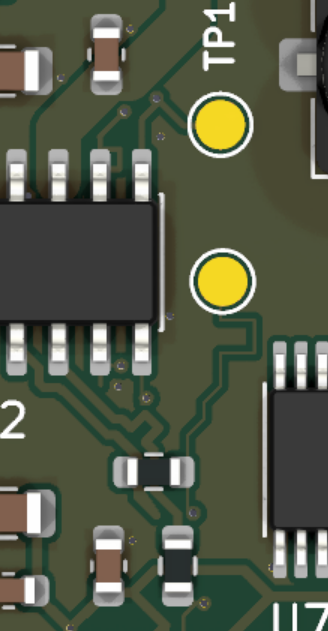
https://files.catbox.moe/nijoin.png
https://files.catbox.moe/suazr4.png
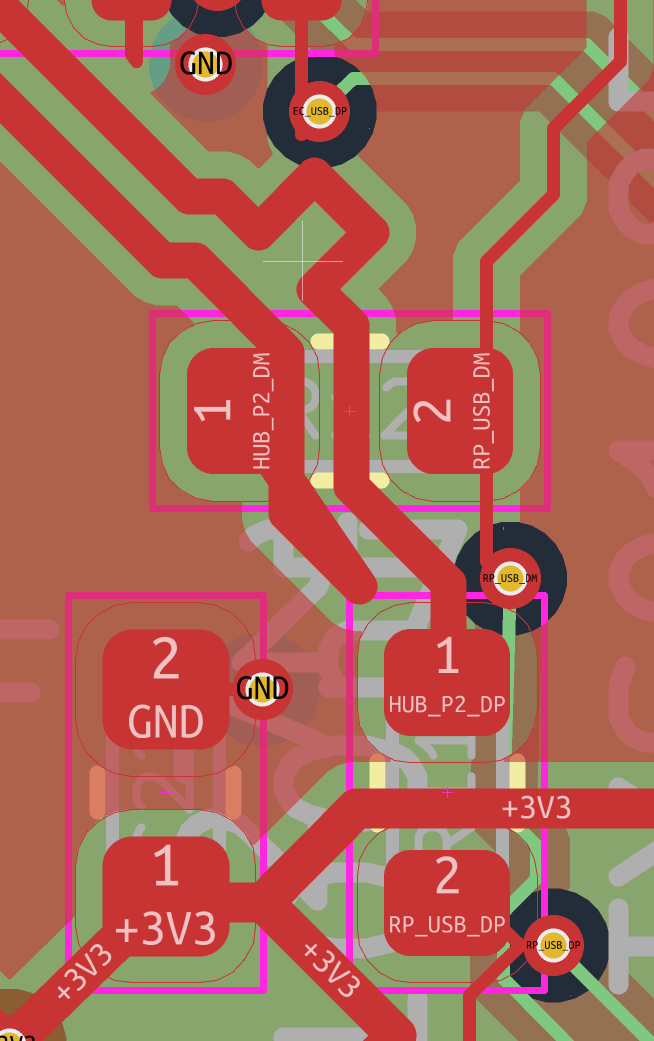
They sort of look sensible until you look closer and then the whole board is fever dream autorouting.
Comment by cowlevel 1 day ago
Comment by abijahkaj 1 day ago
edit: idk why my comments are being [flagged], i've written to hn but the issue is apparently still there
Comment by Neywiny 21 hours ago
Also some of the issues were on USB lines which hopefully aren't running at 2MHz.
Lastly, since you're coding it, maybe make it pull reference layouts+routing for power supplies from the datasheets. That's step 1 for any real eCAD student.
Comment by abijahkaj 20 hours ago
Comment by mh- 1 day ago
https://www.pangram.com/history/67234835-58ff-4603-ba17-2234...
Comment by mcculley 1 day ago
Comment by DaiPlusPlus 1 day ago
Comment by sellmesoap 1 day ago
Comment by wlesieutre 1 day ago
Especially now that they have their own modem and wouldn’t need to pay whatever royalties Qualcomm would demand, which I’ve read are based on the device price and would get very high on a premium laptop.
Comment by drum55 1 day ago
https://www.macrumors.com/2011/08/14/photos-of-a-prototype-m...
Comment by kotaKat 1 day ago
There's a reason they carefully have been bringing their own modem in via "weird" devices. The C1 came in on the 16e, C1X was the Air (phone+iPad), and they're finally confident enough to bring C2 to the mainline iPhones, but it seems like maybe not ready until C3 comes around next fall.
Comment by Vaushite 1 day ago
Comment by mycall 1 day ago
Comment by wolrah 1 day ago
A significant change that came with LTE is the use of OFDM as the base of the air interface, which means that cellular providers no longer need to allocate large segments of spectrum to one protocol or another. Towers that were upgraded from 4G to 5G didn't need to disable 4G or consistently split their spectrum between the two they way they did when upgrading from 2G to 3G or 3G to 4G, they can dynamically allocate subchannels in each mode based on the immediate needs of their users.
It seems unlikely that whatever technologies come in the future will regress in this way, so there shouldn't be a need for a hard cutoff at any point and I'd expect LTE devices to keep working for many generations to come.
Comment by retatop 1 day ago
Comment by cowlevel 1 day ago
Comment by DaiPlusPlus 1 day ago
I struggle to think of any system/scheme/protocol/spec/etc that promised this to have actually delivered. One can never predict the future.
Comment by mycall 16 hours ago
Comment by DaiPlusPlus 8 hours ago
Comment by gruez 1 day ago
Comment by cowlevel 1 day ago
Comment by gruez 1 day ago
Big enough that most carriers can't even launch 5G with its associated core network ("5G standalone"), and had to use the kludge of 5G + 4G core network ("5G non-standalone)
Comment by cowlevel 1 day ago
Comment by OJFord 1 day ago
Right, so if I'm still rocking 4G only while 'everyone' else in the area is using 6G with some other stragglers on 5G, ...
Comment by cowlevel 1 day ago
However new technologies sometimes also bring new spectrum blocks like mmwave 5G.
Comment by wolrah 1 day ago
You will keep receiving service until it becomes unprofitable to do so, same as always, but that time will be a lot further down the road than it used to be because there's basically no reason to care outside of congested cells where making the most of every bit of airtime matters.
If you're in a congested area, prepare for newer tech to be prioritized, often legitimately because the newer modes tend to be better at sharing the air and thus more users can be better served by prioritizing them on limited spectrum.
Comment by ChocolateGod 1 day ago
4G has become the new 2G when it comes to IoT etc.
Comment by whalesalad 1 day ago
Comment by efren6 1 day ago
Comment by abijahkaj 1 day ago
So this is a 4-layer USB-C board around a Quectel EC25-EUX. Behind a USB hub, the computer sees an LTE network adapter, the modem's AT serial ports (caller ID, SMS, answer), and an RP2040 acting as a USB sound card. The RP2040 bridges the modem's 1.8 V PCM audio through a level shifter. There's a 3.8 V buck sized for the 2 A GSM bursts, and no battery.
I wrote the spec as one page of text, and Koppar, the tool I'm building, generated the schematic and the board. Then I reviewed it against the datasheets. The review found a 35 Ω antenna feed that hopped layers, a buck 60 mm from its inductor, and a SIM socket facing into the board. The parts matching would have bought an 18 µH inductor for a 4.7 µH slot. REVIEW.md in the repo has all of it with the numbers.
Status: the boards aren't built yet. The repo is the design as I'm ordering it: KiCad 10 project, Gerbers, JLCPCB BOM and placement files. Bring-up and the sound-card firmware come next.
Happy to answer anything about the audio path or the power design, and I'd like to hear what you'd change before the first bring-up.
Comment by j45 1 day ago
Comment by wolrah 1 day ago
The only actual VoIP phone with a SIM card I'm aware of is the Yealink T74LTE which for a long time was exclusive to Verizon's business phone service but has recently become available for general purchase, those can support both SIM over LTE data and VoLTE (which is also basically SIP but over a prioritized channel).
Comment by Scoundreller 1 day ago
Comment by j45 1 day ago
It looked like an office desk phone but instead of Ethernet, a SIM card goes only. Some came with a cordless handset with it too. seeing
Comment by wolrah 1 day ago
Eww, I hate that such a thing exists. Everyone involved in its development needs their decision-making privileges revoked for anything more consequential than breakfast.
There is no good reason for an internet connected device to be cellular-only unless it's intended to effectively never be in "home territory". Every other such device should at least have WiFi so it's useful in areas where there is no cell service and doesn't need to use limited cellular spectrum even wheb there is service.
There is also no good reason for an internet connected device that's not expected to move while in operation to not have an ethernet port. It's unfortunately common amongst consumer-targeted devices (e.g. Nintendo Wii and a surprisingly large number of printers) but it's bad nonetheless. If it can reasonably be wired it should be wired, period. If it doesn't move and isn't in a weird spot, you need to have a really good reason why it can't be wired to justify using WiFi and "I don't like wires" has never been and will never be such a reason.
Comment by j45 21 hours ago
The reason why this product exists is for homes in places where there is no telephone or cable tv wiring to the house.
This is a massive part of the world and part of why the countries that didn’t have a wired setup in many cars jumped straight to wireless.