In the UK, EVs are cheaper than petrol cars, thanks to Chinese competition
Posted by breve 5 days ago
Comments
Comment by martinald 3 days ago
So it's far better to sell EV below cost (Chinese or not) to get more sold than have to a pay £15k for an ICE car.
The Chinese manufacturers are arguably at double advantage here as they have more BEV to sell so it's far easier for them meet the targets, and they can 'sell' the excess to the Western manufacturers (and further subsidise their EVs!).
I'm not personally against it, I got a brand new EV on a lease recently for close to free after all the tax advantages, and it's not like the Western manufacturers didn't have time to prepare...?
Comment by eterm 3 days ago
Comment by sega_sai 3 days ago
Comment by boznz 3 days ago
Not sure fast charging all the time is good for battery life though. 99% of my driving in NZ is on a normal 10A overnight charge
Comment by sigio 3 days ago
Comment by gib444 3 days ago
Comment by throwaway85825 3 days ago
Comment by Sayrus 3 days ago
Comment by Ekaros 3 days ago
Comment by subscribed 2 days ago
I'd love to have slow chargers built into the street lights. Not everyone owns a house, and the public charging usually meets or exceeds the petrol price per mile.
Comment by throwaway85825 2 days ago
For AC the rectifier is inside the car and the L2 chargers is just a fancy plug. Price should just be the base electricity cost.
Comment by m463 3 days ago
Comment by throwaway85825 3 days ago
Comment by rootusrootus 3 days ago
It's PG&E for the most part, and their huge liability payout for burning a city to the ground due to skipping maintenance on their distribution lines.
Some places in California have prices closer to the US average.
Comment by coryrc 3 days ago
Comment by bittercynic 3 days ago
Comment by m463 2 days ago
Comment by teamonkey 3 days ago
https://transportandenergy.com/2026/04/16/42-of-councils-to-...
Comment by throwaway85825 3 days ago
Comment by tshaddox 3 days ago
Comment by znkynz 3 days ago
Comment by AnthonyMouse 3 days ago
The same applies to workplaces, especially if solar causes electricity to cost less during daylight hours, and then it becomes convenient to get an EV if there is a charger where you park at night or where you park during the day.
Comment by znkynz 3 days ago
Comment by JumpCrisscross 3 days ago
The UK runs on 240V. A regular outlet would probably be fine.
Comment by nicoburns 3 days ago
Comment by moepstar 3 days ago
Comment by nicoburns 2 days ago
Comment by subscribed 2 days ago
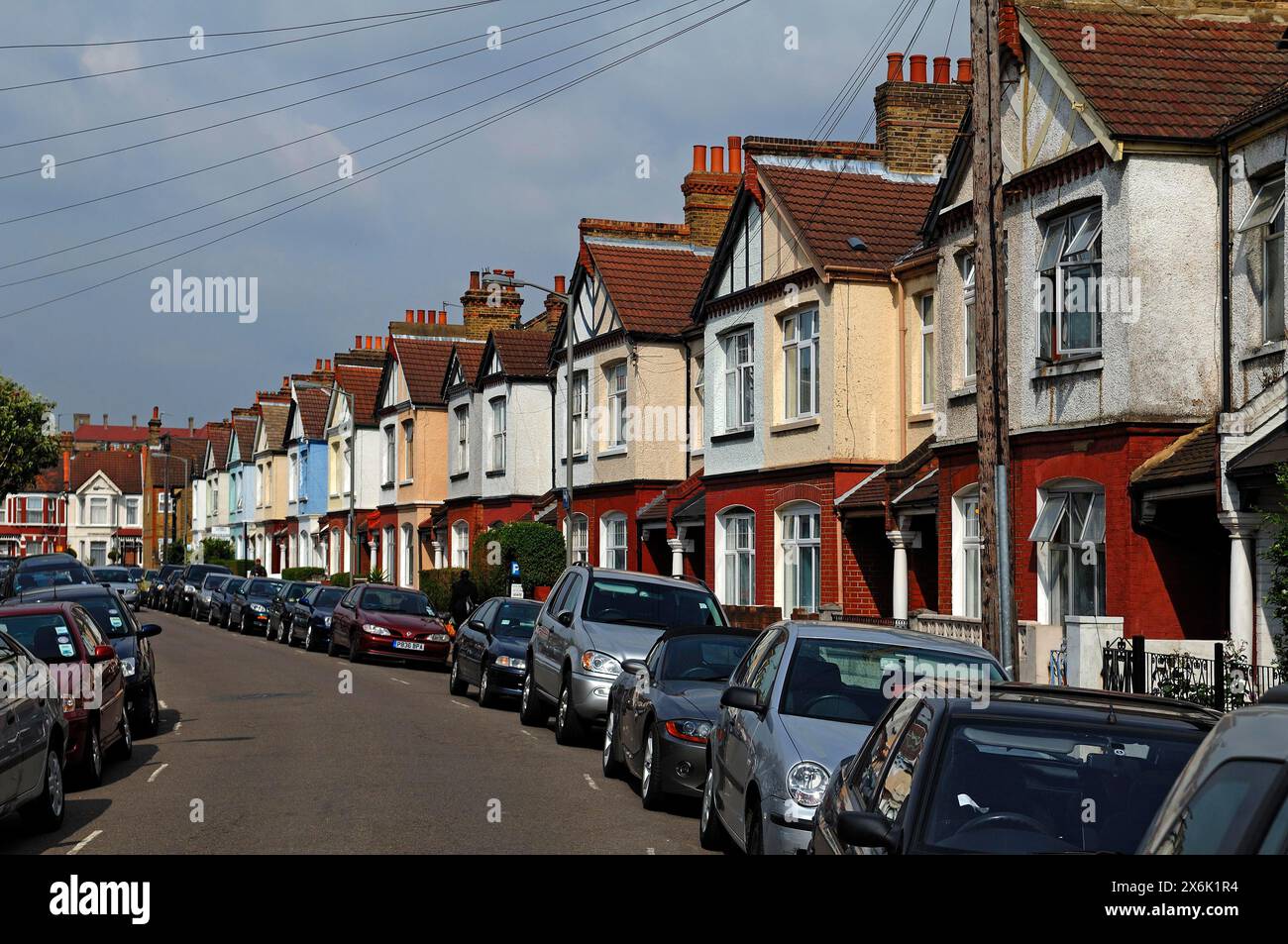
There's usually very little of the garage space available.
And this is how the typical street looks like: no way to charge at home: https://c8.alamy.com/comp/2X6K1R4/typical-english-terraced-h...
Comment by cogman10 3 days ago
Electricity is expensive in the UK (~25p/kWh) But not gas car expensive. It is £1.57/L (£5.94/gallon).
The EV infrastructure is also pretty dang far along, especially compared to the US. Remember that everything in the UK is a lot smaller and closer together than it is in the US. Further, the UK has a functional train system for long distance travel. You can go from the top of Dunnet Head to Lizard Point in a 15 hour drive.
People downvoting me, Look up chargers in plugshare to see just how many there are in the UK, it's a lot. And also correct my math if it's wrong. An 80kWh car costs £20 to fill up. A 55L car, which has about the same range, costs £85 to fill up.
Comment by teamonkey 3 days ago
Comment by throwaway85825 3 days ago
Cost to fill up doesnt matter, only the cost per mile.
Comment by btbuilder 3 days ago
Comment by subscribed 2 days ago
Annual train ticket form my small town (25 miles from the Zone 1 of London) is over £5,500. Five GRAND. For the pleasure of standing every time and a much higher risk of getting mugged.
£15k will give you REALLY nice bike or pretty new car. After third year you're saving thousands. Of course if you decided to buy something old and used, you're saving from the second quarter of the first year on.
It's only functional because not everyone can afford another car to work.
Comment by cogman10 2 days ago
It can be, depends on a lot of factors. Obviously flying ryanair will often be the cheapest way to go, but if you do any sort of other regular airline trains will quickly start to win out.
And it's not as if you can fly everywhere in england. As soon as you start looking at more oddball flights (for example, london to birmingham) ryanair goes away as an option and all the flights end up super expensive.
Trains, on the other hand, remain cheap for pretty much the entire nation. You can basically go anywhere by train for under £60. A lot cheaper if you book in advance.
Comment by graemep 3 days ago
Comment by eterm 2 days ago
Staff per passenger hour has got to be far higher in the airline industry.
Comment by Jblx2 3 days ago
Comment by throwaway85825 2 days ago
Comment by pstuart 3 days ago
Comment by blitzar 3 days ago
> The rate of tax will be 3 pence per mile for fully electric cars; this is around half of the 6 pence per mile the average petrol or diesel driver pays in fuel duty.
https://www.gov.uk/government/consultations/consultation-on-...
Comment by DangitBobby 2 days ago
Comment by DangitBobby 3 days ago
Comment by Detrytus 3 days ago
Comment by DangitBobby 3 days ago
Comment by rootusrootus 3 days ago
Comment by moepstar 3 days ago
My Model 3 (RWD SR+ 2023) is 1847kg unloaded weight, including driver.
Comment by hunterpayne 3 days ago
Comment by dalyons 3 days ago
Comment by diath 3 days ago
This won't happen unless they outright ban non-EV vehicles which is unlikely considering how many people are still using old cars and cannot afford new cars, how many car enthusiasts are there, and not to mention potential lobbying from big oil.
Comment by dalyons 3 days ago
Comment by Jblx2 3 days ago
Comment by rebolek 3 days ago
Comment by cogman10 3 days ago
For example, I have 2 gas stations within a mile of my home. They stay pretty busy because people around me constantly need to fill up. I, on the other hand, basically never visit either of those stations since I switched to an EV. I charge at home.
If everyone around me switched to EVs, those stations could not stay in business. There's a grocery store in the same area which makes anything those stations offer obsolete.
Those are the majority of gas stations that die with a mass switch over to EVs. There's a gas station for my hometown without an attached convenience store with 300 people there. There's no way that station stays in service if a significant portion of the community switches to EVs. It already struggles to be profitable as is (I know the owner).
Comment by otikik 3 days ago
Where I live (Spain) that's not the case at all - our towns are very dense. People in big cities tend to live mostly in flats (Europe's highest elevators-per-capita). Even people in the countryside, where it's more common to have a 1-family homes, often don't have a dedicated garage.
Comment by barbazoo 3 days ago
Comment by WD-42 3 days ago
Comment by MandieD 3 days ago
Comment by idontwantthis 3 days ago
Comment by decimalenough 3 days ago
Also, with Chinese manufacturers increasingly pushing out batteries capable of 1000+ km, you'll be able to charge fully at home for increasingly long road trips.
Comment by Jblx2 3 days ago
- Gas Station = retail outlet that sells and dispenses gasoline and other petroleum-based fuel products
- Charging station = place to charge your EV
Could be an interesting long bet. Will the number of retail locations selling gasoline in the UK in the year 2045 be higher or lower than in 2026?
Comment by Symbiote 3 days ago
I don't see how this is an interesting bet. No new petrol car will have been sold for 10 years. Places selling fuel for large lorries etc will last a bit longer, but these are already a fraction of the total.
Comment by throwaway85825 3 days ago
Comment by Jblx2 3 days ago
Comment by rootusrootus 3 days ago
Comment by medler 3 days ago
Comment by triceratops 3 days ago
Poor people don't buy new cars. New EVs being expensive is not a poor person problem.
Comment by hdgvhicv 3 days ago
The lowest end of the market won’t have electric cars unless the batteries are shagged (early Leafs)
And given how insanely cheap petrol is (15p a mile, so £450 for a low mileage runaround) the savings even if electric was free and they weren’t introducing a 3p/mile charge isn’t there.
Comment by cogman10 3 days ago
And, as it turns out, a brand new 50kWh battery costs around £4000 to manufacture. Used will be cheaper.
Comment by quibono 3 days ago
Comment by cogman10 3 days ago
Saying "It costs a lot of money to replace the battery" doesn't mean much as the battery, even if it has 70% of it's original capacity, is still perfectly functional. Very much the same as the engine which also costs a lot of money to replace.
Comment by quibono 3 days ago
Comment by g8oz 3 days ago
Comment by moepstar 3 days ago
Newsflash: you simply cannot "readout" the status of an engine, transmission, ...
But you can/could/should for a battery.
Now, someone hammer that into peoples brains...
Comment by joe_mamba 2 days ago
Really not true at all. Care to share your sources for this claim? Anecdotally, I've (plus friend and family) owned plenty of beater cars in that ballpark price, and none had failures needing to replace engine or transmission. Most of their faults came in the electronics (sensors, actuators, fuse box, wire harness) plus suspension, body rust, etc basically the same parts EVs also have.
Meanwhile, if you look up 'EV clinic' postings online, you'll see they find plenty of design failures with European and Korean EVs that are basically ticking timebombs(sometimes literally, hello Stellantis) where electric motors, inverters or battery packs are guarantee to fail in a short timeframe due to various design faults that were entirely preventable. Most common faults with poor EV designs I saw, seem to be the seal of the electric motor stator cooling which fails quickly leading coolant to flood the motor rotor killing it, needing a rebuild.
From what I gather from their analysis', the crux of this issue seems to be that some modern EVs, especially those less premium ones, are cost cut to the extreme in a race to the bottom to maintain shareholder value, both at manufacturing but also at design phase, leading to cut corners everywhere and such issues being a common occurrence and manifesting en-masse after their warranty runs out. From their analysis, IIRC Tesla's powertrains seem to be some of the most reliable and well designed, with the likes of Audi, VW, BMW, Mercedes being less so and Stellantis being trash tier.
Meanwhile, plenty of older ICEs are largely immune form such massive reliability faults, because they benefited from decades of industrial design and development experience done in a past era where race to the bottom cost cutting and planned obsolescence weren't yet a thing. So I wouldn't be surprised when an older 1500$ ICE car will last longer than a 1500$ EV.
Comment by hdgvhicv 2 days ago
Comment by XorNot 3 days ago
A logical future market is battery-refurbished EVs, just a question of where the crossover point is.
Comment by gerdesj 3 days ago
In contrast, my cheaper 'leccy rate is now about 25% less at 5.2p per kWh than it was. Electricity is weird in the UK - its pinned to the price of gas and is currently (lol) rather expensive "on peak" at 27.87p per kWh and there is a day standing charge of 47.71p. That's from Octopus.
We also have a petrol car - an elderly Renault Clio. It does just run and run and is pretty economic for a pretty shagged out ICE.
My EV is cheaper to run, by far. However, its unlikely the battery will last 20 odd years. I haven't yet sat down and done some whole life costs for ICE vs EV yet.
My Saic MG4 can do 300+ miles on a 100% charge of its 78kWh battery. After two years, it still manages to exceed its WLTP (with care, when required) and I quite like the ridiculous 0-30 acceleration etc.
Comment by laughing_man 3 days ago
Comment by rootusrootus 3 days ago
Given how long we have all been subsidizing ICE buyers, I think it is fair to spread the love around a little.
Comment by graemep 3 days ago
Comment by joe_mamba 2 days ago
Funny how their solution was to subsidize burning fossil fuels for car commutes to the office instead of, oh I don't know, MANDATING WFH!, given Germans are such staunched green environmentalists. Sure, let's turn off nuclear and ban plastic straws, but let's also subsidize the generation of diesel, brake pad and tire fine dust particles we breathe in, for commuting by car to work. We can't forget our car industry lobbyists.
Comment by graemep 2 days ago
Comment by bzzzt 2 days ago
Comment by graemep 2 days ago
I live in the UK where we pay heavy taxes on fuel and we pay higher taxes on vehicles with higher CO2 emissions.
Comment by bzzzt 1 day ago
Comment by rootusrootus 2 days ago
But put a $7500 point-of-sale rebate on an electric car and people go nuts. So the solution is either make the EV subsidy less obvious, like we do for fossil fuels, or try to educate people on where their tax dollars actually go. The former is more feasible, certainly, in the modern political environment where ideology rules over facts.
Comment by graemep 2 days ago
The subsidies you talk about are US specific and was in rely to one about ICE buyers subsidising EV buyers in the UK.
In the UK we pay heavy fuel duties and car taxes so ICEs have not been subsidised any time recently, but, have been very heavily taxed.
There is no fairness in taxing UK ICE owners for subsidies received by American ICE owners.
Comment by youngtaff 2 days ago
ICE cars are already hugely subsidised by ignoring the health issues they cause e.g. air pollution
What we really need in the UK is better mass transit systems in cities and their commuter zones to remove cars from the roads
Comment by graemep 2 days ago
Comment by idiotsecant 3 days ago
Comment by nslsm 3 days ago
Comment by polyphemus_rm 3 days ago
Do happen to have a link for how the "brand new EV on a lease recently for close to free after all the tax advantages" works in the UK?
Comment by martinald 3 days ago
If you're in the higher tax brackets this means a £200/month lease (say) ends up more like £90/month.
And because of the "new" £3kish subsidy the govt put in, the car finance companies seem to basically apply that as a big discount to the lease value (or it seems that way?). So you could get a brand new ~£30k EV with no upfront payment and a 2-3 year term for <£100/month including maintenance. Mine even came with a free car charger install at home.
Comment by gnfargbl 3 days ago
For an ICE car the government claws this money back through hefty "Benefit In Kind" taxes placed on employer-provided vehicles, but as an incentive to drive adoption the rates on EVs are only 3% of the car's nominal purchase price (and you only actually pay up to 45% of that 3%).
It doesn't work out "free," but it's typically as cheap to lease a new EV through this scheme as it is to pay the depreciation on a used ICE.
Comment by pkaodev 3 days ago
Comment by martinald 3 days ago
Comment by subscribed 2 days ago
Comment by gnfargbl 2 days ago
If the employer leases the car themselves and provides it to you as a benefit, it can be good value -- but then someone has to own the risk of you changing jobs.
Comment by subscribed 2 days ago
The reasons are:
- the provider is absolutely bonkers, and employing idiots, offering as "in stock" car models twice since updated or discontinued
- the provider is offering the cars at the very steep price, entirely eating the tax advantage
- on top of that id have to pay BIK tax
- and lastly I'd have no choice of choosing the insurance provider, which results in any damage covered by me not covered, and the company itself having absolutely atrocious reviews (ex customers claiming they've been "fined" for the normal wear and tear (eg tiny windscreen chips))
Comment by cjs_ac 3 days ago
The Honda Super-N EV will also be released in Australia, New Zealand, and other countries in Southeast Asia that were also British colonies: this decision has nothing to do with tariffs and everything to do with left-hand-drive vs. right-hand-drive.
Comment by seanmcdirmid 3 days ago
Well, you also see them in the Russian far east which gets a lot of used cars from Japan.
Comment by lmm 3 days ago
Comment by NamTaf 3 days ago
I briefly worked on doing LHD-to-RHD car conversions and the devil was definitely in the detail.
Comment by the_sleaze_ 3 days ago
Comment by testing22321 3 days ago
He is not even hiding the fact US automakers make a more expensive inferior product, but that US consumers should not be allowed have the superior one.
Comment by JumpCrisscross 3 days ago
I'm a strong advocate for giving Chinese EVs an import quota per manufacturer (with a 1.5mm-unit annual cap on total Chinese EV imports, downgradable to 1mm in a recession, representing about 10% of demand).
This gives American consumers–and designers–access to and a taste for what the competition is doing. But it preserves a moat for our own producers.
Comment by century19 3 days ago
Comment by prewett 2 days ago
Comment by mchusma 3 days ago
Comment by Ifkaluva 3 days ago
Comment by tonyedgecombe 2 days ago
This was widely predicted by economists at the time, even by the few Brexit supporting economists.
Comment by barbazoo 3 days ago
Comment by cpursley 3 days ago
Comment by tshaddox 3 days ago
Comment by rootusrootus 3 days ago
Comment by testing22321 3 days ago
Comment by hunterpayne 3 days ago
Comment by adrian_b 3 days ago
Perhaps many of these claims are true, but at least in USA I also see huge amounts of subsidies for a lot of products, which are never compared with the Chinese subsidies.
I have never heard about any significant investment in some factory in the USA, which was not conditioned by very large reductions in taxes for that company. I do not see any difference between this and any subsidies that China might have.
Even if there might exist some kind of subsidizing system for electric vehicles in China, there is no doubt that there exists healthy competition between many Chinese companies, so they continuously innovate in EVs, while much less efforts in this direction can be seen in countries like USA, who claim to be scared by the Chinese "unfair" competition, but they seem to do very little or nothing to reduce their technical inferiority.
Comment by testing22321 3 days ago
At least the Chinese got good cars from subsidizing their auto makers. Americans just got ripped off.
Comment by cataphract 3 days ago
But of course the US (or Canada) can't justify their 100% duty in those terms, so they don't even try.
Comment by dalyons 3 days ago
Comment by drstewart 3 days ago
Comment by mig39 3 days ago
https://nationalpost.com/news/massive-risk-chinese-evs-are-t...
Hopefully this means competition with the other EV manufacturers in Canada too.
Comment by jml7c5 3 days ago
Comment by testing22321 3 days ago
Comment by nickserv 3 days ago
Comment by graemep 3 days ago
Also, take a look at the reports on the knock on effects on suppliers of the JLR hack.
Comment by dalyons 3 days ago
(And before the inevitable “but Chinese subsidies” comment - update your talking points, subsidies no longer happens to any meaningful degree)
Comment by dzhiurgis 3 days ago
Actually somewhat surprised we still even have legacy auto in top 10.
Comment by amelius 3 days ago
Comment by dingaling 3 days ago
https://www.forcesnews.com/news/warning-mod-staff-amid-fears...
"Warning stickers banning military workers from discussing sensitive information have been placed inside the Ministry of Defence's electric cars, as fears grow that China could be listening."
Comment by seanmcdirmid 3 days ago
Comment by cpursley 3 days ago
Comment by rationalist 3 days ago
Comment by cpursley 3 days ago
Comment by uni_baconcat 3 days ago
Comment by shimman 3 days ago
Comment by uni_baconcat 3 days ago
Comment by shimman 2 days ago
It's yet to be seen if Chinese companies will be as civilization destroying as US companies, but the bar is literally rolling on the floor now and all the dice seem to be rolling in China's favor due to the US unable to control their elites that are sucking society dry.
Comment by rationalist 3 days ago
You're right, I guess it is only just slightly more lazy than writing the whataboutism.
> if the Chinese want to hurt "US" they have plenty of other ways to go about it.
Another what aboutism...
Why should those other national governments move away from Microsoft, the U.S. has other ways to hurt those countries.
Comment by cpursley 3 days ago
Comment by rationalist 3 days ago
You're incorrectly assuming I don't want something reliable that's safe for the environment in an attempt to make me look bad because you're defaulting to attacking the person instead of the message.
Comment by rationalist 3 days ago
Comment by ab_testing 3 days ago
https://www.lingscars.com/car-lease-deals/?fuelTypes=electri...
Comment by Arbortheus 3 days ago
Comment by youngtaff 2 days ago
Comment by aunty_helen 3 days ago
Comment by izacus 3 days ago
Comment by dzonga 3 days ago
statements like these are what turn some people away. cz they're not sincere.
you can easily compare the costs between models within a manufacturer - BMW ICE version vs Electric version
& on a head to head basis the old guard of auto makers e.g BMW, Mercedes make better vehicles than Tesla.
Comment by rootusrootus 3 days ago
Comment by ilamont 3 days ago
Do they operate like Tesla, or can indie garages handle repairs? How long are warranties?
Comment by century19 3 days ago
Comment by canbus 3 days ago
Comment by renewiltord 3 days ago
Comment by youngtaff 2 days ago
People who receive PIP can choose to use to lease a car from Motability which is an independent scheme
Those people could equally choose to have an ICE car
Comment by schnitzelstoat 3 days ago
Comment by gib444 3 days ago
Comment by Sweepi 3 days ago
  BYD: 17%
  Geely Group: 19%
  SAIC Group: 35%
  Tesla (Shanghai): 8%
  XPeng, Nio, ...: 21%
  Others: 35%
[2] https://eur-lex.europa.eu/legal-content/EN/TXT/PDF/?uri=OJ:L...
Comment by schnitzelstoat 2 days ago
I can't remember if plug-in hybrids are exempt as well or only conventional hybrids.
Comment by gib444 2 days ago
Loads of Teslas and BYD in Lisbon too
Comment by JPKab 3 days ago
Both Labour and the Conservative parties seem to have resigned the nation to only being a financial hub.
Comment by nickserv 3 days ago
Typical case of short sighted capitalism.
Comment by Devasta 3 days ago
Comment by hermitcrab 3 days ago
Comment by cpursley 3 days ago
Comment by arjie 3 days ago
A friend's dad just restored his ancient MG up here in California and it was funny to me to see that car and then go up to Hong Kong and see the modern incarnation of the same marque.
Comment by cpursley 2 days ago
Comment by hermitcrab 3 days ago
I knew someone who owned one of the original MGs. They used to drive around with a boot (trunk) full of tools, for when it inevitably broke down.
Comment by tremarley 3 days ago
Comment by gib444 3 days ago
Any article that doesn't mention the cost of motorway/dual carriage way electric charging is being disingenuous. PAYG is 75-90p/kWh currently. Tesla superchargers with a subscription 57p/kWh (you'll pay with time, due to being busy)
And do you think when EV ownership becomes more popular, the 4p/kWh home charging rate is going to stick around? That is an insane discount compared to daytime electricity.
The UK does not have a good, cheap solution plentiful cheap electric in the next decade or two, so any major increase in demand will mean even higher costs.
Comment by youngtaff 2 days ago
Of course it does… the UK has tariffs that change by electricity demand and supply capacity
As we build out more renewables there will be more times of excess supply and hence cheaper electricity during these times
The buildout of battery storage and north-south inter-connectors will reduce this fluctuation but it’ll still be there
Over time the UK is going to switch it’s pattern of electricity consumption
Comment by gib444 2 days ago
An almost guaranteed reply
Comment by storus 3 days ago
Comment by ggm 3 days ago
It MAY make their disadvantages more pronounced, it MAY off set the specific EV advantage of operational cost compared to ICE. But, ICE are not some ground zero untaxed state, and other tax choices will alter the relative preferences and advantages AT THE TIME.
You can't compare tax now to tax "then" and argue "then" was fairer, if the tax then was on Horses.
Comment by century19 3 days ago
Comment by ggm 3 days ago
Comment by storus 3 days ago
Comment by ordersofmag 3 days ago
Comment by storus 2 days ago
Comment by ggm 3 days ago
Your "possibly increasing over time past the ICE indexation" is very cynical but I would be in the worlds of ad hom if I carried on. I don't think you are here argung in good faith, if thats your basis of reasoning.
The surveillance and remote control is frankly unrelated to ICE/EV because pretty much all high end ICE cars have a SIM these days.
An 11 month out account with low karma posting inflammatory responses, I would be tempted to say you're karma farming for some other outcome.
Comment by storus 3 days ago
I drop my HN accounts when they reach certain karma threshold so that I am not surfing on my past successes but keep relevant in the present. I think you have the collector approach instead and use it as a weapon.
Comment by ggm 3 days ago
Comment by storus 3 days ago
Comment by ggm 3 days ago
Why don't they e.g. do this with the BMW ICE cars which carry a SIM card?
Remember its the deploying state we're talking about, not the specific risk of BYD being under control of the CCP. Your response implied all EV in the UK, are part of a plan to supervise/monitor use of EV cars, not the foreign actor risk as I understand it.
Comment by eucryphia 3 days ago
FIFY.
Comment by g8oz 3 days ago
Comment by CharlesLau 3 days ago
Comment by yanhangyhy 3 days ago
Comment by CMay 3 days ago
Not very free market. It's basically military and intelligence budget combined. If you can hurt auto manufacturing, you further consolidate manufacturing inside China. Then if you can get people to pay for you to spy on them through their own cars, that's well spent intelligence budget. If you reduce the portion of global manufacturing outside of China, you reduce the amount of manufacturing that can quickly pivot to wartime production like we saw during World War 2.
I'm glad that we still have sane enough people in the US that we ban these obvious and transparently bad things. It wasn't that hard to see free trade died.
Hopefully people don't still think that China's green energy initiatives are about the climate. Whatever you think about those initiatives, don't let that blind you to the legitimate questions around China's motivations.
Comment by mytailorisrich 3 days ago
Comment by protocolture 3 days ago
>Not very free market. It's basically military and intelligence budget combined. If you can hurt auto manufacturing, you further consolidate manufacturing inside China. Then if you can get people to pay for you to spy on them through their own cars, that's well spent intelligence budget. If you reduce the portion of global manufacturing outside of China, you reduce the amount of manufacturing that can quickly pivot to wartime production like we saw during World War 2.
The most dangerous nation on the planet, that threatens everyones national security is the USA. And thankfully we averted this risk by basically demolishing their car industry. Its honestly asias gift to the planet. China cant project power anywhere nearly as well as the US, so on balance, they are vastly the more preferable partner for this data.
>I'm glad that we still have sane enough people in the US that we ban these obvious and transparently bad things.
Lmao. Freedomburgerland summed up in one sentence.
>Hopefully people don't still think that China's green energy initiatives are about the climate.
Chinas green energy initiatives are both soft power, and sustainability for a massive population. They only care about the environment as far as it impacts on them economically.
>don't let that blind you to the legitimate questions around China's motivations.
China is the most stable superpower we have. We are right to be suspicious, but honestly the century of American humiliation is playing out pretty well for them without them having to do much of anything.
Comment by CMay 3 days ago
The cars used to be awful, but it's not surprising that they improved. I didn't say anything about the quality of the cars. If the CCP didn't have an iron grip on that country, maybe I would eventually think about them as favorably as Toyota or other Japanese brands. After all, Japan was an enemy and became a great ally with popular culture pervading the US.
> The most dangerous nation on the planet, that threatens everyones national security is the USA. And thankfully we averted this risk by basically demolishing their car industry. Its honestly asias gift to the planet. China cant project power anywhere nearly as well as the US, so on balance, they are vastly the more preferable partner for this data.
That doesn't accurately represent history and nobody serious will make the argument you're making. Culturally, the US is very isolationist. The reason we expand bases around the world is to reduce war (attacking a country with a US base on it is a bad idea, which is a deterrent) and to react quicker to war when it does happen (logistical efficiency). If nobody pushes back, it makes the next world war more likely to drag us in which costs lives.
If we're militarily involved somewhere, there's generally a good reason. It's like firefighting to prevent the whole thing from being engulfed and collapsing. War has a way of normalizing and spreading. Did we start World War 1? World War 2? Vietnam war? Korean war? What were we reacting to with Iraq, Afghanistan, Venezuela, Iran? Do you understand the historical events that resulted in those conflicts? Can you enumerate them?
Do you understand how similar today is to the beginnings of World War 2? Do you know what World War 2 was actually about? Communist Russia was using Marxist communist revolution and political parties in countries around the world to try to achieve global communism, and at the time Russia was doing a massive build out of military that had many countries worried. They had more military hardware than all countries combined including Germany.
Marxism was attacking religion and cultural heritage, which is what spurs these religious racist fascist backlashes. That sat on top of and amplified the industrial trade and power imbalances that remained after World War 1.
Russia's expansion was a combination of weaponized psychological Marxism (it evolved beyond just bottom-up revolution and into a top-down tool of the Russian state). It caused Japan, Germany and Italy to see it as an existential crisis which amplified their race for resource control to prepare to fight back against the eventual final war against Russia. Early CCP members were part of Russia's comintern.
Now we have China creating the most rapid military build-out in history while the CCP is realigning to hardcore Marxist-Leninist purity, on a purging rampage. Russia purged its military not long before invading Poland and Finland.
So, you'll have to excuse me if I don't find your argument convincing that China is the stable power, which is logically incorrect for far more geopolitical reasons than only this.
Comment by verteu 3 days ago
"The primary rationale for the invasion centered around false claims that Iraq possessed weapons of mass destruction (WMDs) and that Saddam Hussein was supporting al-Qaeda. The 9/11 Commission concluded in 2004 that there was no credible evidence linking Saddam to al-Qaeda, and no WMD stockpiles were found in Iraq."
Comment by CMay 3 days ago
Comment by protocolture 3 days ago
You appeal to history but just compare all the aggressive wars started by the USA vs China since WW2. Tell me who to be more scared of.
China hasn't even done much more than pay lip service to Marx since Deng anyway. They are just the most stable, reliable capitalist superpower right now.
Comment by CMay 3 days ago
Just because you were told that the US has no intent or purpose behind its actions, doesn't mean it's true. Do you somehow believe that every country has reasons for things, except for the most powerful country in history? If so, that is a very unreasonable belief.
Some people are taught to hate the US, some people are taught to love the US, others are taught to think for themselves.
Marxists were openly interested in global imperialism, it's just that it was psychological imperialism backed by military follow-up.
I would like to see China as neutral-good and look at some Chinese brands as if they were a Sony, LG, Samsung, IKEA, Spotify, TSMC, etc. Unfortunately that is not possible: https://www.csis.org/analysis/new-challenge-communist-corpor...
Vietnam is communist too and they aren't always treating their people the best either, but they haven't been showing a lot of obvious signs of trying to expand physically or ideologically.
> China hasn't even done much more than pay lip service to Marx since Deng anyway. They are just the most stable, reliable capitalist superpower right now.
Reformists have been getting purged. There was a time where we could imagine China giving up on Marxism, but that may be less likely now.
Comment by protocolture 2 days ago
Is that what happened? That feels like a massive stretch considering who the US backed in the Chinese civil war.
>Since we made the decision to allow China into global trade
Thats another great example. The USA only ever serves to damage global trade. Really good point well made.
>Just because you were told that the US has no intent or purpose behind its actions, doesn't mean it's true.
Lmao.
> Do you somehow believe that every country has reasons for things, except for the most powerful country in history? If so, that is a very unreasonable belief.
The USA has reasons, they are just usually incredibly sucky reasons. And then hawks come in after the fact and make up retrospective reasons to try and justify further dumb interventions. This process is what makes the US extremely dangerous to world peace.
>Some people are taught to hate the US, some people are taught to love the US, others are taught to think for themselves.
Real "I am a dangerous free thinker" shit.
> Marxists were openly interested in global imperialism, it's just that it was psychological imperialism backed by military follow-up.
And you see that ideology as a threat to US Global Imperialism, and you have internalised US Global Imperialism as part of your personality, I get it.
>I would like to see China as neutral-good and look at some Chinese brands as if they were a Sony, LG, Samsung, IKEA, Spotify, TSMC, etc. Unfortunately that is not possible: https://www.csis.org/analysis/new-challenge-communist-corpor...
The difference between this and something like the US All Writs Act, or Australias Access and Assistance bill is super negligible. Just the overt trappings of single party politics really differentiate it. The US, and its allies are equally capable at compelling corporate action. I know its scary when the red guys do it, but if you want me to care about this, you would need the US and friends to not be leading the charge.
>Reformists have been getting purged. There was a time where we could imagine China giving up on Marxism, but that may be less likely now.
I could literally sit down, go through every single piece of Chinese history for the last 20 years and recontextualise it for a US audience. The problem is largely that you dont believe in their legal system. And fair cop, just like the national security courts in the USA theres literally no oversight. So when they disappear someone in the government, and claim they were a traitor, you say that's bad. Fair enough. But thats just noise to me. Because I dont trust the US legal system either. The purges are sold internally as fighting dissent and corruption. If the US government took precisely the same action with precisely the same justification you would be clapping like a seal, and trying to convince others using your "dangerous free thinker" powers.
Reality is Xi is getting rid of his internal enemies. He is very good at this. This isn't necessarily leading to more or less marxism, just determining how long we will be dealing with Xi.
Comment by CMay 2 days ago
China, the US, Germany and Japan were all fighting against cultural genocidal Marxism which had global domination ambitions. It's a matter of historical record. There were dictators on both sides, but not all dictators are created equal. Both Germany and the US were helping provide supplies. The problem is that Japan and Germany got so fanatical and expansionist themselves that they became the bigger threat.
We are lucky that there are incredibly incompetent people in charge of Russia and China, but if Japan and Germany had sufficiently expanded into Russia and China to gain the resources they needed, that would be too much geographic power to allow their respective ideologies to have.
My point in this thread is essentially that the CCP has never ended its war in support of communism and while the era of the tank has largely ended, we now have EVs rolling straight through the middle of cities unopposed. Arguably every bit as useful as rolling a tank down to the capitol.
> And you see that ideology as a threat to US Global Imperialism, and you have internalised US Global Imperialism as part of your personality, I get it.
People knew what life was like inside Soviet Russia. It wasn't free, life sucked. Nobody wanted that to happen to their country. If Marxists gained control of enough global resources and continued to build giant militaries to expand with then they posed a legitimate risk of erasing freedom worldwide.
The US has never been about imperialism in the way you think of the British Empire, the Russian Empire or the Chinese Empire. You're only applying a naive filter by suggesting land empires aren't real empires, only ocean empires are real empires. All of the other empires have been actually imperial, with kings, emperors and so on. It's not really accurate to call the US a religious empire even, but it was a country formed anew with deep understanding of the problematic cycles the world has faced for thousands of years.
There are scenarios where we have critical interests like Panama, Hawaii, Guam, Cuba, Puerto Rico, Greenland, etc, but it's not like we're in these places enslaving their populations and preventing them from knowing the truth. If we were a true British or Russian style empire with endless ambition, the US could have wrecked Germany and Japan, then gone on to finish China and take over Russia, capture all of the middle east, steamroll south america and so on. If we are an aggressive empire, then we have been extremely judicious relative to the amount of projection power we have.
After World War 2, we invested in the rest of the world to help it recover. Why do that when we could've just steamrolled a weak and battered world? Because that's not how we think.
The only reason we're using more of our leverage lately, is because we're countering the things Russia and China are already doing and we're not being ignorant about the threats that are being posed.
> The difference between this and something like the US All Writs Act, or Australias Access and Assistance bill is super negligible. Just the overt trappings of single party politics really differentiate it. The US, and its allies are equally capable at compelling corporate action. I know its scary when the red guys do it, but if you want me to care about this, you would need the US and friends to not be leading the charge.
The US does not require companies to hire political and intelligence minders. It would be like the US requiring a company to align with Republican politics, even if their company wasn't politically minded. We see this kind of wild stuff in radical Islam, where the religious law must be enforced, so religion and state are one. In China, it's more than nuance around a one party state, it is that the politics and the state are one, because Marxists believe that all social action is political action and so social action must sufficiently adhere to Marxist principles. It's just not realistic to enforce this at the lowest levels, so some version of CCP interests are imposed at the company level.
You can point to various laws, but it depends on the spirit of the law and how those laws are actually being implemented in practice. Next to Iran, China leads the charge globally in sociopathy around this particular issue, I'm sorry to say. So, no, you can't normalize it like China is just doing it, because the US is doing it. We're absolutely not doing it the way you are imagining.
The closest thing is when there is military-civil public/private fusion, which is for defense purposes in specific critical areas, but it's not about political compliance as much as it's about national security.
The CCP thinks the survival of the CCP itself is national security. In the US, if you got enough support you can make a new political party.
We do have scenarios where organizations that get a lot of public funding can be required to change some of their policies which can be close to political enforcement, but it is optional for organizations to receive public funding. They have to decide if they're committed to whatever their political thing is enough that they like it more than the money. It makes sense that if public funding is going towards anything that is considered political, it needs to be evaluated whether the state should be doing that since it risks a self-reinforcing cycle that can politically weaponize the state against itself into some kind of one party system.
I've never said the US is perfect, but it's very cheap to point at some random thing in the US that looks vaguely duck-like and say look, you taught us about ducks! It's especially weak when you're trying to defend the goodness of your country and think of the US as bad, but then you use the US as an example for why you're doing something? What China does is much closer to the political radicalism of Nazi Germany or the Soviet Union than the US.
> I could literally sit down, go through every single piece of Chinese history for the last 20 years and recontextualise it for a US audience. The problem is largely that you dont believe in their legal system. And fair cop, just like the national security courts in the USA theres literally no oversight. So when they disappear someone in the government, and claim they were a traitor, you say that's bad. Fair enough. But thats just noise to me. Because I dont trust the US legal system either. The purges are sold internally as fighting dissent and corruption. If the US government took precisely the same action with precisely the same justification you would be clapping like a seal, and trying to convince others using your "dangerous free thinker" powers.
Of course when you've been immersed in the kool-aid of any given system you get used to it and start to rationalize things like "well, the world didn't end after this and it happens a lot, so I guess it's ok". Being desensitized to it is a risk.
The difference is that our justice system succeeds far more than it fails. Journalism can get a little warped, but when one journalistic outlet goes crazy and becomes useless there are others you can look to instead. In China, so many political things are considered national security that you don't have the right to even be accurately informed about political things occurring. Essentially, this is like if Democrats started jailing Republicans for basic vanilla conservatism, but then also jailed any journalists that reports on it in a way that was not aligned with the Democrat party line.
Look at what Venezuela, Cuba, Iran and Russia do with their political opponents. China is that with a little more sparkle at a much larger scale with extreme censorship. When you are raised in a system like that, your ability to even know what is true is degraded significantly since it has been curated in advance to be more favorable to the CCP.
Comment by watwut 3 days ago
With Iran specifically, it was Epstein files and wish to look masculine. Operation masculine insecurity, if you want. With Venezuela, it was wish to get some extortion money for Trump and wish to look like cool manly man.
From those four, only Afghanistan we reaction to outside world rather then deranged internal politics that just must have war.
> Do you understand how similar today is to the beginnings of World War 2?
It was about gaining living space for Germans at the expense of other countries. It was also about gaining world domination by Germans, extermination of all Jews as fast as possible and eventual extermination of eastern Europeans in about two generation (the plan was to prevent their breeding).
Comment by litbear2022 3 days ago
Comment by muyuu 3 days ago
For people with a garage or a driveway who can charge at home, EVs are overwhelmingly a better option. The problem is that large swathes of the population are outside of that and you're making their lives miserable by punishing ICE car ownership.
Meanwhile, adoption numbers are thrown about ignoring that for those in optimal conditions, adoption is already very high and cannot grow much more. While for those particularly misaligned with the strengths of EVs, it will often be so painful to own one they will resist with everything they have, and in many cases they will have to admit defeat and stop driving altogether. Which I guess the government will also be content with. But it will take some time.
*typo
Comment by cameronh90 3 days ago
The reason for the EV nudging is it's a chicken and egg problem. The government doesn't want to run a national charging network themselves for obvious reasons, but private investors don't want to build it out either until it can make money.
So they've been trying to fix it from both sides, both by incentivising EV ownership and encouraging EV charging infrastructure. They're also trying to make charging at home easier, even if you don't have a driveway, by installing those little channels you can run the cable through.
Yes, the government are putting their finger on the scale in favour of EVs. Nobody's pretending they aren't. If combustion taxes were as high as they need to be to account for the externalities, the economy would collapse, but we need to get off ICEs for myriad reasons. Seems like they're doing a pretty good job overall and the main problem is just our high electricity price.
Comment by muyuu 3 days ago
Comment by cameronh90 3 days ago
Comment by muyuu 1 day ago
things visible and invisible are decided by our betters, with or without our consent
Comment by bee_rider 3 days ago
Petroleum companies also get a lot of subsidies—especially if you count implicit things like the cost of cleaning up all this carbon, and oil based geopolitical problems.
Comment by tshaddox 3 days ago
It's obviously not ideal to have an EV if you can't regularly charge at home or at work, but "making their lives miserable" seems like a bit of a stretch. Instead of spending 5 minutes a week filling up at the gas station, you'll spent 30 minutes a week at an EV charging station.
Comment by rootusrootus 3 days ago
And for a lot of people that can be 30 minutes at a grocery store where they were going to be for 30 minutes anyway. The nice thing about using the grid for fuel is that we have way more flexibility to refuel anywhere we want.
Comment by muyuu 3 days ago
I rent EVs every couple of years, last time it was recently, just to see how things are evolving. Since anyway it's clear where policy is going. Whatever you think about said policy. Right now, they're lovely commute machines if you can charge at home.
Comment by Thlom 3 days ago
Comment by bzzzt 2 days ago
Only when it's one of the more expensive 'long range' models, weather is good and it doesn't exceed 100km/h.
Comment by muyuu 3 days ago
Second hand EVs devaluation is not a product of anecdote. It reflects the current state of the market.
They are a different product and they're great at what they do. In fact, for those in the market for them, "nudging" (state coercion) is not necessary at all.
Comment by Barrin92 3 days ago
the UK is a small country. The average British driver drives 20-30km per day. One full EV charge almost gets you through England South to North. If you're putting a bunch of charging stations next to workplaces for people to charge once or twice per week that's going to cover most drivers.
Comment by muyuu 3 days ago
Comment by subhobroto 2 days ago
I think that's the plan - force adoption and double down on the misery so that people forcefully invest into building infrastructure that otherwise wouldn't have.
In other words, you're synthesizing demand. It would be extremely interesting to see how it works out! In my limited experience, these synthetic initiatives explode in costs because it lets grifters, scammers and arbitragers defraud the synthetic demand side (due to the lack of a real free market system which is naturally self calibrating and managing).
One thing that I wonder about - unlike in the U.S. where gas is cheap, my understanding is that it's around $10/gal around most of the E.U. right now? If so, what's stopping people from running towards EVs naturally?
- Is it just the lack of charging infrastructure?
- Is it because most people in the E.U. live in dense areas where it's hard to setup charging infrastructure?
- Is it because most people in the E.U. live in dense areas where public transportation is cheap on a unit "per head" basis making local governments hesitate to invest in charging infrastructure directly?
- Is it that over-regulation in the E.U. make it extremely difficult to build charging infrastructure in the first place?
From a U.S. perspective, I would imagine that most of the U.S. (especially rural and suburban US) would switch to EVs overnight if Chinese EVs were allowed to flood the market. A lot of cities in the U.S. are accommodating literally golf carts on their streets so a $10k brand new Chinese EV that you could plugin is likely to sell like hotcakes.
Comment by muyuu 1 day ago
right now, petrol goes for ~£1.5 per litre and diesel for £1.90
that is converted to US gallons and US currency, $7.67 for petrol (gasoline) and $8.99 for diesel
> From a U.S. perspective, I would imagine that most of the U.S. (especially rural and suburban US) would switch to EVs overnight if Chinese EVs were allowed to flood the market. A lot of cities in the U.S. are accommodating literally golf carts on their streets so a $10k brand new Chinese EV that you could plugin is likely to sell like hotcakes.
Suburban, sure. I'm not sure about rural, esp in the colder areas, because it takes significant investment to deploy the amount of energy you would need to heat vehicles and still have range, so it would take a bit longer.
The main reason the market is not being taken over by cheap Chinese EVs, is that despite the best efforts from our government to destroy the ICE car industry, it still is a MUCH better product for certain niches of the market that are quite significant. So you keep punishing those people for no good reason, while the people who are a perfect fit for EVs already have them.
Meanwhile policy is all over the place with new taxes for EVs specifically paid by the mile because they are heavy and they don't pay enough road tax, and they also don't pay petrol tax which is a massive cash cow and the exchequer is broke.
Over time, councils will make it easier for people to charge at home getting some extra % of natural growth. But until the energy cost situation is sorted - our electricity is EXPENSIVE, especially in public chargers - and this could take a very long time, then for a lot of people EVs will remain a bad fit.
Without the current wave of punitive measures, EVs would have a very similar adoption rate regardless, and I'm convinced that it will surely climb, just more slowly than they would hope. It's also okay that some people keep driving ICEs long into the future.