Vitamin D and Omega-3 have a larger effect on depression than antidepressants
Posted by mijailt 11 hours ago
Comments
Comment by Aurornis 7 hours ago
Pause for a moment and consider the mere plausibility of the claims in the first few paragraphs: The effect size for antidepressants is 0.4, but the effect size for Vitamin D is 1.8? Are we to believe that Vitamin D supplements have an effect size 4.5X larger than antidepressant drugs, and nobody noticed this massive discrepancy until now?
Effect size is also a favorite metric in this vein of supplement-over-pharma writing because it’s so commonly misunderstood and it’s so easy to find small supplement studies that have outlier effect sizes.
To put it in context, even common OTC pain meds can have effect sizes lower than 0.4 depending on the study. Have you ever taken Tylenol or Ibuprofen and had a headache or other pain reduced? Well you’ve experience what a drug with a small effect size on paper can do for you.
Please be very careful when someone tries to tell you that supplements are miraculous and pharmaceutical drugs don’t work at all. I know too many people who delayed trialing SSRIs for years due to internet driven fears and lost many years of their lives to depression based on content like this. People with cabinets full of dozens of supplement bottles that were chosen based on studies, too. Then they finally decided to try real antidepressant medications and wished they’d done it sooner.
As much as I wish we could all just cure depression by taking a simple Vitamin D supplement that has 4.5X higher effect size than antidepressant drugs, this claim just isn’t passable.
Comment by dec0dedab0de 6 hours ago
Hiking has the biggest effect though.
I think maybe the problem is that therapists are diagnosing people, and psychiatrists are prescribing pills based on those diagnoses, but neither are ordering bloodwork to check for deficiencies. Which leads to a lot of people suffering from lack of basic health, and treating the symptoms with SSRIs that have withdrawl symptoms a million times worse than most of the problems they treat.
Now to your point, I seriously doubt that vitamin D will hold up against anti-depressants and therapy if we control for other health and quality of life issues. I just think there is a ton of misdiagnosis, and lack of root cause analysis in the mental health field, and health care in general.
Comment by NoiseBert69 6 hours ago
Keeping the mind busy with beautiful things and being physically exhausted can heal a lot of things.
Its like surfing on a big day - you are just too tired to be depressive afterwards. It feels like a weight blanket.
Comment by Nevermark 2 hours ago
A few months ago I tried walking with a weighted vest, and my body and brain got completely shocked in a really good way. Wakes up everything. So that is in my mix now.
Walking with 20 then 40 lbs was a lot easier than I expected, and the results were much greater.
Comment by alexpotato 4 hours ago
I remember reading that pine trees give off a chemical that is a natural human bronchodilator.
One thought of why people love hiking, especially in piney woods, is that the chemical allows humans to process more oxygen which in turn helps them feel more "energized".
I point this out for two reasons:
1. It's a fascinating bit of trivie
2. It highlights that there are MANY confounding variables so it will always be tough to figure out the isolated impact.
Comment by wincy 5 hours ago
Comment by matsemann 44 minutes ago
Comment by LazyMans 2 hours ago
Comment by klondike_klive 2 hours ago
Comment by wincy 2 hours ago
Oddly a lot of the “guys with road bikes wearing full gear” seem to just ride on the road anyway. I have no idea why, I’ve double checked the laws and I’m allowed to ride there.
Comment by CGMthrowaway 2 hours ago
That statement is broadly true for most outcomes studied, but specifically for depression the larger study results are pretty mixed.
VITAL (the heavily cited metastudy) shows no effect. https://pubmed.ncbi.nlm.nih.gov/32749491/
But there are other large metastudies like this one for Vit D (https://pubmed.ncbi.nlm.nih.gov/39552387/) and this one for Omega 3 (https://pubmed.ncbi.nlm.nih.gov/31383846/) that do show robust moderate effects.
Comment by seba_dos1 46 minutes ago
Comment by Nevermark 2 hours ago
What the article states, then fails to take into account, is that is the mean effect size, and there is huge variation.
Anti-depressants are notorious for producing different effects for different people.
What that high variance means in practice, is for any anti-depressant, the people who get good results are getting a much higher effect than 0.4. And the other people move on to try something else.
So to keep comparing 0.4 directly to the effect of Vitamin D and Omega-3 directly is very misleading.
Comment by ncasenmare 6 hours ago
> Please be very careful when someone tries to tell you that supplements are miraculous and pharmaceutical drugs don’t work at all.
I'll concede I unintentionally gave the tone that one should replace antidepressants with supplements, even though the conclusion specifically writes: "(Don't quit your existing antidepressants if they're net-positive for you!) you may also want to ask your doctor about Amitriptyline, or those other best-effect-size antidepressants."
I have now edited the intro to more explicitly say "you can take these supplements alongside traditional antidepressants! You can stack interventions!"
===
> and nobody noticed this massive discrepancy until now?
Researchers have noticed it for 13 years! From the linked Ghaemi et al 2024 meta-analysis ( https://pmc.ncbi.nlm.nih.gov/articles/PMC11650176/ ):
> Several meta-analyses of epidemiological studies have suggested a positive relationship between vitamin D deficiency and risk of developing depression (Anglin et al., 2013; Ju, Lee, & Jeong, 2013).
> Although some review studies have presented suggestions of a beneficial effect of vitamin D supplementation on depressive symptoms (Anglin et al., 2013; Cheng, Huang, & Huang, 2020; Mikola et al., 2023; Shaffer et al., 2014; Xie et al., 2022), none of these reviews have examined the potential dose-dependent effects of vitamin D supplementation on depressive symptoms to determine the optimum dose of intervention. Some of the available reviews, owing to the limited number of trials and methodological biases, were of low quality (Anglin et al., 2013; Cheng et al., 2020; Li et al., 2014; Shaffer et al., 2014). Considering these uncertainties, we aimed to fill this gap by conducting a systematic review and dose–response meta-analysis of randomized control trials (RCTs) to determine the optimum dose and shape of the effects of vitamin D supplementation on depression and anxiety symptoms in adults regardless of their health status.
===
> even common OTC pain meds can have effect sizes lower than 0.4 depending on the study. Have you ever taken Tylenol or Ibuprofen and had a headache or other pain reduced? Well you’ve experience what a drug with a small effect size on paper can do for you.
I must push back: that's an effect of 0.4 plus placebo effect and time.
There's now RCTs of open-label placebos (where subjects are told it's placebo), which show even open-label placebos are still powerful for pain management. So, I stand by 0.4 being a small effect; even if you took a placebo you know to be placebo, you'd feel a noticeable reduction in pain/headache.
EDIT: Here's a systematic review of Open-Label Placebos, published in Nature in 2021: https://www.nature.com/articles/s41598-021-83148-6.pdf
> We found a significant overall effect (standardized mean difference = 0.72, 95% Cl 0.39–1.05, p < 0.0001, I2 = 76%) of OLP.
In other words, if the effect on antidepressants vs placebo is ~0.4, and the effect of a placebo vs no placebo (just time) is ~0.7, that means the majority of the effect of antidepressants & OTC pain meds is due to placebo.
(I don't mean this in an insulting way; the fact that placebo alone has a "large" effect is a big deal, still under-valued, and means something important for how mood/cognition can directly impact physical health!)
Comment by Aurornis 6 hours ago
You’re cherry picking papers. Others have already shared other studies showing no significant effects of Vitamin D intervention.
For any popular supplement you can find someone publishing papers with miraculous results, showing huge effect sizes and significant outcomes. This has been going on for decades.
With Omega-3s the larger the trial size, the smaller the outcome. The largest trials have shown very little to no detectable effect.
I think a lot of people are skeptical about pharmaceuticals because they see the profit motive, but they let their guard down when researchers and supplement pushers who have their own motives start pushing flawed studies and cherry picked results.
> In other words, if the effect on antidepressants vs placebo is ~0.4, and the effect of a placebo vs no placebo (just time) is ~0.7, that means the majority of the effect of antidepressants & OTC pain meds is due to placebo.
You keep getting closer to understanding why these effect size studies are so popular with alternative medicine and supplement sellers: They’re so easy to misinterpret or to take out of context.
According your numbers, taking Tylenol would be worse than placebo alone! 0.4 vs 0.7
Does this make any sense to you? It should make you pause and think that maybe this is more complicated than picking singular numbers and comparing them.
In this domain of cherry picking studies and comparing effect sizes, you’ve reached a conclusion where Vitamin D is far and away more effective than anything, placebo is better than OTC pain medicines, and OTC pain meds are worse than placebo.
It’s time for a reality check that maybe this methodology isn’t actually representative of reality. You’re writing at length as if these studies you picked are definitive and your numeric comparisons tell the whole story, but I don’t think you’ve stopped to consider if this is even realistic.
Comment by ncasenmare 6 hours ago
I just picked the most recent meta-analysis I could find, which also specifically estimates the dose-response curve. (Since averaging the effect at 400 IU and 4000 IU doesn't make sense.)
> Others have already shared other studies showing no significant effects of Vitamin D intervention.
Yes, and the Ghaemi et al 2024 meta-analysis addresses the methodological problems in those earlier meta-analyses. (For example, they average the effects at vastly varying doses from 400 IU and 4000 IU)
> According your numbers, taking Tylenol would be worse than placebo alone! 0.4 vs 0.7
No, I understand this fine. Taking Tylenol would give you active medication + placebo + time, which is 0.4 + 0.7 + X > *1.1.* Taking open-label placebo is just placebo + time = *0.7* + X.
(Edit: Also, these aren't "my" numbers. They're from a major peer-reviewed study published in Nature, the highest-impact journal. I don't like "hey look at the credentials here", but I bring it up to note I'm not anti-science, see below paragraph)
===
Stepping back, I suspect the broader concern you have is you (correctly!) see that supplement/nutrition research is sketchy & full of grifters. And at the current moment, it seems to play into the hands of anti-establishment anti-science types. I agree, and I'll try to edit the tone of the article to avoid that.
That said, there still is some good science (among the crap), and I think the better evidence is accumulating (at least for Vitamin D) that it's on par with traditional antidepressants, possibly more. I agree that much larger trials are required.
Comment by svara 1 hour ago
No, the domain name is nature.com because it's in a Nature Publishing Group journal, Scientific Reports, which is their least prestigious journal.
It's a common mistake, and they do that on purpose, of course, to leverage the Nature brand.
It's also a mistake that implies a complete lack of familiarity with scientific publishing, unfortunately, which makes it a bit difficult to take your judgements regarding plausibility very seriously.
Comment by kadushka 2 hours ago
I find this a bit surprising. Could there be something else affecting the accuracy of larger trials? Perhaps they are not as careful, or cutting corners somewhere?
Comment by lamename 2 hours ago
Basically, the possibility that the small study was underpowered, and just lucky...then the large studies with more power are closer to the truth. https://en.wikipedia.org/wiki/Faulty_generalization
Comment by kadushka 2 hours ago
Comment by svara 1 hour ago
Then the supposed big effect attracts attention and ultimately properly designed studies which show no effect.
Comment by hirvi74 2 hours ago
A study with 1000 individuals is likely a poor representation of a species of 8.2 billion. I understand that studies try to their best to use a diverse population, but I often question how successful many studies are at this endeavor.
Comment by kadushka 2 hours ago
If that's the case, we should question whether different homogeneous population groups respond differently to the substance under test. After all, we don't want to know the "average temperature of patients in a hospital", do we?
Comment by tsoukase 2 minutes ago
Comment by isoprophlex 10 hours ago
For the past 15-20 years, november thru february are basically a writeoff due for me due to seasonal affective disorder. Cold showers, exercise, no alcohol, strict sleeping rituals. Vitamin d. I can still sleep 11 hours and feel like reheated cat shit.
Enter citalopram. "It will take up to six weeks to dial in" they said. Within four days I felt like the inside of my head was designed by Apple in their glory days. My mind became an orderly, well lit, tastefully designed space... instead of a dimly lit crack den. I'm more emotionally available, no longer tired, less cranky. I felt cozy. I could cry with joy because I could finally understand emotionally why people like the Christmas season.
I won the SSRI lottery I guess, the side effect are sweaty feet, vivid dreams and a dry mouth. That's all.
This just goes to show that for me, they're extremely effective.
Comment by ghusto 9 hours ago
It's like if we took sleeping pills every time we had trouble sleeping. Having said that, I just realised I have the impression that's exactly what people do in the USA?
Comment by cameronh90 7 hours ago
Luckily, sertraline was an almost instant cure.
I can come off it for periods, but it tends to reoccur after a while. So, it does mean I have to take a drug indefinitely, but is that really a problem? It turns my life into one worth living.
The reason we can't take sleeping pills daily is because they stop working in fairly short order. But if, like antidepressants (typically), they didn't lose their effectiveness over time, would there even be a problem with using sleeping pills if you had trouble sleeping?
Comment by andai 6 hours ago
They also give you low quality sleep, because they just knock you out. It's not a natural kind of sleep.
At least that's how it was a while ago. Maybe the situation has improved.
Comment by FuriouslyAdrift 5 hours ago
Comment by Aerbil313 6 hours ago
Comment by corv 6 hours ago
Comment by zemvpferreira 6 hours ago
Comment by Projectiboga 3 hours ago
Comment by kstrauser 5 hours ago
Comment by quietsegfault 6 hours ago
Why buy 1mg pill when you can buy 100mg pill?
Comment by temp0826 4 hours ago
There actually is a condition that calls for extremely high (100mg+ doses), but it is a very rare thing, no one should ever consider that much without instruction from a doctor. But you'll find it right next to the normal <=5mg doses without any explanation.
Comment by calfuris 3 hours ago
Comment by Projectiboga 3 hours ago
Comment by paufernandez 8 hours ago
Chemistry trumps psychology. Good enough chemistry enables cognitive treatments. But to fix the wrong chemistry you need chemistry.
Comment by Wojtkie 3 hours ago
Comment by Projectiboga 2 hours ago
My personal preference is to always suggest getting actual daylight on your retina for 20 min three times a week. Not through glasses, including eyeglasses, but can be through eyelids. That loads transferatin, as in transfer, this loads the enzyme that make serotonin. This then allows the body a better chance to make the intermediate between Serotionin and Melatonin, and is the one believed to help. But the patents have expired so it is like an orphan drug now.
Comment by arghwhat 7 hours ago
To nitpick: The mind is applied biochemistry. Psychology intervenes in the chemistry, like many other activities do. The goal of that is to solve the root cause so that your future levels will be maintained at the right level, instead of just forcing the level by sourcing the respective chemicals externally.
A good rule of thumb in biology and particular any kind of hormone production and balance is "use it or lose it" - if you start regularly receiving something externally, internal production will scale back and atrophy in response, in many cases permanently.
Comment by fwipsy 5 hours ago
We don't really know how SSRIs work, but there's some evidence that it's through desensitizing serotonin receptors, not directly addressing the lack of serotonin. If so, "use it or lose it" doesn't apply; long-term adaptation is the point, and SOMETIMES does persist after quitting.
Comment by pixl97 1 hour ago
Very basic and very often wrong rule, so take it with a grain of salt.
Insulin for example is the opposite. "lose it then use it" would be a general rule for type 2 diabetics where insulin resistance commonly due to weight gain is the primary problem. Losing the weight leads to better uptake and usage. For a type 1 "lose it then use it" you typically lose the ability to produce insulin to an an autoimmune disorder, then are stuck using insulin for the rest of your life.
The body itself typically attempts to main homeostasis, but at population scales this is something that is going to have a massive range of ways it shows up. Evolution, at grand scales, doesn't care if you survive as long as enough of your population survives and breeds. At the end of the day you might just be one of those people that was born broken and to work properly you need replacement parts/chemicals. A working medical system should be there to figure out which case is which.
Comment by Roark66 6 hours ago
There are ways to "hack it".
For example, ~6 months ago I started trt (testosterone replacement). It was the best decision health wise ever. I feel way better psychologically, first time in my life I managed to stick with cardio training for so long (before 3 months was the most). There are other benefits too.
So what about the "loose it" part? Well there is a hormone called HCG one can take a twice a week to trick one's balls into producing some natural testosterone. Its use prevents atrophy and infertility.
Comment by citrin_ru 8 hours ago
When looking at the same reality one persons sees the situation as OK and another as a an endless and hopeless disaster it is hard to tell who is right. A depressed person would tell that most people around him are wrong and are optimistic only because they don't understand how bad all is.
Comment by 16bitvoid 7 hours ago
I'm incredibly optimistic and am content with my position in life. My default state is being mindful of the present and I don't think about things too far into the future. I very rarely ever feel stressed out over things in life.
However, none of that changes the fact that I feel completely empty and find no joy in things. Interests are nearly non-existent, emotions dialed to 1, and the only thing I'm motivated to do is lay in bed staring at the ceiling... unless I'm on sertraline.
Admittedly that's just anecdotal, but I worked in a clinical neuroscience lab researching treatments for severe treatment-resistant depression (read: people who tried so many options including CBT that they even tried electroshock therapy). The only thing that helped those subjects was a regimen of personalized neuroimaging-guided transcranial magnetic stimulation for 10 minutes every hour for 10 hours every day for a week. Even then, it wasn't permanent. Some saw improvement for months, others only weeks.
For some people, it's not just a matter of "perspective".
Comment by citrin_ru 1 hour ago
Comment by sameesh 4 hours ago
Comment by seba_dos1 7 minutes ago
In case of depression in particular, it appears to be a label given to a big bag of various issues you may have causing similar symptoms.
Comment by thewebguyd 3 hours ago
In my own opinion, we need to stop viewing "mental health" as a separate class of conditions from general/physical health. A mental illness is a health/medical condition just like any other and shifting our views and diagnostic criteria in that direction would do a lot to remove the stigma associated with mental illness.
Someone with depression has a chronic illness, not a temporary "it's just in your head" condition.
Comment by kanbankaren 6 hours ago
Maybe the idea that we should find joy and feel full is wrong?
We are on a random planet circling a random star in an unfathomable Universe.
STOP looking for meaning and you are liberated. The quest for meaning by itself might be exhausting and makes you feel depressed.
Comment by 16bitvoid 5 hours ago
It's not as liberating as you might think. A joyless existence is either suffering or nothingness. A life without meaning, either internal or external, is one where nothing is meaningful with no motivation thus one of crippling catatonia til death.
All I can say is just that it doesn't feel good and if you can't feel good about anything, your calculus of your life inevitably leads to the conclusion that existence isn't worth it.
Comment by trilogic 5 hours ago
Go somewhere where you need to work physically you az off to afford daily food. You will be so exhausted eventually that: 1 you will not have any energy left for thoughts. 2 If you have any energy left, you will give it to angriness which will lead to other circumstances which are none related to find the meaning of life.
Ignorance may lead to happiness and friends :)
Comment by 16bitvoid 4 hours ago
I didn't have anxiety, just depression. I rarely thought. I existed on autopilot. I was physically exhausted on a daily basis as a division 1 athlete in college. Often went days without eating either because I simply forgot to eat or forgot to make time for it between classes and training. Didn't change anything.
I think something people are forgetting is that motivation is either driving you toward something you want or driving you away from things you specifically don't want. A complete lack of motivation means I wasn't motivated to do anything to get something, but also I wasn't motivated to anything to avoid something either. I wasn't motivated to eat to avoid hunger pangs. I wasn't motivated to quit my sport to avoid routine physical exhaustion. Instead, my empty autopilot existence just freely acted on the expectations of those around me as a proxy for motivation.
Comment by trilogic 2 hours ago
If One can´t be happy with what One have now, One will never-ever be in any circumstances.
This is not your case certainly but is connected with the autopilot (meaning we don´t get to choose.
Comment by moron4hire 3 hours ago
Comment by trilogic 2 hours ago
This one came out good :)
Comment by Forgeties79 8 hours ago
Or because of a legitimate chemical imbalance or some other cognitive issue they can’t control alone. Right?
Comment by jodrellblank 6 hours ago
- https://www.psychologytoday.com/us/blog/insight-therapy/2022...
and
> "the etiology of depression is incredibly complex, the narrative that it is caused by a simple “chemical imbalance” persists in lay settings. We sought to understand where people are exposed to this explanation"
- https://pmc.ncbi.nlm.nih.gov/articles/PMC11752450/
and
> "Onset of depression more complex than a brain chemical imbalance. It's often said that depression results from a chemical imbalance, but that figure of speech doesn't capture how complex the disease is. Research suggests that depression doesn't spring from simply having too much or too little of certain brain chemicals."
- https://www.health.harvard.edu/mind-and-mood/what-causes-dep...
and
> "Analysis: Depression is probably not caused by a chemical imbalance in the brain – new study"
- https://www.ucl.ac.uk/news/2022/jul/analysis-depression-prob...
(These are not thoroughly checked articles, they're the first few search results; however claims that depression is caused by a chemical imbalance ought to be able to show where that idea originated, how the imbalance is measured in patients, where that hypothesis is supported by evidence, why antidepressents don't fix depression in half of patients, and several more suspicious things).
Comment by Forgeties79 6 hours ago
Comment by jodrellblank 3 hours ago
(I've written paragraphs and paragraphs thinking through some of my views in this thread. You wrote three words naming a thing which doesn't seem to exist. If you want more engagement, engage more. What words am I twisting? Where did you say it was anything more detailed than that? What behaviour that people "can't control alone" are you talking about?)
Comment by Forgeties79 2 hours ago
For emphasis: I do not think it is simply/exclusively “chemical imbalance.”
Comment by jodrellblank 7 minutes ago
Comment by ajross 8 hours ago
No, anxiety and depression aren't simply a matter of perspective.
Comment by sfn42 5 hours ago
Comment by naasking 3 hours ago
It's not at all clear that chemistry is the root issue. The brain is a synaptic graph that does something. Some graphs can have weird paths that lead to pathologies (maybe bad feedback loops). Chemistry seems like fairly a blunt instrument for bludgeoning a "bad" graph into one that's "better".
Forced habits, like cognitive exercises from psychology, can sometimes rewire the graph by themselves because that's how the brain learns/adapts, but we still don't have a good grasp on how to do this truly effectively in many cases.
That said, the blunt instrument of chemistry can sometimes be useful, particularly if it enhances neuroplasticity, as I think psychedelic research is beginning to show.
Comment by bossyTeacher 5 hours ago
Comment by jodrellblank 6 hours ago
A few HN submissions recently are in the style "thinking about doing the thing is not doing the thing. Planning the thing is not doing the thing. <etc etc>. Only doing the thing is doing the thing". Comparing a brain to a large software project with bugs hiding in it, in that vein giving the computer 11 hours of 'sleep' each night is not debugging the code; overclocking or undervolting the CPU is not debugging the code; installing the latest updates and patches is not debugging the code. 'knowing there is nothing to worry about' is not debugging the code. Only debugging the code is debugging the code. Reading a badly explained idea on an internet comment and dismissing it with a mocking "thanks I'm cured" isn't debugging the code. Saying "I've tried everything" isn't debugging the code.
A more specific example, if you are going on a rollercoaster and you are experiencing physical and mental symptoms of worry - nervous, anxious, angry at the person pushing you to ride, twitching and trying to back away, eyes looking around searching for an exit, coming up with excuses to do something else instead, nervous shaking, dread tightness in the chest, affected breathing, perspiring, gritted teeth, etc. etc. then washing over all that with "I know there is nothing to worry about so this must be a problem of brain chemistry" seems a clearly incorrect conclusion.
Such a person clearly has a worry. Quite likely one that's out of proportion (e.g. "rollercoasters kill thousands of people every day!"). Possibly one that's completely incorrect (e.g. "going more than 10mph makes people's insides fall out!"). Quite likely a less clear and less obvious one - which could be anything, e.g. they saw a documentary about a rollercoaster which behaded a child and that's their only thought about rollercoasters; they saw a show about fighter pilots pulling high-G maneouvres and passing out and think that will happen to them on a big rollercoaster; they see the rollercoaster track and support flexing and don't understand that a some flexibility doesn't mean weakness; they went to a theme park as a child and older children bullied them into riding a scary ride and they wet themselves and figuratively died of shame and buried the memory; they were pushed into learning to drive at 15 by their wicked stepfather and this is pattern matching to the same kind of experience; etc. etc.
Saying "there is nothing to worry about, rollercoasters are safe enough and you know it, so your brain chemistry must be broken" isn't debugging the problem. It isn't even explaining the problem. Why would broken brain chemistry particularly affect them at a theme park, or in Winter, and not the rest of the time? How was this broken chemistry identified and measured and quantified and that hypothesis proven?
Likewise, just because the parent poster has tried sleeping and exercising and taking Vitamin D, doesn't address that humans evolved in Africa, connected to oceans and trees and tribal living, and not commuting to a fluourescent lit beige box filled with strangers writing JavaScript while being bombarded with news items about wars and genocides and stories of how everyone else is having a wonderful Christmas, earning more money than you, with a cost of living crises always on their mind, etc.
> "Good enough chemistry enables cognitive treatments."
Drugs can force people to carry on with a life that's making them miserable when they have no other available options to find out why and fix it. That isn't evidence that "there is no root cause"(!). Any more than turning it off and on again can let you get on with your job, but that doesn't show there's no root cause for a program locking up.
> "then you deduce that the black cloud is produced within."
And you have a lifetime of your prior experiences affecting your mood. When you remember that your aunt hit you when you swore at the dinner table, or you saw someone slip on ice and fall over and break their wrist, or watever, every life learning experience is "the mood is produced within".
Comment by Noaidi 6 hours ago
Ha, of course it can be! Our brain chemistry is not stable through our life! Many children are born with epilepsy, but some people develop it later in life. epilepsy, like all neurological disorders are nature AND nurture, genes AND the environment.
Using your roller coaster analogy, there very well may be genes that control; how much fear someone experiences when riding a roller coaster. The problem society has is telling people that they all should be able to not have feear riding a roller coaster and if youa re too afraid to ride a roller coaster you should take xanax.
Comment by jodrellblank 5 hours ago
Citation requested. Because, y'know, it's not like your leg muscles suddenly don't work from age 40-50 and then start working again and we say it's because of unstable "leg chemistry". It's not like your stomach, liver, kidneys, <organs> suddenly stop working after you lose your job or your life partner and we say it's both inexplicable and because of a deficit of "body chemicals" and nod agreement with each other that "body chemistry isn't stable" through a lifetime.
These are just unsatisfyingly crappy non-explanations.
And quick attempts to assume that Doctors, Neuroscientists, Psychiatrists, Psychologists must have a better detailed knowledge of brain chemistry and I'm just falling for nonsense seems to find that they actually don't, and they don't agree that "brain chemistry" is a good explanation, and it can't be measured in a patient, and the idea isn't strongly supported by evidence, and even the mechanism of action of "drugs which correct brain chemistry" isn't agreed on, and when given to people to "correct brain chemistry" it often doesn't make the problem that was blamed on brain chemistry go away.
> "there very well may be genes that control; how much fear someone experiences when riding a roller coaster."
I will lump "genetics" in as another pet-hate unsatisfyingly crappy non-explanation that people tag onto whatever they want so they can stop thinking about it further. There probably are many genes which affect how much fat bodies store, or burn, or food cravings, or what constitutes hunger, or production of various leptins and grehlins and insulins and stomach acids, but that doesn't mean "I'm obese because of my genetics" is any kind of explanation at all. Or "I have this personality because my parents and grandparents had it, it's genetic" is an explanation. Downe's Syndrome is a good use for genetics as an explanation. "I have a macro-scale set of vaguely related behaviours, symptoms and body effects and no clear cause, it's my genetics" isn't.
Even if you have sequenced your genome, and have some specific gene that is associated with extra fat storage, genes can be turned on and off through a lifetime by behaviours and environment. Having a gene from birth doesn't mean it's being expressed and is therefore causing a specific problem, or that the problem can't go away and can't be fixed. ( https://www.cdc.gov/genomics-and-health/epigenetics/index.ht... )
> "The problem society has is telling people that they all should be able to not have feear riding a roller coaster and if you are too afraid to ride a roller coaster you should take xanax."
I agree with this. Society likes assuming everyone is the same. Imagine if we collectively noticed that Adrenaline gives people "a burst of strength" and decided that daily exercise, individual strength training plans, gym visits, were all too much bother and that ageing adults were suffering from "an imbalance of Adrenaline" and when they struggle to carry their massive haul of groceries in from their car they should carry an auto-injector of Adrenaline to help their chemical deficiency.
Comment by Noaidi 4 hours ago
Ohhh, leg chemistry, good choice! You know that leg "chemistry" is control by neurotransmitter release, yes? So you must have never heard of Familial Periodic Paralysis then. Let me tell you what happens with that, because it happened to me while taking Seroquel. Familial Periodic Paralysis is also called Hyperkalemic periodic paralysis and is due to mutations in the gene that encodes the alpha-subunit of the skeletal muscle sodium channel (SCN4A).
https://www.ncbi.nlm.nih.gov/books/NBK1338/
"The paralytic attacks are characterized by decreased muscle tone (flaccidity) more marked proximally than distally with normal to decreased deep tendon reflexes. The episodes develop over minutes to hours and last several minutes to several days with spontaneous recovery.
Some individuals have only one episode in a lifetime; more commonly, crises occur repeatedly: daily, weekly, monthly, or less often. The major triggering factors are cessation of effort following strenuous exercise and carbohydrate-rich evening meals. "
Look at that! Their muscles stopped and stared working again!
And yes, this happened to me while taking seroquel because it lowered my potassium so much it affected my nervous system.
Any good psychiatrist will tell you that they have no idea what is going on. But that does not mean neurotransmitters cannot be changed and that they do not effect behavior.
> I will lump "genetics" in as another pet-hate unsatisfyingly crappy non-explanation that people tag onto whatever they want so they can stop thinking about it further.
As someone who, as an armature geneticist, helped design a genetic study for Stanford, can I say that I put more energy into thinking about these things over the last 45 years than you can even imagine?
>Or "I have this personality because my parents and grandparents had it, it's genetic" is an explanation.
I have my hair color, height, skin color, all the physical traits from my parents, so why do you think the brain is not physical as well? Or or adrenal system? The brain is effected by genetics, this is true as has been shown clearly as a risk for schizophrenia. I have no idea why people think our mood, which is dictated by our thoughts which are created and sensed by our brain, which is a physical organ, does not have anything to do with genetics and neurotransmitters.
and then you go on to talk about epigenetics, like that matters by genes don't? Do you know that genes control the epigentic response? Genes like DNMT1? So people with differences in DNMT1 will have different epigenetic responses?
> I agree with this. Society likes assuming everyone is the same.
So how are we different? nature AND nurture. Genes AND environment. I agree the solution to these problems are wrong, but your solution are just as bad as the ones your are prescribing.
Listen, there are times when our neurtranmitters are supposed to be different, like when we are in pain or when some one dies. But some people, like me, have these changes regardless of the situation and we can like them to other environmental factors like diet, sunlight, weather, etc.
I could tell you whey and why I think am so sensitive to the world but I doubt you would listen, because no one listens, because everyone knows.
Comment by lossyalgo 8 hours ago
Source: multiple friends, family and forums (while researching how to help friends & family get off of various SSRIs).
Comment by IAmBroom 4 hours ago
Your second paragraph reveals a biased motive behind your opinion.
I'm really tired of reading anti-medicine testimonials from people who had anecdotal bad results. Yes, penicillin won't stop antibiotic-resistant strains of some germs, and in fact may kill people like me if we take heavy doses. That's worse than what you're describing for SSRIs; does that mean doctors shouldn't prescribe it?
Comment by braiamp 8 hours ago
Doctors of all countries have been under a lot of pressure by patients and health administrators to "fix the issue and quick". The last thing that your doctor wants is giving you pills so you go away, but that's what the context very strongly incentivize. You want doctors to stop abusing pills, stop asking them for immediate fix. Give them less patients, more time and more resources to deal with the health of the population. Also, prevention.
Comment by pixl97 1 hour ago
Prevention is one of those things that when we actually attempt to fix it would have to completely change the world you live in.
Humans are social creatures and a huge part of our mental health is dependant on the society around us. If the actual problem is "wow capitalism is really broken and showing us ads 24/7 that say were not good enough is killing us", then taking a pill is a valid solution because changing the system will take generations or very violent wars.
Comment by htek 4 hours ago
Comment by pixl97 2 hours ago
Comment by andrewl 7 hours ago
Not that my personal experience is actually a statistically significant sample, but I don't know anybody who takes sleeping pills. Or maybe I do, but they haven't told me. I've also never heard heavy sleeping pill use is one of the stereotypes about Americans. There are an estimated 342 million people in the United States, so impressions aren't always meaningful.
Comment by PurpleRamen 8 hours ago
Comment by elil17 6 hours ago
Comment by hypeatei 9 hours ago
Yes, that's normal in the US. I have multiple family members who take Ambien (zolpidem) before bed every night.
Comment by lazide 9 hours ago
Comment by lotsofpulp 6 hours ago
https://www.cdc.gov/nchs/products/databriefs/db462.htm
Seems like daily users would be less than 10%.
Comment by pluralmonad 8 hours ago
Comment by pixl97 1 hour ago
Because it's easy to say change your habits when the problems are systematic as you say. Cutting yourself off social media, or stopping watching the news isn't easy. Being bullied/stressed about work and not having other work options isn't easily dealt with. Being bombarded with advertising telling you that you suck is not something you can personally deal with.
The US especially has this idea that we're all rugged individualists and any problem we have is our own and not one created by the larger society around us and therefor communal solutions are bad, and you should toughen up.
Comment by chickensong 7 hours ago
It's not a great idea to make general assumptions about such a large and diverse country. Some drugs may be over prescribed, I have no idea if Ambien is one of them, but trying to fit 340 million people across 50 states into the same box isn't going to be very accurate.
Comment by isoprophlex 9 hours ago
Comment by Aurornis 7 hours ago
But that’s exactly what many claim. Even this article is trying to claim that Vitamin D has 4.5X higher effect size than antidepressants (e.g. that they don’t work)
> It's like if we took sleeping pills every time we had trouble sleeping. Having said that, I just realised I have the impression that's exactly what people do in the USA?
USA is actually not the world leader in over medication in this domain, even though it’s popular and safe to hate on Americans. The rates of benzodiazepine and Z-drug prescription in some countries like France are substantially higher than the USA.
Comment by mrguyorama 2 hours ago
Similarly, SSRIs have much better evidence in treatments for many other situations, like anxiety, and yet the medicine itself is attacked, not using it to poorly treat a disorder we barely even begin to understand.
The "hate" is not based in science, despite the fact that SSRIs are objectively a mediocre treatment for depression.
We just don't really have much in terms of better treatments because we know so damn little about depression.
The medical community knows SSRIs are mediocre and have a low success rate at treating depression. They don't have better tools. Everything is a bad treatment for depression because "depression" is a loose collection of symptoms and statistics that we have really poor understanding of, and will certainly be broken up into the actual diseases that make it up when we figure them out, and we will be able to medicate those diseases more effectively.
Every single doctor that would prescribe you an SSRI for your depression will also prescribe vitamin D supplementation if your blood shows low levels.
Someday we will also have a situation where we are going to have to admit that for some subset of the population, their depression has no cause other than "Your life is utterly terrible, for reasons entirely outside of your control, and nothing I can do as a medical professional can fix that".
Comment by pixl97 1 hour ago
The lingering roots of Calvinism in the US cause us all kinds of problems.
"You were born broken because god made you that way, don't make yourself better, and hurry up and die" permeates huge parts of our culture. It's why lots of other cultures look at us and what we do with relative confusion.
Comment by andai 6 hours ago
I can't speak for USA but in parts of Europe a lot of people have PTSD that prevents normal sleep, so they end up on these pills, and then they end up with PTSD and worse insomnia caused by long term use of sleep meds.
I think it's just incentives. Easier to take a pill than to deal with horrible trauma. And that probably stays true forever.
Comment by pixl97 1 hour ago
What is either revealing or terrifying is seeing how many people attempt to prevent that. Sexual abuse for example is pretty rampant in the US. Sexual education at a young age so people know they are being abused under no uncertain terms is a good solution for this.
And yet you will run into far too many people that under no uncertain terms want their children to be excused from sex abuse education. What deeply concerns me is when you see people with this position that you know where sexually abused themselves.
I don't know, people really suck.
Comment by jlebar 6 hours ago
I wish people would stop saying this.
Our understanding of the brain is not sufficiently sophisticated to allow us to identify the "root cause" (whatever that means) of depression in most people. Indeed we have no reason to believe that there even is a root cause to most people's depression.
If you take antidepressants, go to therapy (or meditate or exercise or whatever), then go off them and still feel good, that's great.
And if you take antidepressants indefinitely because doing so improves your life, that's also great! Your life is improved! This isn't an "abuse" of the drugs.
No psychiatrist is making you do anything. They're advising you based on their clinical judgement and experience, but ultimately it's your decision to take the pills or not. If your goal is to go on antidepressants temporarily, any decent psychiatrist will support you in that (because, again, they understand that they can't make you take the pills one day longer than you want to).
I've been on Lexapro and done evidence-based therapy for years. They both have been helpful, but if I had to pick one, I'd immediately pick Lexapro. For me it is a miracle drug. And the miracle is, I can choose how I feel.
(I also added a small dose of Buspar to help with the sexual side-effects.)
If you're on the fence about trying an antidepressant, I really encourage you to talk to a psychiatrist. If you try it and hate it, then you can stop. But a lot of people try it and love it. And I think a lot more people would be willing to try it if the notion that this is somehow "wrong" were gone.
For further reading I recommend https://lorienpsych.com/2021/06/05/depression/. I don't agree with everything Scott Alexander says, but his writing about mental health specifically has been useful to me.
Comment by tootie 2 hours ago
For a long time I wrote off my symptoms as being all in my head. And after a formal diagnosis, I am 100% certain they are all in my head because that's where my brain is. Symptoms are also unequivocally psychosomatic. What I'm feeling can influence my physical symptoms and rather abruptly at that. It's right in the definition of the illness. None of this means that disease is imaginary or not real or I can talk myself out of it. It's as physically irreversible as losing an arm. There are some very good treatments, but I will never ever be cured (barring a miraculous breakthrough).
While the causes of mood or personality disorders are less well understood, it seems entirely plausible that they can be just a physically inevitable. Every thought, feeling, sensory input and motor output is a physical process originating in your brain and your brain can malfunction if it's ill. And we can treat illness with medicine.
Comment by kstrauser 5 hours ago
Frankly, I see this as similar to telling diabetics that they should use just enough insulin to get them to learn to stop being diabetic. That’s possible for a few type 2 diabetics who could make lifestyle changes that got them back into good ranges. It’s completely useless for type 1 diabetics, or type 2 who can no longer go back.
I’m neither diabetic nor depressed. I don’t have a dog in this hunt. I’m just always astonished at “have you tried not being depressed?” Some people can “snap out of it”. Many times that number of people cannot.
Comment by thewebguyd 3 hours ago
There's a lot of this attitude, at least in the USA, when it comes to mental illness in general. I have ADHD, it's a common trope/meme at this point of "Have you just tried focusing?" "Gee thanks, I'm cured!"
It's a form of institutional ableism, particularly prevalent in the US I think because of our hyper individualist culture. A lot of people tend to assume that you are just lazy, or not trying hard enough, as if it was just a matter of willpower.
Kind of frustrating, because those same people would never walk up to someone in a wheelchair and say "have you just tried walking?" but for some reason mental illnesses get a free pass to be ableist.
Comment by pixl97 1 hour ago
Calvinism.
There's been a number of papers written about how pervasive Calvinistic ideas are in the medical community. This tracks with the New England area of the US pumped out the most doctors while medicine was 'growing up', and protestant christianity was the most common form there. When you view the creation of the US medical system with that view many of our screwed up systems make sense. A lack of willpower is a failure of man to be in touch with god, and not a problem a doctor should solve.
Comment by kstrauser 3 hours ago
In before "of course things are easier when you're taking stimulants!", which is another dumb thing I hear too often. I feel basically nothing from taking Adderall, and not in the least stimulated or more alert or more awake or anything. I can just concentrate on boring things afterward.
Comment by pixl97 1 hour ago
Comment by chasil 8 hours ago
I know this road leads to SSRIs at the very least, so I always reply in the negative.
The parent comment hints to me that this might be a mistake. I do not want to become accustomed to an antidepressant, so perhaps my course of action was correct.
I was measured low on Vitamin D, which I've hopefully corrected, and I haven't always eaten fish regularly. Perhaps I should pay more attention to that.
Comment by Fischgericht 1 hour ago
1.) It's killing my libido 2.) It's too strong
For 1.) - yes, this is a very very common side effect. And it's logical - you simply get "triggered" less. Applies for me, too.
And 2.) is the same that a lot of people fail to understand: Then try a lower dosage!
Unlike most anti-depressants, where you have to constantly increase the dose because your brain just generates more receptors to fight back, SSRIs hardly wear off.
Also, relax about the "become accustomed" part. Should your Serotonin levels be too low, then they are too low. Just think about it like you think about table salt. It would be just as unhealthy to try to "get off" salt.
All of this being said: There are tons of different kinds of root causes for depression. A good rule of thumb is: Are you depressed because bad things happened to you? Then seek psychological therapy, and potentially combine this with medication in case it would be too painful to uncover the dark things. Are you depressed on a regular basis, but can not name any valid logical reason? Then your brain has a chemical problem, so stop treating it like this is an illness, but do what you would do if your car would turn on the "oil warning" lamp. You can not replace oil with therapy or willpower.
Comment by staticassertion 8 hours ago
Seems odd. Your doctor can't force you to take anything. If they say "do you want to try X?" just say "No". Not giving your doctor full medical context seems like a mistake - for example, maybe depression would be indicative of another issue, or maybe people who are depressed really shouldn't take a specific medication.
To each their own, and perhaps you have other reasons, but this seems like a less than ideal solution to a very trivial problem if the goal is just to not take an SSRI.
Comment by grep_name 7 hours ago
She then proceeded to say "well I'll just write you the prescription anyway and you can do your research later and decide to fill it or not".
I was actually shocked by this interaction, and think about it often. She's a regular family doctor with the local hospital system, and this was just a regular checkup. I answered one question with a "yes, but it's manageable and I think I can handle it with lifestyle change" and then said no twice to medication and ended up with a prescription, which I ignored but don't appreciate having on my record, since it's a false indicator for future prescribing physicians.
Comment by staticassertion 6 hours ago
Comment by vikingerik 3 hours ago
Comment by freedomben 7 hours ago
Getting treatment for "depression" doesn't always mean SSRIs etc. Sometimes it means treating the underlying condition(s) that are having downstream affects. I would suggest everyone gets their Testosterone levels checked among other common things.
Comment by pixl97 1 hour ago
This is actually a somewhat difficult diagnosis to make, especially when diagnosing adult ADHD without the user documenting and bringing in a well defined log of their behavior (and possibly another person to point out things they don't know about themselves).
>ADHD is a highly heterogeneous disorder with a significant comorbidity rate.
Is thing that you read about in literature around it. And even more common than that is the comorbidity of all the above symptoms, that is ADHD and depression + more in autism.
Comment by kmos 6 hours ago
I am doing several blood analysis with a functional doctor and lyme may be around or was in the body, and so many other things. I was thinking I had lucky gut, but seems negative..
I did get my Vit D up to 65 and I seems to be issues with ADH hormone since kid and probably that makes dehydration. It's a fucking nightmare..
I may only see a testosterone replacement as a solution maybe..
Comment by drumdance 8 hours ago
Comment by somehnguy 5 hours ago
The brain zaps were also hell if I was even like an hour later than usual to take it
Comment by mrguyorama 2 hours ago
Comment by shermantanktop 5 hours ago
How would you have formed that impression? Whatever media and culture you’re consuming, or how you are interpreting it, is leading you to incorrect conclusions. You should examine that.
We all live in a cultural bubble but any time you find yourself thinking that millions of people somewhere else do something crazy, you should probably talk to someone from there.
Sleeping meds might be prescribed at a higher rate in the US, that wouldn’t surprise me due to the specific incentives in our health care system. But that’s a far cry from your impression.
Comment by DauntingPear7 7 hours ago
Comment by Forgeties79 8 hours ago
I don’t know how rampant that problem actually is, but I don’t think you should discount the impact of social stigma when it comes to mental health. It is only in the past 10 to 15 years, at least in the US, that mental health has entered the public dialogue in any meaningful sense. Historically it has been a source of massive shame with people expressing embarrassment at their loved ones suffering from mental health crises. And now we have a whole generation of influencers and politicians who are trying to tell people to pour out all their medications, reject doctors wholesale, take their specific brand of colloidal silver, and be free.
I just think this is a lot more complicated than “psychiatrists abuse the diagnosis.”
Comment by LordDragonfang 5 hours ago
It's actually like statins. Ideally, a doctor will recommend diet changes in addition to the pills. However, relying on lifestyle interventions almost never is effective, And the more we learn about it, the more we realize that cholesterol is mostly genetic based rather than diet based anyway. So the most effective thing they can do is say "here, take these indefinitely". And thank God they do because it saves thousands of lives annually.
For many people with depression, a neurochemical imbalance is the root cause. Just like with statins, addressing it means taking some pills.
Comment by raincole 7 hours ago
And when you question this approach, the famous lecture comes: "but diabetes patients take insulin for life. You realize depression is a real condition and need to be treated right?"
Comment by fc417fc802 8 hours ago
Well that but also they have poorly understood long term effects even after being discontinued (in some people, not others) and they don't work for everyone. The latter is probably most of the reason they get hated on. I don't recall the source but a given antidepressant only works for something like 1/3 or less of the population. So take a person not in a great place emotionally, who is also statistically not in a great place in life overall, subject them to an insufferable bureaucratic process, give them a drug that doesn't end up working for them, add in some pretty wild side effects, sprinkle on a few long term effects that persist after they discontinue the thing that didn't work to begin with, and of course you end up with a bad reputation.
The tl;dr is that our understanding of the brain and mood disorders kind of sucks.
Comment by FatherOfCurses 7 hours ago
Comment by michaelsshaw 9 hours ago
I'm not sure if it is common but I've definitely taken my fair share of my dog's trazodone.
Comment by darvid 6 hours ago
meanwhile people are like "just take magnesium or melatonin lol"
Comment by larrywright 5 hours ago
Everyone should check with their doctor, but it's an inexpensive supplement and the effects (if any) show up pretty quickly, so IMO it's worth a shot.
Comment by Murfalo 7 hours ago
Comment by andruby 7 hours ago
^ citation needed
What does "would have responded" mean? Are you saying that >50% of people with depression that are "helped" by antidepressant, would have been helped _to a similar extend_ with a placebo?
Comment by arghwhat 7 hours ago
That placebos can work should not be seen as undermining the severity or pain of the depression, but rather underline the power of tricking the mind into improvement.
Comment by IAmBroom 4 hours ago
Only true for some. Inarguably, well-proven false for others.
Likewise, placebos and aspirin are comparable at relieving those headaches where aspirin doesn't really solve the source, but that doesn't mean aspirin's well-documented effects are meaningless in general.
Comment by Aurornis 7 hours ago
From reading internet comments you’d think so, but your experience is more typical than anything.
Depression is deceptively common. As a consequence, SSRI use over a lifetime is also more common than most would assume. Any drug will come with negative side effects for some portion of its users. Multiply that by the high number of people who have ever taken an SSRI and it starts to become obvious why there are so many Internet anecdotes about SSRIs not working.
Meanwhile, most people who take SSRIs successfully aren’t going around and advertising the fact that they’re on psychiatric medications. There is less stigma now than there was in the past, but it’s still not something most people like to broadcast to the world. For patients on long term SSRIs in stable states, the SSRI is just a routine thing they take in the background and don’t really think about. There’s no reason for it to come up in conversation.
Comment by steve_adams_86 3 hours ago
I didn't even know I had it, but when I was diagnosed, my psychiatrist was very concerned and made a point of encouraging me to keep in touch, making sure I worked through things and engaged with the problem. I initially thought something like "I'm fine, just a little down here and there, I wonder if this person is inventing work for themselves?"
Same with anxiety. I would have told you something like "I'm not an anxious person at all. I don't even know what that's like, though I can sympathize with people who suffer with it". As it turned out, I was suffering pretty severe anxiety. In retrospect it's as clear as day, but at the time it was just... The way life was.
The thing is, all of my assessments remarked that I demonstrated relatively high self awareness and openness. My experience being diagnosed with ADHD and depression made me seriously concerned for people who 1) can't afford this process and support, and 2) will just continue to grind like I was, living half-dead without knowing it can be any other way.
I suspect there are a ton of these people—I think I notice them quite often—and I was arguably accidentally pulled from that stupor and would likely still be there, unaware, if it weren't for a chance encounter that caused me to think slightly differently about the possibility of having ADHD.
Comment by zigman1 7 hours ago
I have started taking SSRI after a harder-than-usual body collapse, and after no matter what I did my mood hasn't improved for a month. Regular running, meditating, writing, crafting, coding etc were my antidote to my mood swings but this time it didn't work. Started taking SSRI and continue doing all this things, and I was reborn.
My therapist said that a big chunk of why i am feeling better is also because I kept doing things that are good for me. That she sees with a lot of her patients that they think a pill will magically change the situation. It doesn't work on itself, you need to show up and do things that release serotonin in your body.
But seriously, unbelievable, years of frustration and friction in my life disappeared and I have never felt better.
Comment by butlike 5 hours ago
Comment by ncasenmare 7 hours ago
I did mention the following at the end of the "antidepressants" section, but reading your comment convinced me to move it further up. The intro now reads:
> The "standardised effect size" of antidepressants on depression, vs placebo, is around 0.4. (On average; some people respond much better or much worse.)
Also, I wasn't expecting my article to do well on Hacker News; thank you everyone for the comments & critiques! I'll edit the blog post as I go along, to refine it in response to your comments.
Comment by isoprophlex 6 hours ago
Don't take it as criticism, more of a personal take on figuring out what antidepressants do for me. Furthermore, since posting that parent comment I've converted my vit. D dose to IUs and I realised i'm only taking 800 IUs daily. So a thank you for clueing me in on that, and who knows what happens if I up that. Maybe you were right all along and all i DID need was a heroic dose of vitamin D. (... thats what she said)
Comment by ncasenmare 5 hours ago
Comment by marcd35 7 hours ago
About a week ago, there was a reddit post claiming it's actually geographically impossible for anyone where I live to produce enough Vitamin D naturally from the sun alone, due to the shorter days and lower angles throughout the day. I had no idea.
Comment by ncasenmare 7 hours ago
I can't find a rigorous academic source right now, but the top web results all say we need at least UV Index 3 for our skin to be able to make enough Vitamin D. I guess summer may work for us, in the Montreal/New England area, but other than that, yeah, you and I will need to get Vitamin D from diet and/or supplements. And fish is expensive, so supplements it is.
Comment by mvcosta91 9 hours ago
I had a very similar experience, except it killed my libido, so I chose to endure the suffering of Winter rather than live with emotional numbness.
Still, I strongly recommend it for people flirting with the abyss. It was life-changing for me while I was raising an autistic 2yo during the pandemic.
Comment by jonasdegendt 9 hours ago
Did you, as well as the other people seconding this, have any libido left in the first place? I got on Sertraline because I was depressed, and it actually brought my libido back, by virtue of just bringing me back to a better emotional baseline.
All to say, if it had affected my libido, it'd have been a NOOP anyway in my case.
Comment by kranner 7 hours ago
Wouldn't a "NOOP" be the opposite of a "Nope"?
Sorry for the pedantry, but this forum seems an appropriate place for this.
Comment by toxik 3 hours ago
Comment by larrywright 5 hours ago
Comment by sixtyj 9 hours ago
Comment by deskamess 8 hours ago
Comment by wincy 5 hours ago
Edit: this was the blog that gave me the idea, it comes up on hacker news a lot. https://www.benkuhn.net/lux/
Comment by cael450 8 hours ago
Comment by rco8786 9 hours ago
Similar experience. Apparently pretty much ubiquitous with SSRIs
Comment by isoprophlex 9 hours ago
please people, take my post for what it is: anecdotal evidence. SSRIs can basically give you any possible side effect, including destroying your libido.
Comment by michaelsshaw 9 hours ago
Comment by bflesch 9 hours ago
When I hear people say "it killed my libido" I always think about the fact that hyper-sexuality can be a trauma response, and if your body is healing the hyper-sexuality is most likely also reduced.
It's like when you have a disease and then read the side effects of a medication and notice that a lot of the side effects are basically also something that can happen when your overall condition is improving but still some people report them as adverse effects and then these are added as side effects to the package label.
For example you take antibiotics but bacteria can have toxins in their body, and when the bacteria disintegrate you get more sick from the released toxins. It's called the Herxheimer effect: https://en.wikipedia.org/wiki/Jarisch%E2%80%93Herxheimer_rea...
When I started methyl-B12 supplementation I also had inflammation in sinuses for weeks but it was just from my immune system starting up again and being able to attack long-standing inflammation. Someone else would've put "fever", "headache" and "stuffed nose" onto the side effects medication label of methyl-B12.
Comment by subscribed 8 hours ago
Is this your trauma speaking, or do you automatically associate any sexual needs with a pathology?
You've done it twice in this thread alone.
Comment by butlike 5 hours ago
The situation is PersonA has determined they need an anti-depressant. So one thing is 'wrong.' It stands to reason that they may be using sex as a painkilling mechanism. After all, sex feels great. When the anti-depressant kicks in, the body may determine it doesn't have to use that painkilling method anymore, hence, the decreased libido. It doesn't mean having a libido is bad, it means that the person potentially was overdriving it.
Comment by bflesch 4 hours ago
Comment by hu3 7 hours ago
But I understand that it would have been better to ask and not associate because it's a fraction of the cases.
Comment by WarmWash 7 hours ago
Either OP is confused about what libido means, or has some kind of heavy shame around sexuality.
Comment by toxik 3 hours ago
Comment by hu3 6 hours ago
Sex is awesome and liberating! Should be anything but shamed.
Comment by bflesch 7 hours ago
Comment by chubbyFIREthrwy 6 hours ago
Comment by kyleblarson 8 hours ago
Comment by freedomben 7 hours ago
Comment by wojciii 5 hours ago
I had an old gf receive two different drugs each with terrible side effects. To me it looked as poison.
I decided that I would rather hurt myself myself than fuck with my brain chemistry this way.
During the dark northern Winters I lack vitamin D (your doctor can measure this using a blood test). The symptoms are some physical issues and probably something that can be described as light depression which goes away if I remember to take the vitamins.
We are all different. Some people might need anti-depressants. I just need some vitamins.
Comment by biofox 8 hours ago
Comment by kranner 5 hours ago
I finally went and got diagnosed at age 46 for what had been an childhood-onset issue in retrospect. All the signs were there: inability to start work until enough challenge or novelty or a state of crisis had come about, etc. When I spoke to friends about considering treatment, they said they thought of me as a hyperfocus kind of person. But they didn't see how many support systems I had put in place to function normally, how I saw others around me just doing things while I had to work myself up to start and then keep checking and double-checking for the silly inattentive mistakes I knew from experience I would keep making.
I've had a meditation practice for a long time and it has helped with anxiety but it hasn't really helped with getting started on tasks, especially those perceived as boring. I even had to psych myself up to sit down and start meditating, even though I knew I would enjoy it.
I didn't know until a year or two ago that non-stimulant medication existed to treat ADHD. I always thought it was only Adderall and the like, and I couldn't risk anything that would ramp my anxiety up, or take additional treatment for the anxiety with SSRIs because I have severe hemophilia and any additional risk of bleeding from SSRIs was an untenable proposition.
After sitting on the idea for some time and just hoping that I could fix it with more meditation, I finally decided to see a psychiatrist. The doctor suggested Atomoxetine, but said it doesn't work for most people and even then takes 3-4 weeks to take full effect. I started on the absurdly low dose of 10mg/day for the first month to be sure it wouldn't cause additional bleeds. By day 3 I could see a huge improvement in my working memory and ability to perform tasks. It gave me insomnia for a bit but I would wake up at 3 AM, sit down happily to work and write the best code I've written in years. I could not believe the difference it made. There were quite a few side effects initially but I was willing to put up with them because of how smoothly my brain was functioning. I became a nicer person to deal with. I felt this sense of possibility and freedom that I haven't felt since my 20s. My only regret is not having done this sooner.
So yeah, please don't avoid medication based on internet reading.
Comment by MisterTea 4 hours ago
More recently I was on a vacation where I took mushrooms and had a nice trip. Two days later at work I felt very relaxed driving in and sat at my desk BUT something was wrong, my head was dead quiet (the GP explained this exactly like I would.) So quiet that for a second I had a bit of panic as I thought something was wrong. Then something wonderful happened: I realized I was able to just do my work. There was no stress, no worry, no nothing. Just a calm quiet confidence to get the job done. Best day of my life.
After that I called a mental health center and connected with an ADHD specialist who has been working with me. I am also on Atomoxetine myself and while it has not brought me back to that zen head space it brings me close enough. My only gripe is at a higher dose it gives me sensations in my head. However, I learned that eating a proper breakfast helps a lot as I was taking it on a near empty stomach. Overall my life has been slowly improving and I feel more confident at work.
> So yeah, please don't avoid medication based on internet reading.
This - 100%
Comment by krzat 9 hours ago
IMO it's pretty clear that depression is a symptom of many independent issues, so it's really lame that we don't have a more accurate way of diagnosing it.
Comment by compounding_it 9 hours ago
Thats why they are eventually tapered and discontinued once you are able to be on your own.
Comment by ericmcer 4 hours ago
I do wonder if being highly functional and feeling capable is normal though, like as a species it seems almost dysfunctional to happily plow through 8 hour workdays and bills and appointments and all the little bureaucracies we have to navigate. Sometimes a little voice screams "Run to the woods!" when I sit down and look at a long todo list for the day, but with Adderall I can generate some semblance of enjoyment from ticking off the boxes.
Granted our world is what it is, and we are mostly helpless to enact large changes. Finding some kind of peace with reality is probably better than bashing your head against why you don't fit into it well.
Comment by compounding_it 9 hours ago
I am an intermediate metabolized for the first three and the ones I was on most long. It did not suit me and made my orgasms go from ‘wtf’ to ‘that’s it?’ And they are still not normal 2 years after discontinuation.
I am still depressed and anxious to the point of serious consideration of these medicines to save myself, but you can save yourself the experimentation by doing a simple test and avoiding those medicines.
Anxiety depression panic attacks are something I wish more people studied along with sexual health.
Comment by anonymous344 9 hours ago
Comment by pavel_lishin 1 hour ago
I feel like doing those three things would make me feel like reheated cat shit, regardless of the weather outside.
Comment by sheikhnbake 10 hours ago
Comment by wincy 5 hours ago
So I ended up spending $300 on LED bulbs, both corn bulbs and 200W equivalent, bought some 7-Way splitters for my ceiling fan so it’s holding 28 light bulbs (people have joked I have a “biblically accurate ceiling fan” because it’s so bizarre looking, like a weird glowing biblical angel), and get about 10,000 lux in my home office now. As a bonus, I don’t have to run a space heater in my home office (since I only need it in winter, I’d have been using that electricity anyway via a space heater). Solved the issue completely for me.
Comment by throwforthings 6 hours ago
I had a friend on SSRIs not tell us they were on them when they hit a DMT vape pen at a party years ago and they got serotonin syndrome. Had I known I would have warned them not to.
Comment by nerdsniper 6 hours ago
Comment by throwforthings 5 hours ago
Comment by wincy 5 hours ago
Comment by randusername 5 hours ago
I feel like I speedrun Maslow's hierarchy of needs.
No anhedonia so far this year and my creative output is at all-time high. Hope that helps someone get over their own biases about prescriptions.
Comment by Esophagus4 8 hours ago
You can get them for $50… they dry out my shoes which makes them last a lot longer before they get so smelly I have to throw them away. Plus, who doesn’t like warm shoes in the morning?
That, and there are some creams called Sweat Block or whatever you can rub on your feet which reduce sweating. Those work as well.
Comment by larrywright 5 hours ago
Comment by aweiland 7 hours ago
Comment by thewebguyd 3 hours ago
Comment by raffael_de 7 hours ago
Comment by anthonyrstevens 6 hours ago
Such a great book. Highly recommended.
Comment by setgree 7 hours ago
[0] https://www.alexcrompton.com/blog/2017/05/26/hard-is-not-def...
Comment by dizhn 8 hours ago
Comment by lr4444lr 7 hours ago
Plus, most of the more serious side effects take a lot more time to manifest than the typical length any given patient remained in the older clinical trials that secured FDA approval and grounded the official manufacturer literature.
I am glad we have these tools, but I suspect they are vastly overused, and patients not well informed.
Comment by roody15 7 hours ago
Comment by throwaway314314 5 hours ago
I'm sure they have their problems too on occasion, but for me the decision to start taking Escitalopram was one of the best things I've ever done.
The side effects were totally negligible compared to the benefits.
I've stopped taking it a year ago or so and... it's basically cured me.
I'm not saying antidepressant are a literal pharmaceutical cure for depression, but in my case it simply put me in a position mentally to change habits and patterns of thinking in a sustainable way.
My only regret is not doing this 10 years earlier; the poor reputation contributed to that.
Comment by chasd00 5 hours ago
Comment by YeahThisIsMe 6 hours ago
Took a while longer to get the dose right so that my anxiety also mostly disappeared, but the difference in quality of life it made for me is hard to put into words.
Comment by QuantumGood 5 hours ago
(Roughly equivalent to Lexapro 15mg/day; Saffron 30 mg/day if Crocin+Safranal properly standardized)
Comment by isoprophlex 3 hours ago
I'm a small, generally sensitive guy so ymmv...
Comment by QuantumGood 2 hours ago
One meta-analysis showed an antidepressant effect size around 1.2-1.6 , and unlike pharmaceutical antidepressants, saffron with standardized crocin has no well-documented or commonly reported withdrawal syndrome in clinical studies or reviews.
Comment by qxxx 4 hours ago
Comment by shevy-java 6 hours ago
I am not so convinced. Perhaps your case was simpler, but people can feel chronic depression. They may take some drugs to modify that, but what if the external factors won't change? You can see this issue for some people who have a disease that only gets progressively worse. I think we can not unify all this as "dislike on antidepressants" as a one-size-fits-all formula.
Comment by drukenemo 4 hours ago
Comment by maximedupre 8 hours ago
I'm not saying it's a bad.
But I'm also saying there are no magic pills...!
Comment by welshwelsh 7 hours ago
To cherry-pick a quote from a review of SSRI studies:
>the magnitude of symptom reduction was about 40% with antidepressants and about 30% with placebo.
That tells me that antidepressants have some effectiveness, but placebos work shockingly well. You can give someone a sugar pill with no medical properties whatsoever, and a good portion of people will recover, likely crediting the pill for their recovery.
Comment by jollyllama 4 hours ago
Comment by isoprophlex 3 hours ago
Comment by jollyllama 3 hours ago
Comment by dghlsakjg 5 hours ago
There are some forms of depression that you cannot think or act your way out of. If you haven’t experienced that, I promise that you do not understand what it is like. You cannot really understand unless you have experienced it. Your opinion on it is irrelevant, and frequently offensive.
The same is true for people that say that antidepressants are mostly placebo. They are not. When people say that antidepressants saved their life, they aren’t joking or exaggerating in the least.
Yes, I understand that other therapies are also effective, and that some people are non-responsive to some drugs.
Keep your pet theories to yourself if you are not a subject matter expert or someone who has experienced it first hand.
Edit: I understand that the placebo effect is still an effect. My point is that there are a lot of people being incredibly dismissive of real lived experiences and outcomes on a VERY serious issue.
Comment by zeroonetwothree 3 hours ago
Comment by dghlsakjg 3 hours ago
My point is that a lot of the commenters here are saying some variation of "have you tried being happier?" and "these drugs do nothing". Both of which are absurd to the point of offensiveness to people who have gone through it, in the same way that it would be absurd (and offensive) to claim that these drugs have no possible downsides and a negative reaction is placebo.
Comment by thisislife2 4 hours ago
A particular point he makes about depression in it is insightful: Although depression is conventionally viewed as a medical illness, research studies indicate that genetic influences appear to account for only about 16% of depression. For many individuals, life influences appear to be the most important causes.
Comment by marcuschong 4 hours ago
I'm not saying it's the same thing as depression or regular anxiety, but it gave me tremendous perspective on how bad these conditions can be and you just don't have the ability to "shake it off" when things are unbalanced.
Maybe that's how my wife feels when she's off the meds. Shit. Now imagine having a douchebag by your side second-guessing your pain. Never again.
Comment by kayodelycaon 3 hours ago
The good thing is it isn’t necessary to know how someone else feels to have compassion.:)
It’s enough to accept you don’t understand the other person‘s thought process and stop trying to tell them what they are thinking. You don’t need to fix things, you just need to listen and not make them justify or explain themselves to you.
Doing nothing is better than doing the wrong thing.
This comes from my own personal experience. I can’t relate to people on an emotional level. Every relationship is processed with deliberate, logical action. If I love a friend, I need to figure out what would change their internal state so they can experience that love.
From the outside, this looks like I can relate on an emotional level.
Comment by marcuschong 1 hour ago
Comment by bawolff 4 hours ago
In fairness, anti-depressants are a lot of drugs. The article gives a list. 23 of them seemed to be better than placebo, 19 of them were much less clear.
> When people say that antidepressants saved their life, they aren’t joking or exaggerating in the least.
Placebos can also save people's lives.
Comment by tracerbulletx 3 hours ago
Comment by kevin_thibedeau 3 hours ago
Comment by monero-xmr 5 hours ago
Comment by aaronbrethorst 4 hours ago
Huge quality of life improvement. 10/10 would medicate again.
Comment by wincy 5 hours ago
Comment by avipars 3 hours ago
Comment by htek 4 hours ago
Comment by ifyoubuildit 4 hours ago
B: When people say that antidepressants saved their life, they aren’t joking or exaggerating in the least.
Are placebos unable to save lives?
Not claiming antidepressants are or are not mostly placebo, and don't mean to minimize the pain of depression in anyway. I just don't think whether or not they saved a person's life is an indication either way. The placebo effect is real, right? As in the subject actually gets better after taking it.
> Keep your pet theories to yourself if you are not a subject matter expert or someone who has experienced it first hand.
This is the internet, friend. I wish you the best, but maybe don't put too much hope into that one. I think you'll have better luck cultivating the ability to be comfortable having your own beliefs while others have different (possibly wrong!) ones.
Comment by hombre_fatal 2 hours ago
Placebo-controlled RCTs show that some people react well to antidepressants with major variation from person to person.
Comment by ifyoubuildit 2 hours ago
I'm not disputing that someone had the genuine experience of antidepressants saving their life. I'm asking if that precludes antidepressants acting as a placebo.
In other words both things can be true: antidepressants saved someone's life and antidepressants can act as placebo (even in the case where they saved someone's life). And notice I'm saying "can be true". I'm not saying they are true, cause I have no idea.
This is a logic question, not some kind of moral attack.
Comment by graemep 8 hours ago
Comment by isoprophlex 8 hours ago
Comment by wincy 5 hours ago
Comment by graemep 5 hours ago
Comment by isoprophlex 1 hour ago
And I can look at the dark world outside the kitchen windows in the morning and not feel oppressed. It's just a lack of light, no menacing presence.
Comment by Noaidi 6 hours ago
However, citalopram specifically has a big effect on the histaminegma the sigma-1 receptor. I will focus on the sigma-1 receptor:
https://www.sciencedirect.com/science/article/pii/S134786131...
Never heard of it? Yeah, don't be ashamed, it is the biggest secret in depression. In fact they are finding that many "SSRIs" are sigma-1 agonists, even prozac.
https://www.frontiersin.org/files/Articles/1691987/fnins-19-...
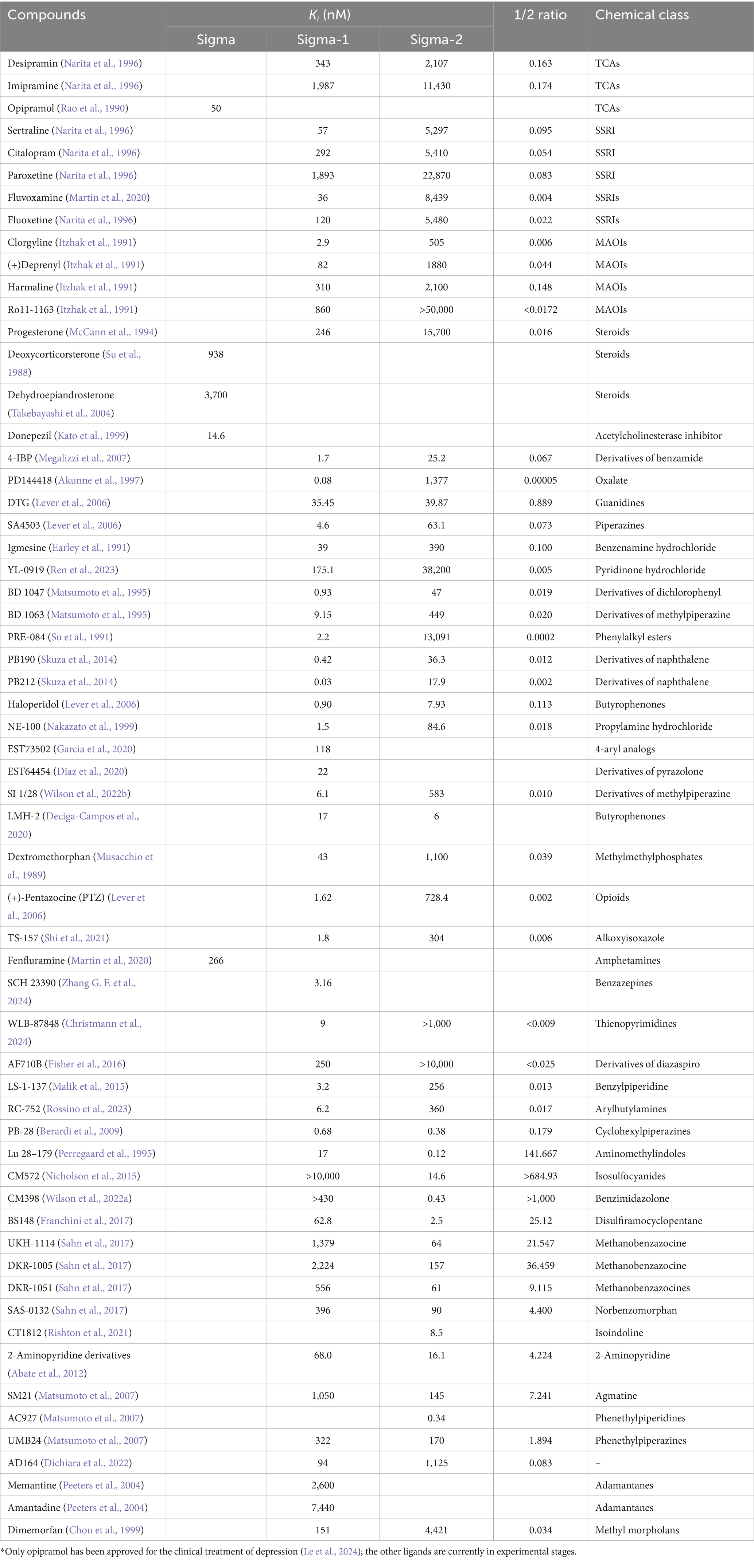
It tunrs out that Sigma receptors modulate glutamatergic dysfunction in depression, and glutamate, being excitatory, well, you can. make your assumptions from there.
https://www.frontiersin.org/journals/neuroscience/articles/1...
It seems the main function of the Sigma-1 receptor is Calcium release. And calcium ion channels are one of the most studies ion channels in mood disorders. By increasing calcium release you increase neuronal activity, hence, the uplifted mood.
It is too bad that the sigma-1 receptor is just starting to be studied and there is limited evidence of how omega-3 and Vitamin D effect it. But I do know that Vitamin D has a huge effect on SLC6A4 (SERT).
https://www.nature.com/articles/s41598-020-79388-7
I have Schizoaffective Disorder Bipolar Type (disabled) and have been on no less than 14 types of meds. I knwo how they work better than my psychiatrists, which I why I no longer take them. I also know my genetics which gave me clues to what is happening in my body. Now I eat a mostly seafood diet and my needs for meds has mostly vanished. I am still an odd old fellow, but at least I am not ranting in the streets or trying to kill myself anymore.
Meds saved my life, but a diet high in Omega 3, D, and a bunch of other things has removed so much suffering from my life, more than any medication has.
(Also, if you want to get into the weeds of depression, you might wat to look at ATP and depression https://onlinelibrary.wiley.com/doi/full/10.1111/cns.14536)
Comment by anonymous344 6 hours ago
Comment by Noaidi 4 hours ago
https://www.researchgate.net/publication/353319033/figure/fi...

Many people I know, when tested, were low in B6. That is more important to me than niacin.
Comment by ulnarkressty 1 hour ago
Comment by petesergeant 9 hours ago
Getting on them can be a ball ache (or entirely painless; escitalopram was easy on and easy off, Wellbutrin was a nightmare to get on, but also easy off), but entirely worth a shot for anyone symptomatic.
Comment by bjourne 4 hours ago
Yes, you did. Had the same medication and got tremors and stiffness so bad I thought I had early-onset Parkinson. Could hardly unlock the door without dropping the keys five or six times. Fortunately, it ceased when I stopped the SSRI.
Comment by quotz 6 hours ago
Comment by luxuryballs 8 hours ago
Comment by bossyTeacher 5 hours ago
Comment by isoprophlex 3 hours ago
Comment by Der_Einzige 10 hours ago
Comment by funkyfiddler369 9 hours ago
Me and my brother just can't stop mixing English and German when we talk to each other. But we don't or barely do it when we talk to others.
When I learned about code, logic, math, I started talking and thinking in different ways and from different and towards different perspectives.
The more I read, which I haven't done in a long long while, the more massive and vast the info I pack into a few sentences becomes.
The more I draw or play the guitar or work on game mechanics and story design or dialogues, the more annoying my speech and manners become but to my environment, that also means that I become "more" social and actually somewhat likeable and bearable.
You smell like Non-evidence based arrogance. I was always surrounded by people who smelled like that. But they are good little copypasta soldiers who follow trends and mutually assure that they don't go completely off the rails. But if one does, they leave him on his real or imaginary battlefield. Nobody wants to evolve anymore. It hurts some people just a little too much, I guess. They'd rather poison others and have their code deleted before getting to live a second life. I hope I could get you on edge a little. I'm just fucking around. But you will probably think something the likes of ... "there's always some truth to it when ..."
Comment by WhyIsItAlwaysHN 9 hours ago
Comment by mk12 9 hours ago
Comment by anonymous908213 9 hours ago
Comment by dmos62 9 hours ago
Comment by isoprophlex 10 hours ago
A kinda strained endeavor, I must say. It's not bad but the SSRI side effects make continuous hydration obviously important. A small price to pay.
Comment by sarreph 10 hours ago
Comment by Cthulhu_ 9 hours ago
Anyway your comment smells AI generated, I can tell from some of the pixels and seeing quite a few shoops in my time.
Comment by Der_Einzige 9 hours ago
https://arxiv.org/abs/2409.01754
https://arxiv.org/abs/2508.01491
https://aclanthology.org/2025.acl-short.47/
https://arxiv.org/abs/2506.06166
https://en.wikipedia.org/wiki/Wikipedia:Signs_of_AI_writing
https://osf.io/preprints/psyarxiv/wzveh_v1
https://arxiv.org/abs/2506.08872
https://aclanthology.org/2025.findings-acl.987/
https://aclanthology.org/2025.coling-main.426/
https://aclanthology.org/2025.iwsds-1.37/
https://www.medrxiv.org/content/10.1101/2024.05.14.24307373v...
https://journals.sagepub.com/doi/full/10.1177/21522715251379...
https://arxiv.org/abs/2506.21817
Either they used an LLM to write part of it, or the linguistic mind virus infected them and now they speak a little bit like an LLM.
Comment by myrmidon 9 hours ago
"Do not rely too much on your own judgment. [...] if you are an expert user of LLMs and you tag 10 pages as being AI-generated, you've probably falsely accused one editor."
Never accuse people of LLM writing based on short comments, your false positive rate is invariably going to be way too high to be acceptable given the very limited material.
It's just not worth it: Even if you correctly accuse 9/10 times, you are being toxic to that false positive case for basically no gain.
Comment by wafflemaker 6 hours ago
Disclaimer: I'm not a doctor, but saw 4 seasons of dr. House. Moreover, few hours of Huberman Lab on sleep and light and most importantly, this episode of Additude Mag Podcast on curing SAD and ADHD day-rhytm shifting with light glasses: https://www.youtube.com/watch?v=fu4mLgkNc6I
What happens in the seasonal affective disorder season is the sunlight pattern diverges from 6-18 that we evolved with. Without daily reminder of getting enough sun (or sun-like) light at the 6 o'clock⁰, your body clock will drift.
It can start by feeling groggy instead of refreshed in the morning, even if you've slept enough. And can escalate into loosing the will to do anything or even live.
No wonder. You're still an animal. You need to be fed, put to bed, etc. at a specific time. If you try to make your body sleep during the day, and eat and work during what body expects to be night, you won't really sleep and won't really live/work. Enough of not really sleeping and not really living - you mess up your body, your gut biome, your hormonal balance and your brain chemistry. You kind of should get depressed when you do it.
You can steer your body clock with light. Most of us do it, by exposing ourselves to strong (strong enough it won't matter if it includes blue wavelength or not).
But you can do it consciously (and in a way good for you) by putting on light therapy glasses (I'm using Lumiere 3¹, and they are not the only ones, find your own) at 6⁰ everyday, or right after you wake up if you're trying to readjust your rhythm. Or if you have time and want to save $200, use a stationary lamp and just sit in front of it doing nothing. I don't have the time. When readjusting, small doses of melatonin (0.5mg) 1h before sleep will accelerate body clock shift.
But don't listen to me, if you have SAD, you should really listen to that ADHD experts episode.
I feel for you, struggling with that stuff for a long time. Vit D, fish oil (lot of). All lights at home set to reduce intensity after 18. Strict going to bed routine. Still sleep poorly once in a while, but can do things in winter again. Hope it will help :)
0: choose whatever suits you. With small doses of melatonin and discipline in using light glasses you can even flip day and night. Just stay consistent, good farmer always feeds his cows at the same time.
1: at the time of buying ( fall '25 ) they were cheapest and best overall in norway. Solid build, ok battery, can have them on during yoga using attached rubbers and kind of can have them over glasses. Mine are very large and have blue light filter, but I manage 20min without eyeglasses. Medical certificate. Few leds, holo strip, battery and some plastic - my inner Scrooge says it's not worth $285, but everything else was worse and more expensive.
Comment by wincy 5 hours ago
Comment by r1ch 10 hours ago
Comment by josalhor 10 hours ago
Comment by ncasenmare 7 hours ago
(Do not take 5000 mg, that's 200,000,000 IU. You'd have to chug dozens of bottles per day)
Comment by barbazoo 6 hours ago
Comment by s-daveb 5 hours ago
what formal education do you recommend so that I can better understand this data?
It’s clear you’ve dealt with anxiety before, but this analysis is super thorough!
And thank you for quickly fixing that mistake - that could have really harmed someone.
Comment by mixmastamyk 2 hours ago
Comment by Aldipower 10 hours ago
Comment by AdamN 8 hours ago
Comment by ndarray 5 hours ago
Comment by xi_studio 10 hours ago
The author simply (and terrible mistaking) typed [mg] instead of [UI] in the first paragraph: if readed entirely, the author correct this typo in every other sentence
Comment by Xunjin 10 hours ago
Comment by hermannj314 8 hours ago
That is that pathway to death you are worried about?
Comment by deltoidmaximus 8 hours ago
Comment by fc417fc802 7 hours ago
Comment by amai 9 hours ago
Comment by dec0dedab0de 6 hours ago
Comment by sschueller 10 hours ago
> A single, optimal sun exposure session might produce the equivalent of 10,000 to 25,000 IU from a supplement, but it will not keep increasing with more time in the sun. That's your max per session.
Comment by arethuza 9 hours ago
"In Scotland, we only get enough of the right kind of sunlight for our bodies to make vitamin D between April and September, mostly between 11am and 3pm."
https://www.nhsinform.scot/healthy-living/food-and-nutrition...
Personally I found that taking Vitamin D supplements made quite a bit of difference - and I spend a fair amount of time outside (~3 hours each day).
Comment by matsemann 8 hours ago
We have a saying here to take cod liver oil all months ending with R (in Norwegian that's September to Februar) to get both omega 3 and the vitamin D.
Comment by mixedbit 8 hours ago
Comment by pbhjpbhj 8 hours ago
Comment by austinjp 9 hours ago
Comment by theptip 5 hours ago
For some people even in sunny areas, 5000 IU might be needed to get you in-range. This is highly individual.
Comment by francisofascii 5 hours ago
Comment by RobotToaster 8 hours ago
spoken like someone who has never lived in the UK
Comment by bflesch 8 hours ago
In many countries it is physically impossible to get enough vitamin D from the sun, even if you go out naked.
Also did you ever notice that the cheap apartments in many places are facing north and do not have a balcony, and of course do not have a private garden? Now you are reduced to going to a park which in the "cheap" areas is also not a good spot to chill for 30 minutes.
Comment by INTPenis 9 hours ago
During the spring, summer, fall months I barely need it since I'm outside so much with my dog.
Comment by Ensorceled 9 hours ago
Comment by bflesch 8 hours ago
Comment by nimonian 8 hours ago
Comment by pjc50 9 hours ago
It also sucks a lot when it's dark before starting work, dark after leaving work, and during the day rather cold to be exposing skin to the sun.
Comment by consp 10 hours ago
I'm not stating the dosage is wrong. Looks like it is anyway.
Comment by abelitoo 9 hours ago
For D3, it is 25mcg / 1000 IU / 125%
After splitting in half it's 12.5 mcg / 500 IU / 62.5%.
I take with some fat-containing food to allow ir to absorb which is usually breakfast (yogurt, some nuts, some kind of fruit, oats), and it's a night and day difference in my mood (how easily I can control my temper if already agitated, how easily I brush off annoying stuff, takes the intensity off of my reactions and mood during conversations).
I did a blood test before starting, and if normal is between 30 - 70, I was at 10. Dr prescribed megadose of D2, followed by daily D3, but I skipped on the megadose and went straight to D3 -- makes me wonder if a megadose would build up my stores since D is fat-soluble and make it so I could miss a day and not notice.
All of the above is anecdotal from me, a self-professed cave dweller, but it's been a couple of years now, and I still notice the difference. Also, what I heard from people in Boston is that 90% of them are on a vitamin D supplement. My friend from there laughed at me when I was raving about it, saying "yeah, literally everyone here is on it".
Comment by moritzwarhier 10 hours ago
Comment by voisin 10 hours ago
Edit: for clarity I am not saying it is impossible to overdose on oral tablets, but rather that with most tablets 400 IU to 1000 IU and the safe limit so much higher than these, it seems like it would be extremely unlikely for someone to be taking 30+ tablets daily. Not impossible, but not easy either.
Comment by moritzwarhier 10 hours ago
First: the RDA and the safety limit are not the same, and an RDA in a country being too low does not mean that the maximum safe dose is wrong.
And it certainly does not mean that there is a higher risk in under-dosing than overdosing when taking the RDA (which already includes recommendations for supplementing if you spend most of your time indoors).
I'm not a scientist, so I only know what physicians told me and what's explained in news publications or by consumer advocacy non-profits.
Here are a study (which I didn't read) and the NHS's advise on Vitamin D toxicity:
https://www.ncbi.nlm.nih.gov/books/NBK557876/
https://www.nhs.uk/conditions/vitamins-and-minerals/vitamin-...
The study says:
> Most cases of vitamin D toxicity resolve without serious complications or sequelae. However, in some instances, severe hypercalcemia can lead to acute renal failure requiring hemodialysis. Cases of permanent renal damage due to vitamin D toxicity are rare.
Which sounds good, but I don't think it supports that there is no risk of oral Vitamin D overdose.
Comment by neRok 9 hours ago
* Toxicity resulting from lack of monitoring is frequently seen in patients requiring high doses to treat ailments like osteoporosis, renal osteodystrophy, psoriasis, gastric bypass surgery, celiac, or inflammatory bowel disease.
* Patients who are on high doses of Vitamin D and taking inadvertently increased amounts of highly fortified milk are also at increased risk for vitamin D toxicity.
* According to the latest report from America's Poison Centers (APC), there were 11,718 cases of vitamin D exposure recorded in the National Poison Data System. More than half of these cases were in children younger than 5 years.
* The clinical signs and symptoms of vitamin D toxicity manifest from hypercalcemia's effects.
* Clinical management of vitamin D toxicity is mainly supportive and focuses on lowering calcium levels.
* Isotonic saline should be used to correct dehydration and increase renal calcium clearance.
A lot of those point to people drinking too much milk! (enriched milk)
* People with osteoporosis thinking "I better drink more milk for strong bones" when they are already on supplements/medicine.
* Kids drinking lots of milk and presumably not drinking any water - hence the dehydration.
PS: There are a lot of people out there that don't drink any water, and stick to juice or milk or soda, etc. They are not always fat, but that doesn't mean they don't have issues.
Comment by moritzwarhier 6 hours ago
And my takeaway is not that everyone should be taking 10k IE, but it's a great reminder to be more consistent in taking my Vitamin capsules in winter.
I'm still standing by my point that it's "easy" to overdose on Vitamin D. Like the article already mentions, one should remember possible kidney issues and not take insane doses of it.
What the recommended daily intake should be, I don't know.
The whole reason I'm commenting on this is I used to take one of the "top" antidepressants on this list.
And I am a skeptic of antidepressants, that doesn't mean I deny all positive effects in people who are prescribed them, of course.
For what it's worth, it's also easy to overdose on Venlafaxine. It's still considered safe.
Just an example to make clear that my comment was not a critique of taking Vitamin D in general.
I don't find the article's main point surprising though. That's the reason I'm taking Vitamin D, too. Doesn't mean that it's impossible to overdose, and this point is also important, because many people still think that it would be impossible to take too much of an vitamin or mineral. Thankfully, high-dose Vitamin A / retinol supplements are not as widespread.
Comment by ifwinterco 9 hours ago
Comment by perching_aix 10 hours ago
Comment by bulbar 9 hours ago
Seems to be a thing in conspiracy theories "they try to hide those simple tricks from you (drinking bleach, ivamectin, 100k D3, ...)
Comment by ndr 10 hours ago
Comment by Aurornis 7 hours ago
Also, be careful taking 5000 IU/day of Vitamin D. I did this for a few months and it was enough to send my blood levels over the top of the range, even in winter.
Too much Vitamin D is not good for you. The supplement fans have gone too far in recommending too high of dosages. My doctor said she’s seeing a lot of people with excessively high Vitamin D levels now that it has become popular.
Comment by seba_dos1 7 hours ago
Just test your blood levels before you start and then after 3 months or so. It's quick and cheap, and the only way to know whether the dose is right.
Comment by Aurornis 7 hours ago
No, that’s literally what I was doing when I reached the excessive range: 5000 IU/day in winter with an indoor job.
This commonly repeated idea that everyone is deficient and you can’t overdose on 5000 IU/day is wrong.
> Just test your blood levels before you start and then after 3 months or so. It's quick and cheap, and the only way to know whether the dose is right.
Literally what I did.
Every time I explain this online it seems like the supplement people ignore what I wrote and just parrot the same “5000 IU/day and everyone is so deficient you can’t overdose” myth.
Comment by seba_dos1 6 hours ago
That doesn't make it easy for most people. In my case it was barely enough to move the needle, but that's not how it will be for most people either.
> you can’t overdose on 5000 IU/day is wrong
Of course you can (though it would usually have to be really prolonged to actually cause you troubles, and even then it's mostly due to calcium rather than vit D itself). The vast majority of people won't, but you don't know whether you're in that group or not until you test yourself.
> Literally what I did.
That's good, but my post obviously used plural "you" as a general advice.
(BTW. There's no evidence of toxicity below blood level of 150 ng/ml, but there are many guidelines that consider levels way below that, such as 50 ng/ml, as "too high" already)
Comment by redhed 2 hours ago
Comment by globular-toast 3 hours ago
Comment by cloudhead 10 hours ago
Comment by neRok 9 hours ago
> A statistical error in the estimation of the recommended dietary allowance (RDA) for vitamin D was recently discovered; in a correct analysis of the data used by the Institute of Medicine, it was found that 8895 IU/d was needed for 97.5% of individuals to achieve values ≥50 nmol/L. Another study confirmed that 6201 IU/d was needed to achieve 75 nmol/L and 9122 IU/d was needed to reach 100 nmol/L.
> This could lead to a recommendation of 1000 IU for children <1 year on enriched formula and 1500 IU for breastfed children older than 6 months, 3000 IU for children >1 year of age, and around 8000 IU for young adults and thereafter. Actions are urgently needed to protect the global population from vitamin D deficiency.
> ...
> Since 10 000 IU/d is needed to achieve 100 nmol/L [9], except for individuals with vitamin D hypersensitivity, and since there is no evidence of adverse effects associated with serum 25(OH)D levels <140 nmol/L, leaving a considerable margin of safety for efforts to raise the population-wide concentration to around 100 nmol/L, the doses we propose could be used to reach the level of 75 nmol/L or preferably 100 nmol/L.
Comment by js2 6 hours ago
https://hn.algolia.com/?q=vitamin+d+mistake
Vitamin D is a favorite topic around here:
Comment by johnisgood 10 hours ago
Comment by zelphirkalt 10 hours ago
Comment by moritzwarhier 10 hours ago
Edit because the comment might be to shallow for HN: I sympathize with the struggle against depression and, after first-hand experience, share the skepticism against the widespread prescription of antidepressants and the methods of evidence presented for it.
Very serious and important topic.
Regarding Vitamin D, I am also supplementing in the Winter, but I have not read the article, which says it has an estimated reading time > 10min. I use one 1000IE (0.025mg according to the package) tablet a day max.
I'll bookmark this discussion page to read TFA later maybe.
Comment by voisin 10 hours ago
Also important to take it with Vitamin K.
Comment by moritzwarhier 9 hours ago
Seems like it would be best to increase time spent outdoors though.
Comment by energy123 9 hours ago
Comment by maximedupre 8 hours ago
Comment by sowbug 5 hours ago
IU, not mg.
K2, not K3.
Comment by lossolo 10 hours ago
Comment by dns_snek 7 hours ago
My starting levels were unknown but I assumed they were low given my usual sun exposure and some low-energy symptoms (which resolved a couple of weeks after I started taking it). I discontinued VitD then and now I only take 1000 IU/day in the winter.
Comment by Liquix 10 hours ago
Comment by bloak 10 hours ago
It's my understanding that northern Europeans evolved fair skin in order to cope with the lack of vitamin D in their diet.
Comment by Flatterer3544 10 hours ago
Comment by cies 9 hours ago
i understand it as: absorbing is in the intestine, generating D happens in the skin when exposed to the sun
Comment by HPsquared 10 hours ago
Comment by zelphirkalt 10 hours ago
Comment by smallerfish 10 hours ago
Comment by graemep 10 hours ago
Comment by nialv7 8 hours ago
Comment by RandomTeaParty 10 hours ago
Comment by grumbelbart2 10 hours ago
Comment by sowbug 5 hours ago
Another issue is insulin syringes are labeled in "insulin units," which hapless folks reasonably assume can be abbreviated "IU."
If you are measuring out a certain number of IUs, and your calculator or formula hasn't asked you which substance you're working with, you're gonna have a bad time.
Comment by koakuma-chan 9 hours ago
Comment by phoronixrly 9 hours ago
Comment by perching_aix 9 hours ago
Comment by phoronixrly 9 hours ago
Comment by pulvinar 8 hours ago
I wonder if even the simplest LLM would make this particular mistake.
Comment by naasking 2 hours ago
Comment by zelphirkalt 10 hours ago
EDIT: Wow, the HN-local doctors at it again. Imagine getting downvoted for sharing information from newspaper article (and honestly labeling that info as such), that probably was written by someone consulting medical professionals. But hey HN will know better!
Comment by krona 10 hours ago
See: Vitamin D and health: evolution, biologic functions, and recommended dietary intakes for vitamin D (293 citations)
Comment by SoKamil 9 hours ago
Comment by poizan42 8 hours ago
> An adult in a bathing suit exposed to 1 minimal erythemal dose of ultraviolet radiation (a slight pinkness to the skin 24 h after exposure) was found to be equivalent to ingesting between 10,000 and 25,000 IU of vitamin D (Fig. 6).
Doesn't say 30 minutes, but it may be 30 minutes depending on your skin colour and the local strength of the sun.
Comment by zelphirkalt 8 hours ago
So the paper may be well researched or whatever, but the interpretation of it is questionable.
Comment by poizan42 8 hours ago
From the abstract:
> The safe upper limit for children can easily be increased to 2,000 IU of vitamin D/day, and for adults, up to 10,000 IU of vitamin D/day has been shown to be safe. The goal of this chapter is to give a broad perspective about vitamin D and to introduce the reader to the vitamin D deficiency pandemic and its insidious consequences on health that will be reviewed in more detail in the ensuing chapters
The full article is available on researchgate[1]. Direct link to PDF [2].
[1] https://www.researchgate.net/publication/226676251_Vitamin_D...
[2] https://www.researchgate.net/profile/Michael-Holick/publicat...
EDIT: I just looked up the author, Michael F. Holick. Apparently he is one the people who identified calcitriol in 1971. I know appeal to authority doesn't prove anything, but it might be prudent to at least consider his findings.
Comment by zelphirkalt 10 hours ago
Comment by krona 10 hours ago
Comment by zelphirkalt 9 hours ago
Comment by lynx97 10 hours ago
Comment by Ensorceled 9 hours ago
Comment by zelphirkalt 8 hours ago
Comment by Ensorceled 7 hours ago
Comment by freedomben 7 hours ago
I think the downvotes are harsh btw and in general HNers have gotten too reflexively downvoting IMHO.
Comment by turtlesdown11 3 hours ago
Comment by weird-eye-issue 10 hours ago
Comment by AndrewDucker 10 hours ago
Comment by woadwarrior01 10 hours ago
Comment by viraptor 10 hours ago
Comment by spoiler 10 hours ago
Can you give the replyee some pointers, for example? Link to articles or studies that show a different view?
Comment by weird-eye-issue 10 hours ago
But also here is something to think about: your body will produce more D3 than that by being in the sun for just several minutes. So if you consider such a low dose of D3 an overdose then you better steer clear of the sun!
Comment by zelphirkalt 9 hours ago
This is another superficial statement, that displays shallow-at-best understanding. Staying in the sun and producing via the skin, and intake via food are 2 separate pathways. You cannot just make wild assumptions about one of those pathways from stuff you know about the other pathway.
And actually: Yes, you shouldn't stay in the sun for too long without proper protection. Having the sun shine on your skin is not some inherently healthy thing. It too comes with acceptable dosage and overdose. Symptoms of overdose are commonly known as getting a sunburn.
Comment by weird-eye-issue 9 hours ago
Comment by johnisgood 10 hours ago
Comment by weird-eye-issue 9 hours ago
Comment by zelphirkalt 8 hours ago
The problem with that is, that you still need to know how to interpret any results and statements within the supposedly scientific papers. If you are not a statistician, you might overlook methodology mistakes. If you are not an expert in the matter of the paper, you might not realize some side condition, that makes some statement or result of the paper irrelevant for your individual situation.
Comment by weird-eye-issue 7 hours ago
Comment by johnisgood 9 hours ago
Comment by nilslindemann 10 hours ago
Comment by Xunjin 10 hours ago
Just a simple look at the side effects of high dosages:
Safety and side effects
Taken in typical doses, vitamin D is thought to be mainly safe.
But taking too much vitamin D in the form of supplements can be harmful and even deadly. Taking more than 4,000 IU a day of vitamin D might cause:
    Upset stomach and vomiting.
    Weight loss and not wanting to eat.
    Muscle weakness.
    Not being able to think clearly or quickly.
    Heart rhythm issues.
    Kidney stones and kidney damage.
Comment by ncasenmare 7 hours ago
> McCullough et al 2019 gave over thousands of patients 5,000 to 10,000 IU/day, for seven years, and there were zero cases of serious side effects. This is in line with Billington et al 2020, a 3-year-long double-blinded randomized controlled trial, where they found "the safety profile of vitamin D supplementation is similar for doses of 400, 4000, and 10,000 IU/day." (though "mild hypercalcemia" increased from 3% to 9%. IMHO, that's a small cost for reducing the risk of major depression & suicide.)
So why then does Mayoclinic, etc, all say 4000 IU is the limit? I think because policy is decades behind science (this happened with trans fats), and also policymakers are much more risk-averse. (this is why in California, thanks to Prop 65, up until ~2018, there used to be a warning in every coffeehouse that coffee causes cancer.)
But thanks to your comment, I will edit the intro to note what the official max safe dose is, and that more recent peer-reviewed research shows it's too low!
Comment by smallerfish 10 hours ago
1) There are lots of studies that correlate Vitamin D production with sunlight exposure. For example, https://pubmed.ncbi.nlm.nih.gov/20398766/ this one lands on 1/4 of a MED = 1000 IU. Of course now we have a MED definition problem, but we're roughly talking single digit numbers for a white person in midday sun in NYC to reach 1/4 of a MED.
2) If you also supplement with Magnesium, a lot of your side effects go away. Vitamin D3 depletes Magnesium absorption.
Comment by mezzode 1 hour ago
Comment by gavinray 6 hours ago
Regularly have my Vit D levels checked and they are always within the upper bounds of healthy reference range
Comment by Bender 10 hours ago
I did have one issue related to magnesium however. If I did a very high dose of magnesium taurate and a couple of other chelated forms I would have trouble catching my breath after physical exertion similar to chronic high doses of iodine. Not the end of the world but it was unnerving.
Don't anyone else do what I do. I experiment on myself more than scientists experiment on mice minus the whole dissection bit. I am just continuing some experiments from the 1900's but as I understand it AI will be learning all of those soon. Fascinating stuff really.
Comment by ncasenmare 7 hours ago
Comment by leetrout 9 hours ago
Comment by nxobject 10 hours ago
(As an aside, Cohen would be the person not to tell you to assign qualitative values to effect sizes. They are as arbitrary as any other threshold used by working statisticians.)
[1] https://www.cambridge.org/core/journals/psychological-medici...
EDIT – that is, please don't draw the conclusion that you can substitute supplements for antidepressants. The meta-analyses don't seem designed to examine that hypothesis, and I doubt anyone would ever participate in a such a trial. In general (and as a working biostatistician), I would be very, very, very cautious applying estimates of average effect to myself, you, or any other individual person in a field as murky as psychiatry. That's why even the stingiest American health insurance plans still have an incredibly large range of antidepressants in their formularies.
Comment by ncasenmare 7 hours ago
> many studies in the Vitamin D meta-analysis enrolled patients already taking antidepressants.
Yes, and that's even more encouraging, that there's still effects of Vitamin D on major depression even if already on antidepressants! This suggests we can "stack" the interventions.
Table 1 of the meta-analysis ( https://pmc.ncbi.nlm.nih.gov/articles/PMC11650176/ ) shows the raw sub-group analysis. There were 9 studies on patients using antidepressants, 13 on patients who weren't, the rest were Mixed or Not Reported (...how do 6 studies just not report that?) Anyway,
Effect size of Vit D for people on antidepressants: −0.54 (−0.85, −0.23)
Effect size of Vit D for people NOT on antidepressants: −0.28 (−0.40, −0.16)
Both negative. Weirdly, the effect of Vit D seems to be a bit stronger for people on antidepressants, but the difference isn't statistically significant at the p<0.05 level (P subgroup difference is 0.23)
(As for why those effect sizes, -0.54 & -0.28, are lower than what I (and that meta-analysis itself) report, -1.82, that's because the majority of RCTs for any group used far less than 5000 IU. Table 2 in that paper shows the effect (with 95% CI) for various dosages.)
I'll lightly edit my blog post to emphasize stack them, don't substitute. Thanks again for your comment!
Comment by zahlman 2 hours ago
I think the point here is that such a study selects for people where their antidepressants are already known not to work very well for them, or they wouldn't be interested in participating.
Comment by GenBiot 7 hours ago
You are however correct about population being important (which is a big reason meta analyses can be very useful).
Comment by nxobject 7 hours ago
Comment by maerF0x0 5 hours ago
eg just to paint the picture: you're depressed so you don't get out of bed, therefore you don't go do your workout, therefore you lack endorphins and look in the mirror and see squishy, you're sad about how squishy you are and so you get more depressed. You're more depressed so you also don't do your dishes, when you do get out of bed you are depressed you feel like a slob and you're squishy, so you get more depressed...
Whereas adding anti-depressants, and other virtuous cycle things like vitD/O3, exercise et al. Give the boost necessary to _make your life less depressing_ ...
So if you know someone who's depressed, it might be helpful to help them make their life less depressing too. (in addition to all the best medical advice!)
[1]- he's a real Dr... Dr. Alok Kanojia (Dr. K), a Harvard-trained psychiatrist (MD, MPH) specializing in modern mental health
Comment by witherk 2 hours ago
Careful, he is also a believer in Ayurveda[1]. Which basically basically categorizes people into different elements like fire and water and then tries to change their diet and habits to match their elemental style or something. You can hear him talking about it here [2]. Kinda reminds me of Humorism [3]. Dr. K seems like a nice enough guy but don't get too lured in by the "Harvard-trained" credentialism.
[1] https://en.wikipedia.org/wiki/Ayurveda [2] https://www.youtube.com/watch?v=rQ2xnThRGPg [3] https://en.wikipedia.org/wiki/Humorism
Comment by maerF0x0 2 hours ago
Comment by Fischgericht 1 hour ago
Within my peer group of people on the spectrum (which very often comes with a depression, which is logical) we've discussed Vitamin D studies for years. And multiple of us decided to give it a try for a couple of months. And neither those who tried it INSTEAD of an SSRI, nor those that took both (SSRI + D) could report any measurable difference.
I have a theory on why is that: It is known that low levels of Vitamin D is one likely cause for depression - in Northern Europe, where during winter time people do not get enough sunlight, that correlates very clearly with the suffering of depression.
But potentially it simply does not work the other way round: I moved to near the equator, and I therefore basically have sunlight shining out of my butt, but still am depressed. It makes sense that in this case Vitamin D makes no difference at all.
In summary my theory would be: Vitamin D only has an effect on a depression that was caused by a lack of Vitamin D.
Comment by vegancap 10 hours ago
Disclaimer, not saying vegans should stop being vegans, just make sure you find a good supplement, and make sure you understand the difference between EPA/DHA Omega 3.
Comment by hshdhdhj4444 10 hours ago
Fortunately today’s vegan communities are much more aware of this so I started taking these supplements right up front and all my blood markers improved dramatically since when I consumed meat/dairy.
It’s annoying to hear some push back against this when it’s as simple as taking relatively safe supplements (just make sure you talk to a doctor, and not a social media influencer, about how much you should take, and if you get a chance to regularly check your bloodwork don’t miss out).
Comment by vegancap 6 hours ago
Comment by johnisgood 10 hours ago
Comment by tefkah 8 hours ago
every vegan should supplement b12, so they probably do too
Comment by johnisgood 8 hours ago
Comment by pseudalopex 6 hours ago
Comment by johnisgood 4 hours ago
Comment by dvh 10 hours ago
There's your answer
Comment by vegancap 6 hours ago
Comment by serpix 10 hours ago
Comment by tefkah 8 hours ago
Comment by hshdhdhj4444 10 hours ago
Comment by buddhistdude 9 hours ago
Comment by Kichererbsen 8 hours ago
Comment by vegancap 6 hours ago
Comment by quietbritishjim 8 hours ago
Comment by augusto-moura 7 hours ago
Comment by Aurornis 7 hours ago
I would bet that 95% of that improvement or more was due to the exercise.
Your anecdote is common: People start taking Vitamin D or fish oil as part of a bigger plan to have a healthier lifestyle and then they attribute success to the pills, not the lifestyle changes.
Comment by vegancap 6 hours ago
Comment by brushfoot 10 hours ago
I see your disclaimer, but just for more context, vegans can get Omega 3 without taking pills per se. Flax seeds are an excellent source. I often add a spoonful to a bowl of oatmeal or as a pancake topping along with fruit sauce and granola.
Comment by the_pwner224 30 minutes ago
The body has some ability to convert ALA to EPA & DHA, but at extremely low rates (particularly for DHA) - it's not a consideration in practice.
So no, eating seeds will not fulfill your body's requirements.
Comment by canucker2016 10 hours ago
from https://www.bhf.org.uk/informationsupport/heart-matters-maga... :
Eating ground flax seeds gives you more benefits than whole seeds, as whole seeds remain undigested and pass through the system.
  Most people can’t chew flaxseeds effectively, so they grind them first or swallow them whole. (They are tiny.) Nutrition experts do recommend grinding them first to release the fiber and the beneficial fatty acids. Flaxseeds are helpful for constipation and may lower cholesterol as well.

  Ground flaxseed goes rancid easily, however, so it should be kept in the freezer until you are ready to use it. If you buy it ground, you wouldn’t have to use the blender or coffee grinder to break those seeds up before you have breakfast.
Comment by mistercow 9 hours ago
Just get an algae oil based DHA+EPA supplement.
Comment by pydry 10 hours ago
Chia seeds taste ok but you need to prep them by soaking which is a pain (or experience bloating).
All other seeds have more omega 6 than omega 3.
Comment by grvdrm 10 hours ago
Comment by humanfromearth9 7 hours ago
I know first-hand that low energy-levels and lacking energy production mechanically lead to depression.
Also, look at how people (children also) experience the world and their relationships and their stresses when they are tired (or even just hungry) compared to when they are fit...
Fix those, and the depression might be gone.
This is not bashing against anti-depressants, they play their role to. But in some cases, energy-management is key.
Comment by nikolatt 7 hours ago
Comment by ibeckermayer 6 hours ago
(No affiliation, just have been subscribed to the founder’s substack for a while)
Comment by Aurornis 6 hours ago
I know I won’t convince the parent commenter but hopefully I can convince other readers not to go down this road or invest any money in anything related to him.
Comment by ibeckermayer 4 hours ago
The technical details are beyond my understanding but I’ve heard from a PhD in the field that Masterjohn’s understanding of metabolism is second to none. Whether his protocols work or not is certainly a case by case matter (like any health protocol), but he always appears to substantiate it with well-cited lines of argument, and is willing to engage with interlocutors.
As for spending years with changing protocols without getting anywhere besides spending lots of money, well that can be said for people with complex issues who go the institutionally approved route as well. It isn’t discrediting in its own right that a protocol didn’t work for some.
Comment by StiviGee 6 hours ago
Comment by Aerbil313 5 hours ago
Comment by francisofascii 5 hours ago
Comment by cardanome 10 hours ago
You might be depressed because you life objectively sucks. Then you symptoms are good and healthy and a signal to make changes in your circumstances.
You might actually have a good life but still feel depressed because there is a chemical imbalance in your brain. (Very simplified). That is when drugs come in.
It might be just a seasonal thing and you need to go outside more and take some supplements.
You might have some other undiagnosed issue. You might have ADHD, autism and other things that cause you to struggle and develop depression as a side effect.
So find out what works and what doesn't work for you.
Comment by xnzakg 10 hours ago
Comment by tock 9 hours ago
Comment by cardanome 9 hours ago
On a sidenote, I know that knowing that it is "just your depression talking" is also a pretty hard pill to swallow and not always helpful. Personally I have a lot of fears that I know are irrational but that doesn't make them any less real.
And even if your problems are external, sometimes you need to focus and your inner self first, find some strength and help so you can tackle the external problems later. But for other people "working on yourself" can be avoiding the actual problems they need to work on.
And yes happiness is always relative.
Comment by zug_zug 7 hours ago
We tell ourselves that we must have "better lives" than say a native american in the year 1000AD, but there's no reason to think that.
I think odds are that maybe the native american was happier -- having a small group that you spend time with outdoors every day, getting extensive exercise, having a clear sense of purpose, eating healthy fresh food every day, never once thinking about politics or bills or global warming. I bet they liked their life more than a depressed divorced accountant in our modern society, even if we have more material wealth or health access.
Comment by sambuccid 8 hours ago
Comment by the_pwner224 26 minutes ago
Comment by citrin_ru 8 hours ago
Comment by sambuccid 5 hours ago
Comment by citrin_ru 9 hours ago
The problem with this that to a bad situation different people react differently - some trying to do what they can to improve the situation or at least don't make it worse and some give up and let situation to slip and become worse and worse (becoming a self fulfilling prophesy). It's not a choose one makes I think (it's likely a biological predisposition) but the difference is still exists.
People prone to depression genuinely believe the main (only) reason for a depression that the life sucks and as a result they avoid medical help and don't do anything which could help them.
Comment by jillesvangurp 7 hours ago
And each of those things can be caused by physiological issues as well. You might feel stressed because you don't sleep well. You might sleep poorly because you suffer from e.g. sleep Apnea. Which in turn might be because of a mix of physiological and other reasons (diet, weight, alcohol abuse, etc.).
Or you might be working too hard, which makes you stressed and causes you to lose a lot of sleep. Different causes that have similar results. Including long term physiological results. Your brain can actually get damaged if you chronically abuse it or neglect it. Many "between the ears" type problems are actually physiological.
Root causing your issues enables you to deal with them properly instead of fighting the symptoms.
Anyway, I take vitamin D and a few other things. Getting yourself checked out regularly once you hit middle age is a good idea. There's a lot of stuff that is long term lethal that a checkup can detect early. And some of it is fixable. I have the usual cardio vascular challenges that many people struggle with because of a combination of genetics, age, and life style. And indeed a vitamin D deficit.
I was also recommended to consume more omega-3 as well. Eat salmon. Work some flax/chia seeds in your breakfast. I put flax seeds in my yogurt and use it as a thickener in sauces as well. You have to grind it to dust for it to get absorbed properly. Dirt cheap and it doesn't mess with flavor/texture too much. I keep a jar of ground flax seeds in my fridge. Takes 2 minutes to top it up every 1-2 weeks or so with some freshly ground seeds.
But I'm also aware that me being a stressed startup founder has health consequences that a few pills and suplements won't fix for me. I need to actively make sure I get my rest and sleep. I deal a lot better with stressful situations when I'm well rested. And I seem to be better at avoiding getting in to those as well. And I feel happier. Sometimes the best thing I can do for my company is having a proper weekend or going to bed early enough that I can get my 8 hours of sleep. You can survive on 4 hours (been there done that), for a while. But most people are not at their peak performance if they do that. And it's not good for you to work yourself to exhaustion all the time.
Comment by BeetleB 7 hours ago
Pinpointing problems in your life as the cause of your depression is a trap.
Comment by ajkjk 10 hours ago
For example: if your life objectively sucks, why aren't you doing anything about it? Some people whose lives suck fix their lives, and other people get depressed and do nothing; what's the difference? And: all of us know somebody who appears to have a good life and therefore their depression is presumably a chemical imbalance thing but if you're being honest the vibes in their life are a bit off, actually, like you can tell they're not really getting everything they need out of it, that they're clearly good at masking (for example people who are clearly not thriving in their relationships) .... in which case sure medication could help but you can't shake the feeling that facing the reality of their life would help a lot more.
However! Questioning this stuff becomes a bit of a moral minefield. "Believing" in the chemical imbalance theory is part of why it's medically helpful. If your life has sucked for years and you could find no way of fixing it and then SSRIs helped, then you basically need to believe that it really was a chemical imbalance, because believing that it might not be threatens to take away the thing that's making your life work. So much so that I would bet at this point there are already readers of this comment who are ready to angrily reply to my preceding paragraphs, because the model I just described threatens their existence. (If so, wait a sec and read the rest...)
On the flip side, for some people not believing in the chemical imbalance model for some particular case might be important. Maybe they want to feel responsible for their life being bad, so they will be motivated to do something about it, and being happy due to drugs would make them feel complacent and okay with years passing by at a shitty job or something. Or picture someone whose parent has gone their whole life unable to take them seriously as an adult, which as a result means the child and parent have a bad relationship, and then picture the parent complaining about depression and taking medication for it. This can be really infuriating: the child thinks about the parent, "your life sucks because of the tension created by not treating people around you with respect, and you're so incapable of recognizing this even when it's told to your face regularly that you're taking drugs to feel better despite not fixing the problem". Now ascribing depression to medical problems seems like avoidance, and having people write off your frustrations and say that you're just depressed and need to take a drug for it is frustrating.
Just saying: the two narratives really get tangled up. I don't really know what to do about it, but I do think that some harm is done by harping on the concept of a "chemical imbalance". A lot of the issue is avoided if you just think of the drugs as helpful but don't choose any model (with its moral implications) for what exactly it is they're helping with. Just treat them as a tool for making you feel better.
Also, I suspect that people who have an intuitive aversion to mental health drugs are probably way overindexing on that intuition. I definitely did this for a long time, as did some friends I knew growing up. Turns out whatever your issues you can sometimes just deal with them sooner than later if you accept that doctors might be onto something. (Actually I think the reason people get stuck avoiding medication for so long is precisely that they feel like they're not allowed to be skeptical of them... which makes them kinda plant their feet in the ground and refuse to be open to it. That's kinda why I'm typing this long comment, to tell anyone reading that it is a reasonable thing to feel. And now that you know that maybe try them anyway..?)
Comment by legulere 10 hours ago
Comment by nayroclade 10 hours ago
> Some of the available reviews, owing to the limited number of trials and methodological biases, were of low quality (Anglin et al., 2013; Cheng et al., 2020; Li et al., 2014; Shaffer et al., 2014).
Comment by afpx 9 hours ago
Comment by phoronixrly 9 hours ago
HN and dubious self-medication advice go hand-in-hand. Please consult a medical professional instead of a bunch of ad-tech devs.
Comment by mrguyorama 1 hour ago
Good times.
HN is as bad at medicine as it is at everything else.
Comment by phoronixrly 1 hour ago
Comment by Palomides 9 hours ago
Comment by legulere 8 hours ago
If you (or your close ones) don't suffer from depression, then I guess it's best to ignore it until scientific consensus has formed. That will for sure show up on wikipedia. As far as I can see as a layperson there is a lot of correlation with Vitamin D that breaks down in interventions and Vitamin D is recommended mostly for babies and elderly people. On the other hand I see Vitamin D pushed as a miracle drug not unlike Vitamin C used to some decades ago and regular reports of overdosing of supplements leading to organ failure.
If you're suffering from depression, you should talk to your doctor. They will be able to help you to weigh potential benefits with risks
Comment by tracker1 5 hours ago
I'm usually able to reason or force my way through depression and the like, but have had a few deep bouts in my life. The medications have ranged from ineffective to building a tolerance quickly, to just plain worse than the symptoms being treated. Nothing like missing your highway exit multiple times back and forth because you get lost "in" the drive on medication, or having 140 browser tabs open and losing 5 hours of work time.
Everyone is different. I am amazed at how much western society has so many hormonal issues that come down to the lack of quality or appropriate fatty acid intake and a lack of something as simple as more outdoor/sun time. I think the "low fat/cholesterol" advice for most of the past half century combined with the increase in snacking and junk foods have been massive disservices to humanity as a whole. I wouldn't be surprised if some of the effects are multi-generational in the making either.
Comment by b800h 10 hours ago
Doing this has had a massive positive effect for me, and combined with decent nutrition and daily exercise, has been wonderful.
Comment by parag0ne 9 hours ago
All of these likely got better due to the overall effect of decreased anxiety and not making ADHD worse. I'm not myself when on caffeine. Nikola Tesla quit all caffeine/other stimulants for a reason.
Comment by b800h 8 hours ago
Comment by jofzar 9 hours ago
Going to argue here, this is wildly bad advice. Decaf practically has no caffeine, it has 2-7 mg from what I can tell which is less then chocolate. 2-7mg is like impossible to notice and might aswell be water with how little there is.
Comment by dddw 9 hours ago
Comment by __turbobrew__ 4 hours ago
Im on week 3 of no coffee now, I will maybe give it a month or two more to make a judgement call if I want to continue with coffee or not.
It is unfortunate as I really enjoy coffee, but it causes some issues for me with anxiety and stomach problems.
Comment by charles_f 3 hours ago
Comment by marginalia_nu 8 hours ago
I tried doing this for almost a full year, and while the improved sleep and generally improved mood was fantastic, and even toward the end it was so much harder to get any focused work done.
Comment by cameronh90 7 hours ago
I'm not sure my overall focus over time is higher with caffeine, but it does allow me to nudge more of it into the useful part of my day. However I'm a fast metaboliser of caffeine, and it doesn't impact my sleep at all, so could be that there's a genetic component to one's experience here.
Comment by b800h 8 hours ago
Comment by marginalia_nu 7 hours ago
Comment by b800h 5 hours ago
Comment by marginalia_nu 5 hours ago
Comment by binsquare 10 hours ago
I'd add that my ability to sleep naturally was negatively affected as side effect of medication. I tried a various combos to induce sleep and found the best solution to just be... exercise.
No caffeine, exercise, sleep lead to a significantly reduced anxiety and more.
Comment by driverdan 7 hours ago
Those are two different things. Cutting out caffeine can help with anxiety but not ADHD. It's the opposite for ADHD, stimulates help significantly.
Comment by Aurornis 7 hours ago
Also there’s a growing trend of diagnosing every focus problem as ADHD when many patients might have focus problems secondary to another condition like anxiety. It’s sadly all too common to find someone who believes they have ADHD due to TikTok self diagnosis or even a lazy doctor’s diagnosis but their core problem is actually anxiety. For these people, stimulants of any kind can actually worsen focus even if then provide a short term perception of helping due to the energy boost.
Comment by ivm 7 hours ago
I’m quite sensitive to caffeine, yet I can drink green tea all day without noticing much effect, while even a light coffee or a caffeine pill is clearly noticeable. I can also drink tea before going to sleep without any problems.
Comment by Aurornis 7 hours ago
You can absolutely get high doses of caffeine from tea if you really want to. It comes down to the type of tea, how much is used, and how strong it’s brewed.
There is nothing special about tea that breaks the rules of caffeine. It comes down to the content of the leaves, quantity, and extraction into water.
> while even a light coffee or a caffeine pill is clearly noticeable
Caffeine pills generally have really high dosages, FYI. Even light coffee drinkers can be caught off guard by how much caffeine is in a typical off the shelf caffeine pill.
Comment by ivm 7 hours ago
There's definitely something special, just poorly studied: typical "how much caffeine is in X?" tables show tea having caffeine levels similar to coffee, but I never feel the same effects.
> Caffeine pills generally have really high dosages, FYI.
I use 200 mg tablets split into quarters for doses of 50–100 mg. Yet, they produce a much milder curve than coffee (which I no longer drink) and, as a side effect, cause no gastrointestinal side effects!
Comment by Aurornis 7 hours ago
I have never seen a caffeine comparison table that shows tea and coffee at the same level.
It’s common knowledge that typical coffee brews are in the range of 2-5X higher in caffeine content than typical tea brews.
Tea is widely used as a lower caffeine alternative to coffee.
Comment by ivm 6 hours ago
Comment by volkk 2 hours ago
Comment by dec0dedab0de 6 hours ago
Comment by grvdrm 10 hours ago
Can you describe what else you tried? Other supplements? Any other non-food/supplement techniques like journaling, breathing, etc.? Any therapy and other similar human interventions?
After all those - is it / was it still the case that cutting caffeine drove the best outcome?
Comment by parag0ne 9 hours ago
Things like journaling / breathing / etc calm the nervous system while caffeine stimulates it. I would say caffeine is counterproductive to those practices.
Comment by grvdrm 8 hours ago
I briefly quit caffeine once but it as well before any realization of anxiety. So, hard to extrapolate forward from that experience.
What feels different to me (compared to you) is this: sometimes I'll drink 2 cups of coffee in the morning and be awake but useless. Sometimes totally productive. Caffeine in some form is there - recently sometimes substituting coffee for a Celsius.
Comment by b800h 8 hours ago
Comment by tripledry 10 hours ago
I gave it maybe 2-3 months and decided it's not worth it.
Tempted to give it another shot!
Comment by b800h 8 hours ago
Comment by haght 9 hours ago
Comment by b800h 8 hours ago
Comment by voidUpdate 9 hours ago
Comment by b800h 8 hours ago
Comment by voidUpdate 7 hours ago
Comment by xenospn 9 hours ago
Comment by bamboozled 10 hours ago
Comment by buddhistdude 8 hours ago
Comment by bamboozled 7 hours ago
Comment by majkinetor 3 hours ago
Comment by ramon156 10 hours ago
Comment by daoboy 10 hours ago
After an absurd amount of trial and error with every over-the-counter, trendy supplement over the last couple of decades (and lord only knows how much money), these are the only ones that seem to make a subjective difference on my quality of life and an objective difference in my bloodwork.
Comment by Liquix 10 hours ago
recent evidence [0] suggests there's not much of a link between serotonin and depression, and therefore the effects of SSRIs are either placebo or an as of yet unexplained mechanism of action. IMHO it seems much more likely that modern lifestyles (excessive screen time, poor diet, lack of socialization, no connection to nature, no spirituality, etc) have more of an effect than serotonin levels.
Comment by buildsjets 3 hours ago
Do be aware that not all vitamin E supplements actually contain the dosage that they are labeled at, and that inclues both no-name brands and some big name brands. I'm having trouble finding a good reference on google due to AI and SEO pollution. But I recall Nature Made was labelled accurately and that is what I buy.
My wife on the other hand has struggled with life-long anxiety/depression even when living in Atlanta. For her a fairly low dose of lexapro enables her to live her life like a normal person. We wish we could get her mother to give it a shot for a few weeks, as she now can see a lot of similarities in both their personality traits that were affected by a life of untreated anxiety.
We also have cat that would probably have been put down for fear-biting of people and attacking our mild and mellow dog until we got his aggression under control with kitty prozac. I kid you not, it's a transdermal fluoxetine cream we put in his ear each day. Without the constant anxiety stimulus in the way, his real personality came through and he is actually very sweet. To me at least. Still bites my wife, but not hard anymore, just enough to keep her alert.
Comment by basch 3 hours ago
or society in its current incarnation. its an underexpressed opinion that maybe depression is a justified reaction to ... life, as humans across a lot of earth in 2026.
Comment by y1n0 3 hours ago
Comment by elAhmo 10 hours ago
I remember a similar case with levelsio who was advocating people to take melatonin and discussing how much grams is good vs bad. When I said that people shouldn't take medical device from someone who was successful in building web apps, he blocked me.
Comment by janpeuker 7 hours ago
Comment by mixmastamyk 2 hours ago
Comment by snarky_dog 5 hours ago
Comment by NathanielBaking 6 hours ago
"Evidence does not support the use of vitamin D supplementation for the prevention of cancer, respiratory infections or rheumatoid arthritis. Similarly, evidence does not support vitamin D supplementation for the treatment of multiple sclerosis and rheumatoid arthritis or for improving depression/mental well-being."
https://pmc.ncbi.nlm.nih.gov/articles/PMC4907952/#:~:text=Bo...
Comment by brushfoot 10 hours ago
Comment by code_biologist 10 hours ago
The main problem with ALA is that to have the good effects attributed to omega-3s, it must be converted by a limited supply of enzymes into EPA and DHA. As a result, only a small fraction of it has omega-3's effects — 10%–15%, maybe less. The remaining 85%–90% gets burned up as energy or metabolized in other ways. So in terms of omega-3 "power," a tablespoon of flaxseed oil is worth about 700 milligrams (mg) of EPA and DHA. That's still more than the 300 mg of EPA and DHA in many 1-gram fish oil capsules, but far less than what the 7 grams listed on the label might imply.
https://www.health.harvard.edu/heart-health/why-not-flaxseed...
Also, beware of omega 6 fats. Seed oils (corn, soy, canola) used in commercial food products are incredibly omega 6 dominant in terms of polyunsaturated fat content. Consequently, the ratio of omega 3 to omega 6 fats we consume has plummeted as food production has industrialized. Omega 3 fats are precursors to generally anti-inflammatory signaling compounds, whereas omega 6 fats are precursors to pro-inflammatory signaling compounds. The bias in fat intake leads to more pro-inflammatory signaling in the body, and a lot of alt health types have alleged this is a major causative factor in the obesity epidemic.
This is important for depression, because chronic brain inflammation as a cause of depression was one of the going hypotheses at least a decade ago when I last looked into all of this. Upping omega 3 intake is an intervention that can address chronic inflammation, which is potentially why it improves some cases of depression.
Pretty much nobody in the west needs more omega 6s these days. I hear even farmed salmon eat primarily corn and soy based feeds these days, meaning their fat ratio is skewed much more heavily toward omega 6 than wild salmon and fish.
Comment by cube2222 10 hours ago
First, when taking omega 3 supplements, you generally care about increasing the ratio of omega 3 to omega 6. Hemp hearts have much more omega 6 than omega 3, so they're not very effective for improving the ratio.
Second, hemp hearts contain ALA, while what you generally want to improve is EPA and DHA (this is also covered in TFA). The body can convert ALA to EPA and DHA, but it's not efficient.
So all in all, if Omega 3 for the article's stated benefits is what you want, this is not the way. I recommend looking into eating more fish, or if you want a vegan route, algae-based supplements. [0] is a decent source from the NIH about foods and their Omega 3 content, split by ALA/EPA/DHA.
[0]: https://ods.od.nih.gov/factsheets/Omega3FattyAcids-HealthPro...
Comment by brushfoot 10 hours ago
Flax seeds are even better just for Omega 3 at 1:3, but hemp hearts have other benefits, like more protein, which is why I called them out. That said, I eat a fair amount of flax seeds as well.
Comment by cube2222 10 hours ago
This is not to say that they're unhealthy of course.
EDIT: see the sibling comment by code_biologist, it's much more comprehensive than what I've written.
Comment by brushfoot 7 hours ago
Comment by dingdingdang 9 hours ago
Comment by amai 10 hours ago
https://examine.com/supplements/magnesium/research/#nutrient
Dai (2018): Magnesium status and supplementation influence vitamin D status and metabolism: results from a randomized trial https://pubmed.ncbi.nlm.nih.gov/30541089/ "Our findings suggest that optimal magnesium status may be important for optimizing 25(OH)D status. "
So it might well be that general deficiency in Vitamin D is caused by the deficiency in magnesium status. This would also be an explanation why we see Vitamin D deficiency in sunny Africa: https://theconversation.com/think-vitamin-d-deficiency-is-no...
Comment by joshhart 6 hours ago
Comment by Geee 6 hours ago
Comment by Aeroi 7 hours ago
It's processed into (7-DHC), the same compound in human skin.
7-DHC is bombarded with UV light, triggering a chemical reaction that creates Vitamin D3.
Comment by jsolomon 2 hours ago
This is the referenced meta-analysis: https://www.cambridge.org/core/journals/psychological-medici...
The largest N study (N=18,353; more than half of the entire 31 study sample) included is https://jamanetwork.com/journals/jama/fullarticle/2768978, which found: "Risk of depression or clinically relevant depressive symptoms was not significantly different between the vitamin D3 group...and the placebo group."
The highest dose study (100,000 IU/week) included is https://pubmed.ncbi.nlm.nih.gov/30532541/, which found: "...the treatment response or BDI scores did not differ significantly between groups."
The paper/supplementary materials doesn't include a simple table of the depression outcomes for the 31 included studies, which is a glaring omission.
I think someone just messed up here. Maybe missed a decimal place?
For a more realistic perspective, here's another careful meta-analysis of RCTs of Vitamin D for depression that found null result: https://www.sciencedirect.com/science/article/abs/pii/S08999... (granted, 2015). And another from 2025 that found a .36 effect size, which is plausible and still fantastic: https://www.frontiersin.org/journals/psychiatry/articles/10....
I don't mean to dissuade people from trying these given the low risk profile, just don't expect to go from a C to an A.
Comment by RankingMember 2 hours ago
Comment by lqstuart 10 hours ago
That's not to suggest that exercise etc isn't great, just that society has come a long way in destigmatizing mental health and just being like "oh just take fish oil" to someone dealing with that kind of depression, either through shitty genes or childhood trauma or whatever, can be really harmful.
Comment by RobotToaster 8 hours ago
(The STAR-D had a cumulative remission rate of 67%, I don't know how to convert that to the format he used)
Otherwise I agree that vit D and omega 3 are underrated for depression, it would be interesting to see if they have a cumulative effect with antidepressants.
Comment by meroes 4 hours ago
Getting Vitamin D from food is a fools errand, and since sunscreen and protective clothing slow vitamin D from the sun drastically, it's in most people's best interest to get it tested.
Comment by strontian 3 hours ago
Comment by meroes 3 hours ago
Comment by rollulus 8 hours ago
Unlike the commenter, I didn’t suddenly turn into a chess grandmaster, but I did notice that my winter blues didn’t show up this year, the first time in a decade!
Comment by JohnMakin 5 hours ago
Comment by hmhrex 4 hours ago
I read this years ago and it's fascinating. Looks like it's been updated for a second edition last year.
Comment by lazarus01 4 hours ago
Each human being is unique, as is the recipe for sustained positive metal health.
I think it’s helpful to consider and experiment with different ideas and strategies.
I strongly disagree there is one single solution that can provide significant lift for a large population.
Comment by lynguist 9 hours ago
Comment by Roark66 6 hours ago
I did a blood test for vit D metabolites (oh 25 or something). It turned out I was deficient.
The doc gave me 8k units as a prescription drug. In theory weaker. After 2 months I was no longer defiecient (kinda borderline). After 4 months the doc decided to go down to 4k iu.
Now I wonder why some experts are telling people to take 10k iu? Is it because the supplements are crap and contain 10% of what they claim? (I've been taking vit K as well)
Comment by dec0dedab0de 6 hours ago
Too much Vitamin D3 can be toxic, so doctors are reluctant to tell you to go over published guidelines. but if you don't have other issues, and stick to what you can get OTC from a normal vitamin brand and follow the instructions, you're probably safe. There was a story a while ago about a woman who died from too much D3, but it turned out she was taking a whole bottle's worth every day for years.
Comment by Aurornis 6 hours ago
Taking 10K per day is a bad idea. I went into the excess Vitamin D range with half that dose even in winter with an indoor job.
More is not always better.
Comment by snickerer 7 hours ago
The effect after taking the Vitamin longer than 24 weeks is not significant anymore.
Comment by shevy-java 6 hours ago
It is depressing ... :(
(Note: my own real therapy is to do what is fun. That is, humour. This can occur via social interaction; it can also happen to some extent by studying human behaviour via ... youtube videos! There are some surstromming videos that are just epic display of human behaviour. If aliens ever arrive here, I'll show them the Top 3 videos there. Either they will laugh too - or flee from this strange planet.)
Comment by shellkr 9 hours ago
Edit: This may also be of interest: https://en.wikipedia.org/wiki/Orthomolecular_psychiatry
Comment by alastairr 9 hours ago
Vitamin D is toxic (and ultimately fatal) at high doses, which is why the 'suggested' dosages of between 400IU and 1000IU are so conservative. You may need more, but you should get a blood test.
Comment by bell-cot 9 hours ago
Comment by bevan 6 hours ago
Comment by sreekanth850 6 hours ago
Comment by devops000 2 hours ago
Comment by samsartor 8 hours ago
Comment by comrade1234 9 hours ago
Based on the test I was just a tad under where I should be and so now I am taking 800 IU per day. I may stop in the summer when I get more sun.
I read somewhere that too much vitamin D has similar effects as too little (permanent hair loss, anemia, etc) but that may have just been on a blog similar to the linked blog on this submission.
Comment by running101 10 hours ago
Comment by grvdrm 10 hours ago
Comment by code_biologist 10 hours ago
Comment by freehorse 10 hours ago
Comment by SubiculumCode 6 hours ago
Comment by tiffanyh 8 hours ago
Comment by seba_dos1 1 hour ago
Toxic levels of vitamin D can be life threatening, so do keep your levels in check, but you won't get there unless you really try, so if you can't get out of the bed to have your blood tested just start taking it and check it after 3 months when things get hopefully easier for you. Just make sure to get the number of zeros in the dose right.
Comment by cwillu 8 hours ago
Comment by torcete 10 hours ago
Comment by rustyhancock 10 hours ago
Does that mean vitamin D treats depression in general?
When most people talk of depression they aren't even using talking about major depression.
We live in a world that in many ways is comfortable but crushing. Is that depression? Or just harmful levels of understandable unhappiness? Are they different?
Comment by snickerer 7 hours ago
The effect after taking the Vitamin longer than 24 is not significant anymore.
Comment by seba_dos1 1 hour ago
Comment by zvqcMMV6Zcr 9 hours ago
It is fat soluble vitamin, together with A, E and K. That in itself makes in more risky in terms of overdose. I didn't hear of any cases outside kids eating jars of vitamin gummies but it does happen.
Comment by mda 9 hours ago
Comment by buddhistdude 8 hours ago
Comment by _aleph2c_ 7 hours ago
Comment by dennis_jeeves2 7 hours ago
Comment by CafeRacer 9 hours ago
Comment by HisNameIsTor 8 hours ago
Comment by fairytalemtg 4 hours ago
Comment by fleebee 10 hours ago
Comment by bawolff 5 hours ago
Why you being mean to latin? ;)
Comment by jlebar 7 hours ago
> Zolpidem (“Ambien”) has effect size around 0.39 for getting you to sleep faster. Ibuprofen (“Advil”, “Motrin”) has effect sizes between from about 0.20 (for surgical pain) to 0.42 (for arthritis). All of these are around the 0.30 effect size of antidepressants.
...
> Some of our favorite medications, including statins, anticholinergics, and bisphosphonates, don’t reach the 0.50 level. And many more, including triptans, benzodiazepines (!), and Ritalin (!!) don’t reach 0.875.
As for why, read his essay I guess. But I wouldn't take at face value the interpretation of effect sizes in the original article.
(I also couldn't say why the effect size of vit D and Omega-3's is so large, although per Scott Alexander's article if fewer people drop out of the treatment group, that should increase the effect size, so maybe the relative tolerability of the treatments is part of the story?)
Comment by hirvi74 2 hours ago
Comment by seba_dos1 1 hour ago
Do keep your levels in check though.
Comment by anonymous344 9 hours ago
Comment by dimitrov 5 hours ago
Honestly, Costco supplements are hard to beat since they're both USP certified and are usually the cheapest.
Comment by dassarin 8 hours ago
Not to say they don’t help, but it’s asinine to state that nutrients are a replacement for selective serotonin reuptake inhibitors, whose sole purpose is to help with depression, and has been designed by an army of scientists, researchers, psychologists, psychiatrists.
Comment by benterix 6 hours ago
- I believe this crucial bit is missing from TLDR
Comment by empressplay 5 hours ago
Comment by elif 9 hours ago
Y'all called me MAHA and down voted me into the negatives. Please, insult your own analytical ability by doing the same here. This time I'll just revel in your ideologically confined science denial this time.
[0] https://scitechdaily.com/simple-three-nutrient-blend-rapidly...
Comment by Cipater 8 hours ago
Comment by dartharva 5 hours ago
The main instigator of depression is still societal as the postmodern era is pushing everyone into seclusion and addicting them to constant individualized dopamine hits, increasing the miserable effect on one's chronic mood and exacerbating one's self-consciousness about it.
Comment by ece 3 hours ago
Comment by lynx97 10 hours ago
Comment by trhway 10 hours ago
Comment by meindnoch 10 hours ago
Comment by shimonabi 10 hours ago
Comment by Forgeties79 8 hours ago
Comment by vijaybritto 9 hours ago
Comment by defraudbah 10 hours ago
Comment by DimitriBouriez 8 hours ago
Comment by buddhistdude 8 hours ago
Comment by DimitriBouriez 8 hours ago
Comment by Iolaum 10 hours ago
Comment by rini17 10 hours ago
Comment by 7952 9 hours ago
Comment by account42 10 hours ago
Comment by dennis_jeeves2 7 hours ago
Comment by notTooFarGone 10 hours ago
Comment is neither helpful nor is it funny.
Comment by Ensorceled 9 hours ago
Comment by xi_studio 10 hours ago
So sunbathing is one of many way of integrating Vitamin D in our body not THE way.
Comment by zipy124 8 hours ago
Comment by NoPicklez 10 hours ago