The Scottish Highlands, the Appalachians, Atlas are the same mountain range
Posted by lifeisstillgood 1 day ago
Comments
Comment by shagie 1 day ago
Comment by almog 1 day ago
Comment by biomcgary 1 day ago
Comment by librasteve 1 day ago
Comment by oncallthrow 1 day ago
Comment by clickety_clack 1 day ago
Comment by physicsguy 1 day ago
Comment by orwin 21 hours ago
Comment by SubiculumCode 1 day ago
Comment by esseph 1 day ago
Comment by IAmBroom 17 hours ago
Comment by ErroneousBosh 17 hours ago
There used to be a place on Allison Street that did a kind of mutton liver and spinach stew with fenugreek and green chillis that I am currently right at this moment prepared to drive a 12-hour round trip to buy.
Comment by sollewitt 1 day ago
Comment by nephihaha 20 hours ago
Scotland and Ireland were exchanging population for millennia because they are physically close. As soon as England got involved, trouble began.
Comment by fsckboy 1 day ago
Q: Where in the US are you closest to Africa?
I'll explain the answer key at the bottom so you don't see them sooo readily if you want to think about it... but whatevs
an entirely different interesting factoid, the Catskill Mountains in NY State, which seem to be part of the Appalachian Range, are in fact not mountains at all. What appear to be mountains is actually erosion of a high plateau, leaving mountainous appearing hills https://static1.thetravelimages.com/wordpress/wp-content/upl... (they are however connected to the Appalachians, they just aren't mountains)
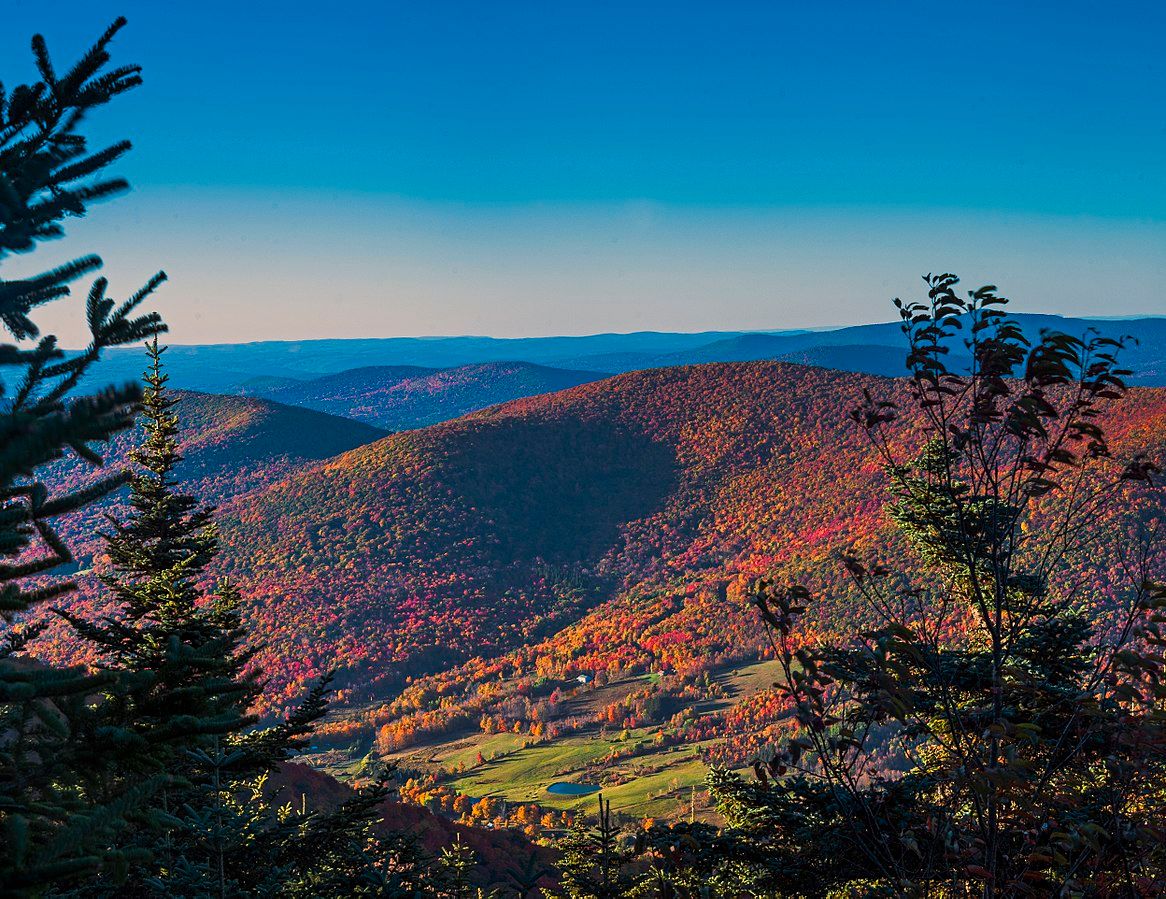
.
Wrong Answer: adirolf
A: eniam
I wrote the words backward
Comment by nonameiguess 15 hours ago
Comment by ErroneousBosh 17 hours ago
I guess it's kind of like how Edinburgh on the east coast of the UK is quite a bit further west than Bristol on the west coast of the UK.
Comment by fsckboy 9 hours ago
and similar, traversing the Panama Canal from the Atlantic to the Pacific puts you farther east.
Comment by aklemm 19 hours ago
Comment by sakopov 1 day ago
[1] https://web.archive.org/web/20250326213947/https://www.geoti...
Comment by IAmBroom 17 hours ago
Comment by jjulius 1 day ago
https://ui.adsabs.harvard.edu/abs/2015AGUFM.T13A2979G/abstra...
Comment by sbuttgereit 1 day ago
He did "Baja-BC A to Z" 3 years ago:
https://www.nickzentner.com/#/baja-bc-a-to-z/
With the associated reading list: https://www.geology.cwu.edu/facstaff/nick/gBAJA/
Currently he's about halfway through another "A to Z" called "Alaska A to Z" which covers some of that same territory
https://www.nickzentner.com/#/livestream-series-26-episodes/
And the so-far-posted reading list: https://www.geology.cwu.edu/facstaff/nick/gALASKA/
Of central importance to the first half of the current Alaska series is recent paper by geologist Robert S. Hildebrand titled: "The enigmatic Tintina–Rocky Mountain Trench fault:a hidden solution to the BajaBC controversy?"
What's great about these series is that he'll get a number of the geologists writing these papers involved in one way or another. Either contributing interviews or talks specifically for the video series, or like in the case of this Hildebrand centric work in the current series, Hildebrand himself is watching the stream and participating in the live chat with the other viewers, answer questions and the like.
Comment by jjulius 20 hours ago
Zentner's a goddamned national treasure.
Comment by al_borland 1 day ago
Comment by mauvehaus 1 day ago
Also, AIUI, because bourbon has to be aged in new white oak barrels, you find a lot of former bourbon barrels aging distilled spirits all throughout the world, Scotland included.
Comment by al_borland 1 day ago
Interesting, I just looked up the details on this[0]. I’m surprised they didn’t hammer that home as well. I thought maybe you were just being pedantic at first, but that’s a good call out. I did make sure to say cask instead of barrel, as a barrel is just one size option for a cask.
They did talk about the rules of scotch vs bourbon and how some of that supply chain works for reuse.
[0] https://www.scotchwhiskyexperience.co.uk/about/about-whisky/...
Comment by eszed 14 hours ago
Comment by nephihaha 1 day ago
Comment by Tagbert 1 day ago
Comment by aitchnyu 20 hours ago
Comment by Ericson2314 16 hours ago
Comment by trgn 1 day ago
Comment by wahern 1 day ago
> In the Paleogene and Neogene Periods (~66 million to ~1.8 million years ago), the mountain chains that today constitute the Atlas were uplifted, as the land masses of Europe and Africa collided at the southern end of the Iberian Peninsula.
But it also notes,
> The Anti-Atlas Mountains are believed to have originally been formed as part of the Alleghenian orogeny. These mountains were formed when Africa and America collided
Anti-Atlas? If we jump over to the Anti-Atlas article we see,
> In some contexts, the Anti-Atlas is considered separate from the Atlas Mountains system, as the prefix "anti" (i.e. opposite) implies.
and
> The summits of the Anti-Atlas reach average heights of 2,500–2,700 m (8,200–8,900 ft),
So in addition to subsequent events, the portion of the Atlas originally formed with the Appalachian is geologically distinguishable from the other portions of the Atlas chain, and actually significantly lower than the parts of the chain formed later, though not as low as the Appalachians.
Comment by tengwar2 1 day ago
Comment by zimpenfish 1 day ago
I think they might have gotten flatter in the intervening 200M+ years.
Comment by IAmBroom 17 hours ago
Most people wouldn't object to an article about Kilimanjaro containing a map of where it is in Tanzania, but for reference, here is a map of just the mountain: O.
Comment by tengwar2 16 hours ago
Comment by prennert 1 day ago
If you are interested in the geology of Scotland, there are excellent books available, including "Land of Mountain and Flood: The Geology and Landforms of Scotland". I am sure good books about the Appalachians and the Atlas are available, too.
Comment by adolph 1 day ago
Comment by brcmthrowaway 1 day ago
Comment by voxleone 1 day ago
The collision with Asia began around 50–55 Ma and is still ongoing, which is why the Himalayas are still rising today.
Comment by mr_toad 1 day ago
Comment by nkrisc 1 day ago
Comment by turtlesdown11 1 day ago
Comment by IAmBroom 17 hours ago
Comment by cranberryturkey 1 day ago
Comment by IAmBroom 17 hours ago
So, advertising your side project? Because it is useless for checking out Scottish Highlands trails.